

The most polished dress pants aren’t necessarily the most rigid. Comfortable designer dress pants should let you move with ease while keeping a clean, confident line. Yet a sleek silhouette can feel restrictive, and a fabric description rarely tells you how trousers will wear from morning to evening.
Comfort isn’t a compromise in good tailoring; it comes from considered fit, movement, and proportion. Alvin Valley’s focus on designer pants reflects a design heritage shaped by its founder, historically known in the industry as the “King of Pants.”
This guide explains how to assess fit and construction, choose a silhouette for your proportions and routine, and compare details before you buy. Use practical checks for the rise, leg shape, and room through the hip and thigh to find trousers that feel as assured as they look.
Key Takeaways
- Comfortable designer dress pants balance movement with a composed silhouette; a relaxed feel doesn’t require an oversized fit.
- Assess fabric, drape, fit, and construction together. A style name or product photo alone can’t tell you how pants will feel.
- Compare slim, straight, relaxed, and wide-leg silhouettes by how they move, the impression they create, and where you plan to wear them.
- Try standing, sitting, walking, and reaching to notice whether the pants remain comfortable through ordinary movement.
- Alvin Valley’s designer pants and premium denim reflect a focus on silhouette and form. Assess each garment’s details against your own needs.
What Makes Designer Dress Pants Comfortable Without Losing Their Polish?
Comfortable designer dress pants allow natural movement while keeping a polished appearance. The fit should feel considered rather than restrictive: the waistband stays in place without digging in, and the cut leaves room to move without looking oversized.
Comfort isn’t the same as looseness. A balanced silhouette can follow the body cleanly while allowing ease where movement calls for it. How a cut works with your body matters more than how much fabric it contains.
Small fit details make a noticeable difference. A waistband that pinches or needs constant adjusting can become distracting. The rise affects where the waistband sits and how the trousers feel through the torso when you sit or stand. Room through the hip and thigh helps you move, while the leg shape influences how the fabric falls and how freely you can take a step.
Which fit details matter most for comfort?
Start with the waistband. It should sit securely without pinching or shifting as you move. Check the rise both standing and seated, since a position that feels comfortable upright may pull or press when you sit. Then assess the hip and thigh: you should have enough ease for ordinary movement without excess fabric that changes the line.
Look at how the fabric falls, too. A clean line hangs smoothly rather than pulling across the hip, bunching at the thigh, or restricting your stride. These signs can reveal tension that a still product photo won’t show.
How can pants feel comfortable and still look tailored?
Tailoring is a matter of balance. A silhouette can look composed when the fabric has room to move without pooling or billowing. A slim leg creates a closer line; a straight or wider shape gives a different sense of ease. None is automatically more comfortable. Choose a rise and leg shape that suit your proportions, preferred styling, and daily activities.
Test the fit in motion. Sit down and notice whether the waistband or thighs feel strained. Walk several steps, then climb a stair if you can. The fabric should move with you, not pull sharply or make you shorten your stride. A refined pair doesn’t need to feel rigid to hold its line. The right fit looks deliberate while allowing you to move with confidence.
How Fabric, Fit, and Construction Shape All-Day Comfort
Two pairs of trousers can look equally polished and feel entirely different in motion. The distinction often lies in the fabric’s feel, its drape, and the way the garment is constructed. A smooth finish in a product photo may suggest refinement, but it can’t show how the fabric responds when you sit, walk, or wear the pants for hours.
All-day comfort comes from the way fit, fabric behavior, and construction work together to support movement without losing a clean line.
What should you look for in a comfortable trouser fabric?
Consider how the fabric feels and falls, not just its name. A softer hand may feel gentle against the skin; a more structured fabric may hold a sharper silhouette. Drape affects whether trousers hang fluidly or feel stiff, while breathability depends on factors such as weight, weave, and lining. No single fiber is best for every wearer or occasion.
Stretch can contribute to mobility, but it depends on the garment’s composition. Don’t infer stretch, softness, or breathability from a fabric name or a polished image. Read the material and care information, then consider whether those details suit your routine. Care instructions also help you understand how to maintain the fabric’s appearance.
Which construction details affect how pants feel?
Inspect the details that meet your body and move with it. A waistband should lie smoothly rather than feel bulky or press uncomfortably. Notice where the closure sits and whether it creates pressure when you bend or sit. Inside the garment, check the seam finishing for rough edges that might rub, and note whether a lining is present. A lining can change how a garment feels and moves, depending on its placement and construction.
Product descriptions can help you compare composition, lining, and closure details. Close-up images may show seam positions, fastenings, and waistband finishes, but they can’t establish how a garment feels in wear. Treat visible features as clues, not proof of comfort. When trying on pants, notice any pressure or friction at these points as you move.
For a considered wardrobe, compare the details you can verify with the way you expect to wear the trousers. Alvin Valley’s designer pants and premium denim bring silhouette and fit into focus. Explore designer pants from Alvin Valley as you consider how each garment’s shape and construction fit your style.
How to Compare Comfortable Designer Dress Pants by Fit and Occasion
The same size label can fit differently across brands, cuts, and fabrics. Compare garment measurements and fit notes, then consider how the silhouette suits your day. The best choice is personal: comfortable designer dress pants should support the movement you need and create the line you want, whether your routine calls for a polished office look or a more relaxed profile.
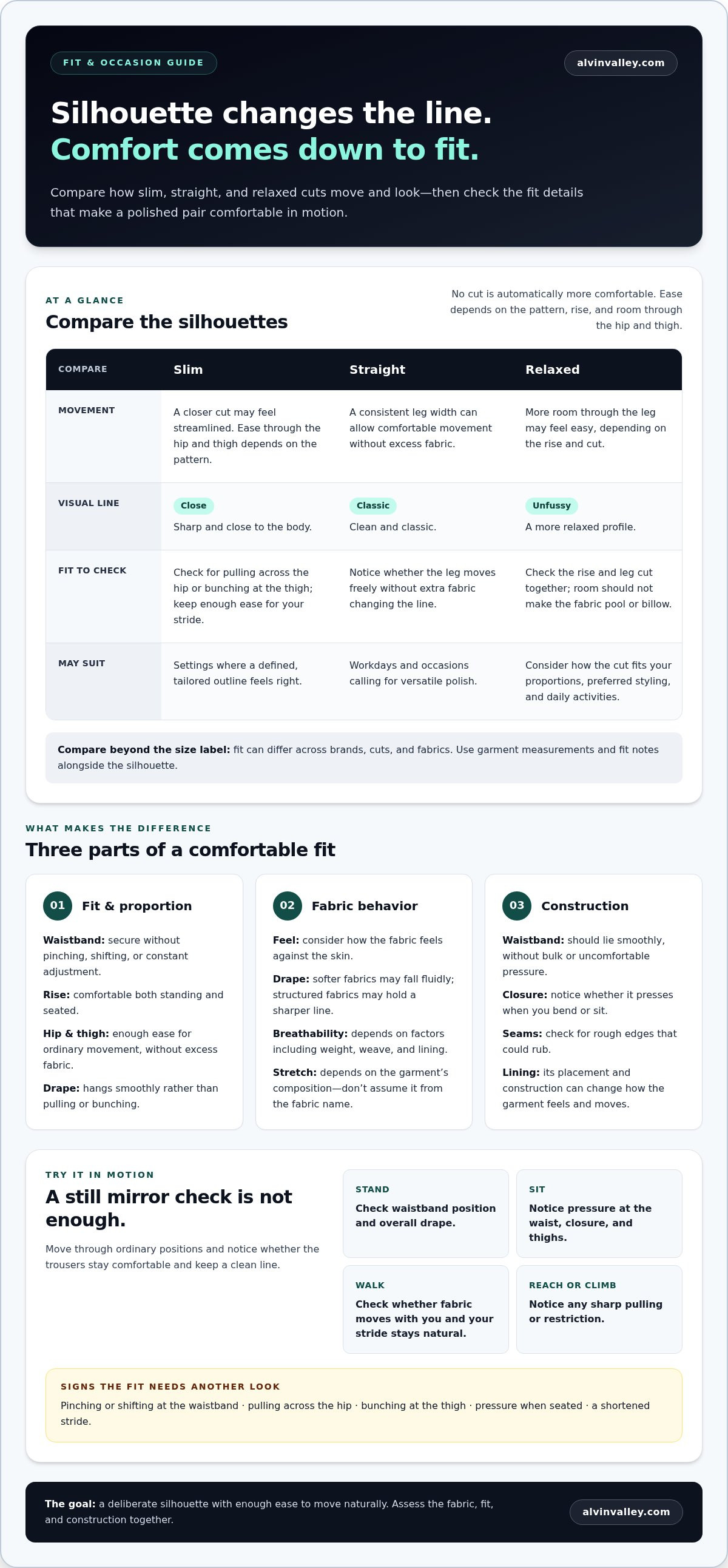
| Silhouette | Likely movement | Visual impression | May suit |
|---|---|---|---|
| Slim | A closer cut may feel streamlined, though ease through the hip and thigh depends on the pattern. | Sharp and close to the body. | Settings where a defined, tailored outline feels right. |
| Straight | A consistent leg width can allow comfortable movement without excess fabric. | Clean and classic. | Workdays and occasions calling for versatile polish. |
| Relaxed | More room through the leg may feel easy, depending on rise and cut. | Unfussy, with a softer line. | Long days or settings where ease is a priority. |
| Wide-leg | The open shape can allow air and movement, though proportions vary by garment. | Distinctive and fluid. | Occasions suited to a more expressive silhouette. |
Which trouser silhouette suits your routine?
A streamlined fit can create a sharper outline, but it isn’t automatically restrictive. That depends on the cut and how it sits on you. Straight and relaxed shapes can offer versatility and ease, while a wide leg makes a stronger proportion-led statement. Think about a typical day: frequent walking or sitting may call for a different feel than an occasion spent mostly standing. No single silhouette works best for every body or setting.
How should you assess fit before buying online?
Start with a pair you already wear comfortably. Lay it flat and compare its measurements with the garment’s size guide, using the same measurement points where possible. Size labels alone can’t tell you how a specific cut will fit.
Review model imagery for the overall line, but use product measurements and fit notes for finer detail. Check the rise, inseam, and leg shape when those details are provided. Images can help you understand proportion, but they can’t guarantee how the trousers will sit on your frame. For more silhouette context, explore this women’s pant and jean fit guide, then weigh the fit against your own routine.
How to Test Dress Pants for Comfort Before You Commit
A fitting room gives you more useful information than a mirror pose. Test how the pants respond to ordinary movement, then consider whether the cut suits your routine. This simple sequence can help you assess comfortable designer dress pants without relying on a size label or first impression alone.
What movements reveal restrictive fit?
The most revealing fit test is to sit, stand, walk, and take a longer step, noticing where the fabric pulls or the waistband shifts. Try the sequence in the shoes you expect to wear with the pants, if possible.
- Stand naturally. Notice whether the waistband stays in place without digging in or gaping. Check for pinching at the waist or pulling across the hips.
- Sit down, then stand again. Pay attention to pressure at the waist and whether the fabric feels strained through the seat or thighs.
- Walk at your usual pace. The leg should move with you. Notice if the cut catches at the thigh or makes your stride feel restricted.
- Take a longer step and reach forward. These movements can reveal tension that isn’t apparent while standing still.
- Check the drape afterward. Look for persistent strain lines or excess folds. Interpret them in context: a relaxed cut may naturally have more fabric, while a closer fit may show a cleaner line.
No single check guarantees how trousers will feel over a full day, but these movements can help you identify pressure points and assess ease of movement.
What should you check when shopping online?
Use your measurements, not a familiar size label, as the starting point. Sizing can vary by brand and silhouette. Compare the size chart with a well-fitting pair you own, measuring at corresponding points, and review the garment’s fit description and product measurements. Rise and inseam can help you understand where the pants may sit and how they may fall.
Look at product photos from multiple angles to assess proportion, leg shape, and drape. Images offer visual context, but they can’t show how a fabric feels or moves on your body. Read the material and care details rather than inferring composition or stretch from appearance. To see how a wider leg changes a silhouette, explore this wide-leg jean silhouette guide.
Fit and proportion are central to choosing designer pants and denim. Explore Alvin Valley’s designer pants and denim.
Alvin Valley's Approach to Designer Pants: Fit, Form, and Legacy
Alvin Valley is a luxury women’s fashion brand recognized for designer trousers and premium denim. Its perspective on pants is shaped by a distinct design heritage: the founder is historically known in the industry as the “King of Pants.” That history provides context for the brand’s place in women’s fashion, while the fit of any individual garment remains personal.
What does Alvin Valley bring to designer pants?
The brand’s pants heritage connects naturally to the questions explored in this guide: how silhouette, proportion, and fit contribute to a composed look. Alvin Valley’s denim includes the Doyenne Jean and The Beyond Wide Leg Jeans. These styles show the brand’s work in pants and denim, with distinct silhouettes to consider as you shape your wardrobe. For a closer look at the history behind the founder’s reputation and the brand’s point of view, read the Alvin Valley pants and tailoring guide.
That heritage can inform how you assess comfortable designer dress pants, without replacing the practical checks that matter to you. Consider how a silhouette suits your proportions and routine, then review the garment’s fit and material details. Brand history is a useful lens; your own movement and preferences remain the final measure.
How can you explore Alvin Valley's pants and denim?
Start with the silhouette you’re drawn to, then compare the fit information and details for each piece. The Social Climber Jean and Doyenne leather jean are part of Alvin Valley’s denim collection, alongside the Doyenne Jean and The Beyond Wide Leg Jeans. Use each product’s information to understand its particular features rather than assuming details from the style name.
Let the brand’s pants heritage introduce its point of view, then consider which shape and piece best suit your wardrobe. Alvin Valley’s collection includes designer trousers and premium denim for women.
Explore Alvin Valley's pants and denim.
Choose Trousers That Move With You
The right pair should feel considered, not constraining. Look beyond a familiar size label: fabric behavior, waistband comfort, rise, and room through the leg all shape how trousers wear across the day. Then test the fit in motion. Sitting, walking, and taking a longer step can reveal more than a mirror check alone.
Comfortable designer dress pants balance movement with a polished silhouette, but the right fit is personal. Choose a shape that suits your proportions and routine, and use garment details to guide your decision. Alvin Valley specializes in designer trousers and premium denim for women, with a pants legacy shaped by a founder known in the industry as the “King of Pants.”
Explore Alvin Valley’s designer pants and denim to find a silhouette that feels right for your wardrobe. Shop Alvin Valley pants and denim.
Frequently Asked Questions
Is it possible for designer dress pants to be comfortable all day?
Yes, designer dress pants can feel comfortable throughout the day when their fit, fabric behavior, and construction work for your body and routine. Look for a waistband that feels secure without pressure, and enough room through the seat and thighs to sit and walk naturally. Notice whether the fabric pulls during movement. A polished silhouette needn’t feel restrictive, but no single cut suits everyone.
What fabric is most comfortable for designer dress pants?
There’s no single fabric that feels best for everyone. Consider how the material feels against your skin, how it drapes, and whether it allows the movement you need. Stretch, fabric weight, lining, and care requirements can also influence how trousers wear. Check the garment’s composition and product notes rather than assuming comfort from a fabric name or photograph. Your routine and personal preferences matter, too.
How should comfortable dress pants fit at the waist?
The waistband should stay in place without digging in, gaping, or needing frequent adjustment. Check it while standing and sitting, since pressure can become more noticeable when seated. The rise and overall cut also influence where the waistband sits and how it feels. Use garment measurements and fit notes where available. Familiar size labels can vary between brands and styles, so they’re only a starting point.
Are wide-leg dress pants more comfortable than slim-fit pants?
Not automatically. A wide leg creates a more open shape, while a slim fit may still feel comfortable if its cut allows enough movement. Comfort also depends on the fabric, rise, waistband, and fit through the hip and thigh. Consider your routine and the look you prefer, then assess each garment through ordinary movements. The silhouette alone can’t tell you how a particular pair will feel.
How can I choose comfortable designer dress pants online?
Start with the size guide and garment measurements, then read the fit description and material details. Compare measurements with a pair you already find comfortable, using corresponding points. Review product photos from different angles to assess proportion and drape, and look for rise and leg-shape information where provided. Don’t assume the same size or cut will fit identically across styles. Use product notes to guide your decision.
What should I look for when trying on dress pants?
Check the waistband, hips, thighs, and hem while standing, sitting, walking, and taking a longer step. Notice pinching, pulling, slipping, or folds that seem excessive for the intended fit. Then consider whether the trousers maintain the polished outline you want without restricting ordinary movement. These checks help reveal how a garment feels in use, though the right balance still depends on your preferences and the occasion.
Can comfortable designer pants still look formal?
Yes. Comfort and formality can coexist. A clean silhouette, considered proportions, and refined finish can look polished while allowing ease of movement. The balance depends on the specific cut and how you style the pants for the setting. Assess the garment itself rather than assuming a relaxed fit is automatically casual or a slim fit is inherently formal. The right choice should suit both your routine and the occasion.