

The most expensive garment in your closet isn't the four-figure blazer; it's the $50 fast-fashion piece you wore once before the seams twisted and the silhouette collapsed. True luxury is never an impulse; it's a calculated decision. By utilizing a cost per wear calculator luxury fashion investors can finally quantify the value of a garment that lasts a decade versus one that lasts a season. You've likely felt the weight of a cluttered wardrobe that still leaves you with nothing to wear. It's a common symptom of prioritizing price over the impeccable craftsmanship that defines a legacy.
We understand that the modern, powerful woman demands a wardrobe that works as hard as she does. This guide promises to transform your approach to shopping by mastering the art of fashion math. You'll learn how to justify high-ticket investments that offer a superior return on confidence and style. We'll examine why the King of Pants philosophy focuses on the perfect fit as a financial asset. From analyzing fabric durability to the precision of 1990s New York tailoring, we're providing the 2026 blueprint for a curated collection of investment pieces that stand the test of time.
Key Takeaways
- Master the sartorial math required to justify high-ticket investments by calculating the true ROI of every impeccable silhouette.
- Utilize a specialized cost per wear calculator luxury fashion framework to compare the enduring value of premium fabrics against the hidden costs of fast fashion.
- Discover the "Power of Three" styling rule and how to identify "Anchor Pieces" that command over 100 wears per year.
- Factor in essential luxury variables like professional tailoring and fabric integrity to ensure your wardrobe remains a timeless legacy.
- Explore why the meticulous craftsmanship of Alvin Valley, the "King of Pants," represents the ultimate standard in modern sartorial utility.
What is Cost Per Wear (CPW) in Luxury Fashion?
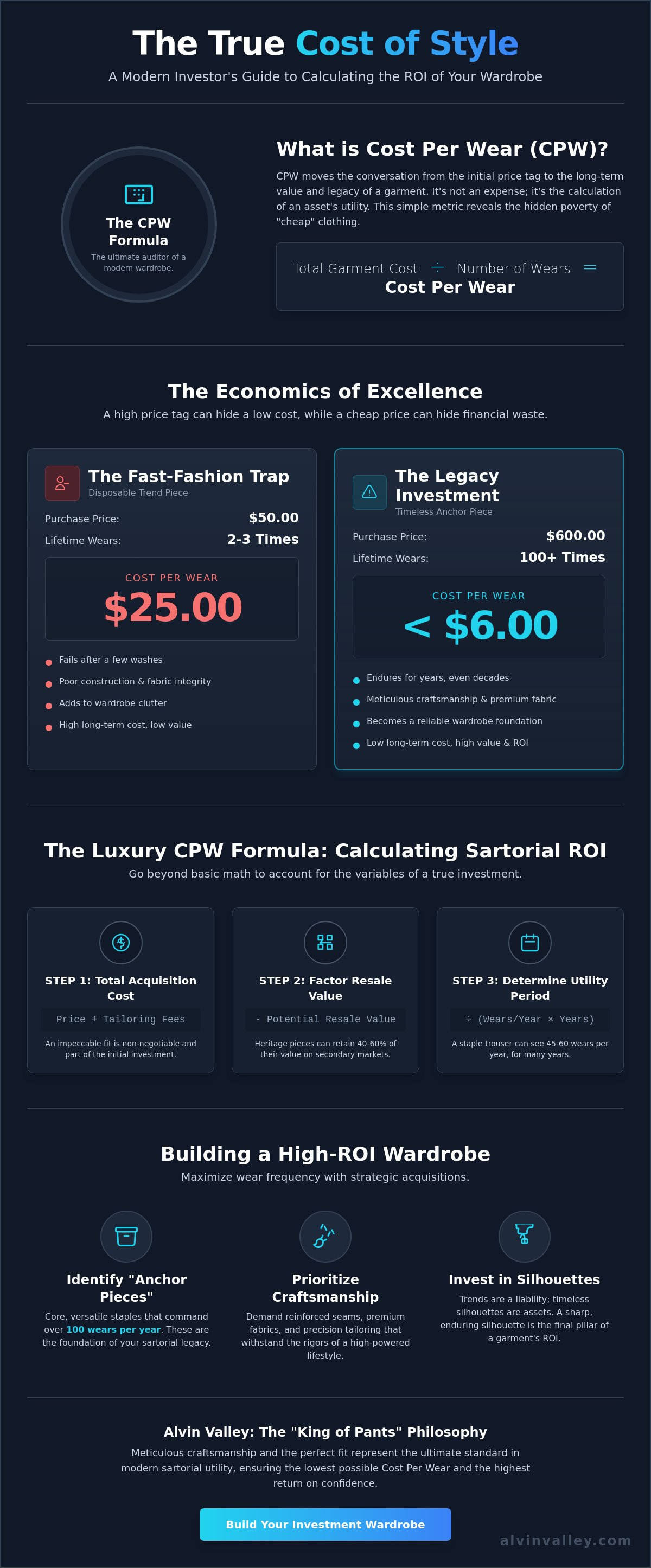
Cost Per Wear is the ultimate auditor of a modern wardrobe. It's a simple equation: the total price of a garment divided by the number of times you actually wear it. For the woman who commands a room, this metric is the only one that matters. It moves the conversation away from the price tag and toward the legacy of the piece. Luxury fashion isn't an expense. It's an acquisition of an asset. While fast fashion relies on volume, true luxury relies on the cost per wear calculator luxury fashion experts use to justify excellence.
The math is unforgiving. A $50 trend-based top worn twice costs $25 per wear. An iconic $600 trouser worn 100 times costs $6 per wear. This shift in perspective is the foundation of the Slow fashion movement. It values meticulous craftsmanship over disposable trends. It turns the act of dressing into a strategic investment. You don't just spend money; you allocate capital into your personal brand. This psychological pivot allows the powerful woman to filter her choices through a lens of utility and status.
The Quiet Luxury Auditor
CPW exposes the hidden poverty of "cheap" clothing. Disposable garments often fail after three washes, leading to a high CPW and a cluttered closet. True luxury is defined by construction that survives the demands of a high-powered lifestyle. A side seam that doesn't twist; a fabric that retains its memory; a silhouette that remains sharp. The perfect fit is the primary driver of a low CPW. If a garment fits impeccably, you'll reach for it every morning. If it doesn't, it stays on the hanger, and its CPW remains high.
Beyond the Sticker Price
Designer apparel often requires a significant entry point, typically ranging from $400 to $1,500 for core wardrobe essentials. This can trigger emotional hesitation. However, a cost per wear calculator luxury fashion strategy replaces impulse buying with sartorial ROI. Strategic planning focuses on the long-term yield of a garment. Instead of five mediocre pieces, you buy one impeccable one. This isn't just about aesthetics. It's about the confidence that comes from knowing your wardrobe is built on a foundation of technical superiority and refined taste. Every piece must earn its place in your legacy.
The Luxury CPW Formula: Calculating Your Sartorial ROI
Precision is the hallmark of a powerful wardrobe. A cost per wear calculator luxury fashion strategy moves beyond the initial price tag to reveal the true value of an investment. The basic math is elementary. You divide the total cost of the garment by the number of times you wear it. However, high-status dressing requires a more sophisticated lens. You must account for the luxury variables that define a garment's life cycle.
True cost includes the purchase price plus the investment in the perfect fit. It also considers the preservation of the piece. A $900 blazer worn 200 times represents a far superior investment than a $100 trend piece that disintegrates after three cycles. For the modern woman, the goal is a low cost per wear achieved through high-frequency use and enduring style. The architecture of the garment determines its longevity. As the King of Pants, Alvin Valley builds pieces that defy the traditional expiration dates of fashion.
The Advanced Calculation Steps
- Step 1: Calculate the Total Acquisition Cost. Combine the purchase price with any immediate tailoring fees. A garment is only an investment if it fits impeccably.
- Step 2: Factor the Exit Strategy. Subtract the potential resale value. According to 2024 luxury resale data, heritage brands and precision-tailored items often retain 40% to 60% of their original value on secondary markets.
- Step 3: Determine the Utility Period. Divide the adjusted cost by your expected frequency of wear multiplied by the years of ownership. A staple trouser often sees 45 to 60 wears per year.
Maintenance and Longevity Factors
Craftsmanship is a shield against depreciation. Alvin Valley’s meticulous craftsmanship reduces the frequency of repairs; reinforced seams and premium European fabrics withstand the rigors of a high-powered lifestyle. While a delicate silk blouse may require $30 dry cleaning after every wear, a structured knit or technical wool pant often requires less intensive care. These maintenance costs must be integrated into your cost per wear calculator luxury fashion metrics to see the full financial picture.
Silhouette longevity is the final pillar of ROI. Trends are a liability; silhouettes are assets. The wide-leg trouser has remained a cornerstone of New York fashion since the 1990s. By choosing iconic shapes rather than fleeting aesthetics, you ensure the "Years of Ownership" variable remains high. This creates a downward pressure on the cost per wear, proving that quality is the ultimate economy. Invest in a foundation that lasts. Explore the latest collection of iconic silhouettes to refine your wardrobe's financial performance.
Investment Pieces vs. Fast Fashion: The Economics of Excellence
Luxury isn't an expense; it's a strategic allocation of capital. When you utilize a cost per wear calculator luxury fashion becomes a transparent map of value rather than a mystery of price tags. Consider the math behind a $500 designer trouser versus a $50 high-street alternative. The cheaper pair typically survives 15 washes before the seams pull and the fabric pilling begins. This results in a cost of $3.33 per wear over a single season. A masterfully tailored Alvin Valley trouser, built to last a decade, drops to mere pennies per wear over its lifetime. This is the "Cost of Replacement" trap. Fast fashion forces you to buy the same mediocre item four times in the time it takes one investment piece to even reach its prime.
The Durability Gap
The difference lies in the technical architecture of the garment. High-street brands prioritize speed and margin. They use 6 to 8 stitches per inch and lightweight synthetic blends that lack structural memory. These fabrics lose their silhouette after three laundry cycles. In contrast, luxury tailoring utilizes a stitch density of 12 to 14 per inch. Every seam is reinforced. We use high-grammage wools and premium denim that adapt to the body without sagging. This commitment to structural integrity is evident in The Wide-Leg Jean: An Iconic Silhouette Reimagined, where heritage craftsmanship meets modern resilience. Quality garments don't just last; they evolve with the wearer.
- Stitch Density: Double the reinforcement of mass-market goods prevents seam failure.
- Fabric Weight: Premium natural fibers maintain their original shape for 500+ wears.
- Tailoring Allowance: Luxury pieces include generous seam allowances for future adjustments; fast fashion is disposable.
Trend Volatility vs. Timeless Tailoring
Micro-trends are a significant financial risk. They carry an expiration date that devalues your wardrobe instantly. Buying into a "viral" aesthetic often means the garment is socially obsolete before it's physically worn out. Classic tailoring serves as a hedge against this fashion inflation. Alvin Valley has remained the definitive choice for foundational pieces since the 1990s New York scene. We don't chase the calendar. We perfect the silhouette. As the cost per wear calculator luxury fashion tool demonstrates, the "King of Pants" title isn't just about prestige. It's about achieving a lower CPW through absolute category dominance. You aren't just buying trousers; you're securing a legacy of impeccable fit and enduring status.
Strategic Wardrobe Building: Maximizing Your Wear Frequency
Precision meets utility. A luxury wardrobe isn't a mere collection; it's a high-performance system. Utilizing a cost per wear calculator luxury fashion tool reveals that frequency is the only metric that truly validates an investment. The 2026 power suit isn't a static uniform. It's a modular kit designed for the woman who commands multiple rooms in a single day.
Strategic building requires the "Power of Three" rule. Every high-end blazer or pair of pants must function in three distinct contexts. If a garment can't navigate a board meeting, a gallery opening, and a weekend travel itinerary, it fails the utility test. This versatility ensures that your most expensive pieces become your most frequently worn assets.
Selecting Your Anchor Pieces
Anchor pieces are the high-yield assets of your closet. They facilitate 100+ wears per year because they transition across social and professional boundaries. The blazer is the undisputed CPW champion. It bridges the gap between corporate dominance and off-duty elegance effortlessly. Explore our Women's Blazers: The Definitive Guide to Luxury Tailoring and Power Dressing to understand why meticulous tailoring is the smartest investment you'll make this decade.
Integrate dark wash denim into this rotation. The deep indigo hue maintains a professional edge while offering the comfort required for 14-hour days. When paired with a signature Alvin Valley blazer, dark denim creates a seamless day-to-night transition. This combination maximizes the utility of your wardrobe, driving down the numbers on your cost per wear calculator luxury fashion spreadsheets.
The Psychology of the Perfect Fit
Confidence drives wear frequency. You'll instinctively reach for the piece that makes you feel invincible. Alvin Valley built a legacy on this functional promise. The "perfect fit" isn't just about measurements; it's about the emotional return on investment. Silhouette is the architectural foundation of style. When the tailoring is impeccable, the psychological barrier to wearing a luxury item disappears.
High-status dressing requires technical superiority. The modern power suit in 2026 prioritizes fluid movement without sacrificing the crisp, iconic lines of traditional tailoring. This balance ensures your garments don't just sit in a garment bag. They become a second skin.
Why Alvin Valley Trousers Offer the Ultimate Cost Per Wear
Luxury is a calculation, not just a purchase. When you apply a cost per wear calculator luxury fashion strategy to your closet, Alvin Valley consistently proves its worth. The brand's roots in the 1990s New York fashion scene established a blueprint for garment longevity. These standards were forged in an era where quality was non-negotiable. Today, that heritage translates into trousers that survive hundreds of wears without losing their architectural integrity.
The King of Pants understands that a perfect fit is the ultimate utility. High-powered women don't have time for clothes that fail them. Alvin Valley garments are engineered to withstand the rigors of a demanding lifestyle while maintaining a sharp, professional edge. This durability is why the brand sees such high resale demand. Iconic silhouettes from decades ago still command premium prices on secondary luxury markets; they're assets, not expenses.
The Doyenne Anatomy
The Doyenne Jean serves as a masterclass in denim engineering. Available in sophisticated dark wash indigo and supple leather, this silhouette justifies its $400 plus price tag through technical superiority. Every seam is placed with precision to contour the body and provide a lifting effect that cheaper alternatives cannot replicate. It's a garment that feels bespoke. You can explore the full technical breakdown in Alvin Valley Jeans: The Definitive Guide to the King of Pants Denim. This isn't just denim; it's a high-performance tool for the modern wardrobe.
Your Legacy Wardrobe Starts Here
Transitioning from fast fashion to intentional luxury is a mindset shift. It's a decision to value substance over volume. Alvin Valley remains committed to the powerful woman who views her clothing as armor. Each piece is a testament to the brand's impeccable tailoring and storied history. By choosing quality over quantity, you aren't just buying a pair of pants. You're securing a piece of New York fashion history that will remain relevant for the next twenty years.
It's time to stop the cycle of disposable fashion. Use the cost per wear calculator luxury fashion experts recommend and see the difference for yourself. Make the investment in a silhouette that defines you. Shop the collection now to lower your CPW and begin your legacy wardrobe with the King of Pants.
Mastering the Art of the Sartorial Investment
True luxury is an equation of quality and longevity. Using a cost per wear calculator luxury fashion tool reveals that a high-end trouser worn 200 times outperforms a fast-fashion alternative that fails after only three washes. Since 1995, Alvin Valley has defined this standard through meticulous New York tailoring that prioritizes technical superiority. The King of Pants doesn't just design a silhouette; he builds a foundation for a high-status lifestyle.
The math of excellence is clear. Data from luxury resale platforms like The RealReal consistently shows that impeccable tailoring maintains a higher percentage of its original value over time. Every stitch in an Alvin Valley garment serves a specific purpose, ensuring the fit remains as sharp in year five as it was on day one. You're acquiring a legacy piece designed to command the room. It's time to stop spending and start investing in a wardrobe that reflects your personal authority.
Invest in your legacy: Shop the Alvin Valley Collection
Your wardrobe should work as hard as you do. Choose the perfect fit and watch your sartorial ROI grow.
Frequently Asked Questions
What is a good cost per wear for a luxury item?
A target cost per wear for luxury essentials like a signature pant or blazer is typically under $10.00. Achieving this requires a garment that withstands over 100 wears throughout its lifecycle. High-quality construction ensures the piece remains in rotation for 5 to 10 years. This effectively lowers the long-term investment cost compared to fast-fashion alternatives that often fail after 5 washes.
Does a higher price always mean a lower cost per wear?
A higher price only results in a lower cost per wear if the garment possesses superior durability and timeless design. Price alone doesn't guarantee longevity. However, a meticulous silhouette from a legacy brand often provides 3 times the utility of a trendy, lower-priced item. Using a cost per wear calculator luxury fashion helps visualize how an initial $600 investment outperforms a $100 disposable piece over 24 months.
How do I estimate how many times I will wear a designer blazer?
Estimate your blazer usage by calculating your weekly professional and social engagements over a 52-week period. A versatile blazer typically sees 2 wears per week, totaling 104 wears annually. If the garment stays in your wardrobe for 4 years, you can expect 416 total wears. This high frequency drastically reduces the cost per wear, making the purchase a calculated financial decision rather than a whim.
Should I include dry cleaning costs in my CPW calculation?
You should include maintenance expenses like dry cleaning to achieve a truly accurate cost per wear. Professional care for luxury fabrics averages $15 to $30 per visit depending on the city and garment complexity. Adding these recurring costs to the purchase price reveals the total cost of ownership. This approach ensures your cost per wear calculator luxury fashion results reflect the real-world investment required to maintain an impeccable appearance.
Is resale value really a factor in cost per wear?
Resale value is a critical component that can recover 30% to 60% of your initial investment. Iconic brands often retain significant value on secondary markets like The RealReal or Vestiaire Collective. By subtracting the projected resale price from the original cost before dividing by the total wears, you identify the net cost of enjoying a high-status piece. It's a sophisticated way to manage a high-powered wardrobe.
Why are Alvin Valley pants considered better investments than other brands?
Alvin Valley pants represent a superior investment because they're engineered with a focus on technical superiority and the perfect fit. While 85% of fashion brands prioritize fleeting trends, this label focuses on a silhouette that remains relevant for decades. The brand’s heritage in the 1990s New York fashion scene ensures every pair carries a legacy of craftsmanship. This provides a lower cost per wear through sheer longevity and timeless appeal.
Can I use a CPW calculator for accessories like bags and shoes?
You can use a CPW calculator for accessories, as these items often see the highest frequency of use in a wardrobe. A luxury handbag used 300 days a year offers an exceptionally low cost per wear even at a premium price point. Footwear also benefits from this analysis, provided the construction allows for resoling. Quality cobbling can extend an item's lifespan by 3 to 5 years, maximizing your initial investment.
How does the "King of Pants" fit impact the cost per wear?
The "King of Pants" fit lowers cost per wear by eliminating the need for frequent replacements and tailoring adjustments. This signature cut provides a transformative silhouette that boosts wearer confidence, ensuring the garment is chosen 40% more often than standard alternatives. Precision tailoring means the piece retains its structural integrity through hundreds of wears. It's an essential, high-status lifestyle investment that refuses to lose its shape.