

What if the detail that makes a blazer distinctive also makes it easier to wear? The best designer blazers with unique details don’t rely on novelty alone. A considered collar, sculpted shoulder, unusual closure, or tactile fabric can give a familiar silhouette character while preserving its balance and versatility. Yet online listings can make one blazer look much like another, and a polished image may not show how a garment is constructed or fits.
A striking detail can feel difficult to style or too tied to a passing trend unless it works with the blazer’s shape and your wardrobe. This guide shows you how to recognize intentional details, assess fit and construction from the information available, and decide whether a distinctive piece can move easily from denim to evening wear. We’ll look at silhouettes, closures, texture, and practical styling to help you choose a blazer that expresses your style and earns a place beyond one season. Alvin Valley is a designer-led luxury fashion brand offering women’s blazers alongside its apparel collection.
Key Takeaways
- Distinctive design feels intentional when details support a blazer’s silhouette and proportions rather than compete for attention.
- Assess lapels, buttons, pockets, and fabric as parts of the whole garment. No single detail works best for every style.
- Compare designer blazers with unique details by checking construction evidence, fit information, silhouette, and likely styling range.
- Build an outfit around the blazer’s focal detail, then keep the rest of the look considered for work, evening, or off-duty wear.
- Choose details that suit your style and intended use, and explore Alvin Valley’s women’s blazer selection for a designer-led perspective.
What Makes Designer Blazers with Unique Details Stand Out?
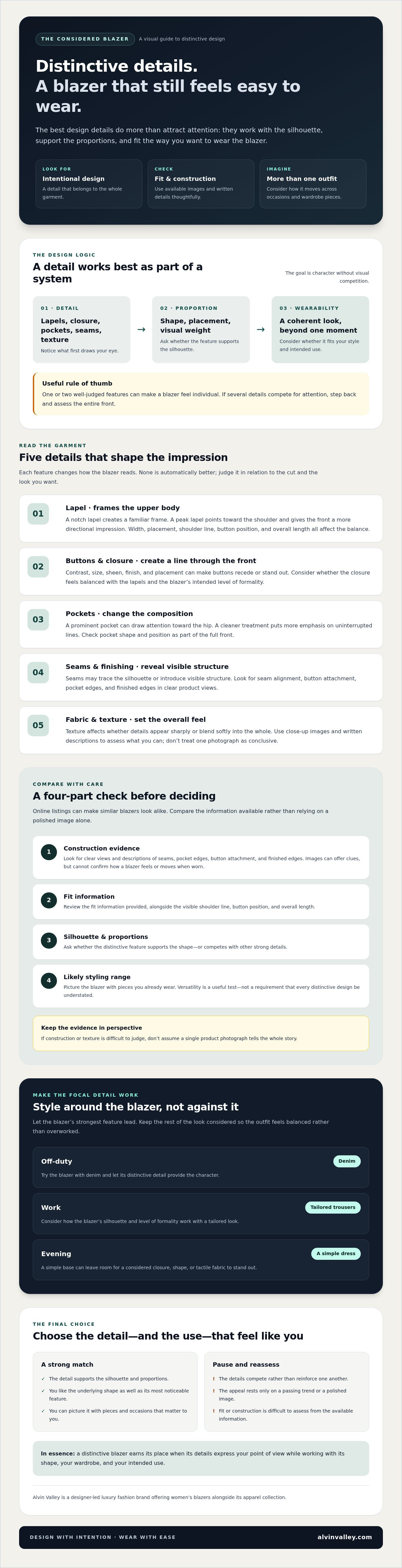
Distinctive details are design choices that shape a blazer’s character. At their best, they work with the garment’s silhouette and proportions to create a coherent impression. A shaped lapel may sharpen a classic outline; a contrasting button may draw the eye to the closure. The detail should feel integral to the design, not added simply to attract attention.
A blazer’s defining details shape its visual character by directing attention, reinforcing its silhouette, and setting its level of formality. One or two well-judged features can make a look feel individual without making it feel overworked. For context on how the garment evolved into a staple of classic attire, explore the history of the blazer.
Which blazer details create a distinctive look?
Use lapel shape, button treatment, pocket design, seams, and fabric texture as evaluation cues. These are general examples, not claims about current Alvin Valley products. Consider how each feature is handled: contrast makes a detail more prominent, scale affects its visual weight, placement guides the eye, and finish influences whether it reads as subtle or striking.
Consider the whole front of the blazer. A strong pocket shape or pronounced lapel may already provide a focal point. Additional contrast or visible seamwork can support that emphasis or compete with it. On product pages, examine close-up images and written descriptions. If construction or texture is difficult to judge, don’t treat a single photograph as conclusive evidence.
How can a blazer feel individual without feeling too trend-led?
Balance a statement detail with a clean silhouette. A distinctive closure or considered texture can feel personal while the overall shape remains easy to wear with different pieces. Details tied to a recognizable trend may be harder to integrate once that look feels less current. Ask whether you’re drawn to the blazer’s underlying shape as well as its most noticeable feature.
Think about repeat wear. Could the blazer work with tailored trousers, denim, or a simple dress without requiring the rest of the outfit to compete? This is a useful test of versatility, not a rule that every distinctive piece must be understated. For more context on the garment’s role and styling potential, read Alvin Valley’s authoritative guide to the blazer. The strongest designer blazers with unique details express individuality through choices that serve both character and wearability.
How Lapels, Buttons, Pockets, and Fabric Shape a Blazer
A blazer’s details work as a visual system. The lapel frames the upper body, the closure creates a line through the front, and pockets and seams add rhythm. Fabric determines whether those elements appear sharply or blend softly into the whole.
Construction details influence a blazer’s character by shaping its lines, directing the eye, and determining how its design reads as a complete garment. When comparing designer blazers with unique details, ask whether each feature belongs to the blazer’s proportions and feels considered alongside the rest of the design.
What do lapel shape and proportion communicate?
A notch lapel has an angled break where the collar meets the lapel, creating a familiar frame. A peak lapel points upward toward the shoulder and draws the eye outward, giving the front a more directional impression. Neither is universally better; the effect depends on the cut and the look you want.
Width and placement matter, too. A broad lapel can carry visual weight across the chest, while a narrower one may make the front feel more restrained. Notice how the lapel relates to the shoulder line, button position, and overall length. Assess the complete garment rather than choosing by lapel alone.
How do buttons, pockets, and seams create visual rhythm?
Buttons can recede into the fabric or stand out through contrast, size, sheen, or finish. Their placement affects where the eye pauses and how the front appears to close. Consider whether a closure feels balanced with the lapels and suits the blazer’s intended level of formality.
Pocket shape and position also change the composition. A prominent pocket can draw attention to the hip; a cleaner treatment puts more emphasis on the front’s uninterrupted lines. Seams may trace the silhouette or introduce visible structure. In product photography, look for clear views of pocket edges, seam alignment, button attachment, and finished edges. These clues can help you assess visible workmanship, though images alone can’t confirm how a blazer feels or moves when worn.
How do fabric and finishing make details feel intentional?
Texture, drape, and surface finish alter how design features register. A textured fabric can make a simple cut feel more expressive; a smoother surface may sharpen the outline of a lapel or seam. Contrast can emphasize a feature, while a close tonal match lets it blend in. Review fabric descriptions alongside photographs, and check fit information to understand what images can’t show about movement and ease.
Inspect lining, seams, buttons, and edges where product images allow. For Alvin Valley, confirm any statement about materials, construction, or fit against the current product page rather than inferring specifics from appearance. To see the brand’s current women’s blazer selection, visit Alvin Valley’s blazer offerings.
How to Compare Designer Blazers with Unique Details
A distinctive feature earns its place when it works with the blazer’s shape and suits how you plan to wear it. Compare the garment as a whole, not just the detail that first catches your eye. This framework helps you assess what product photography and descriptions show, and where you may need more information.
| Detail | Silhouette to assess | Construction evidence to look for | Styling range to consider | Fit information to check |
|---|---|---|---|---|
| Lapel | Does its width and angle relate to the shoulder and front? | Clear images of the collar and lapel edges | Does it suit both polished and relaxed outfits? | How the description explains the cut through the shoulders and chest |
| Closure | Does its placement support the blazer’s lines? | Close-ups showing button finish and fastening details | Can you wear the blazer open, closed, or both? | How the front sits when fastened, if described |
| Pockets and seams | Do their position and scale balance the overall shape? | Visible edges and seam placement in detail views | Do they feel compatible with your usual wardrobe? | Whether the cut offers the ease you want through the body |
| Fabric and texture | Does the surface reinforce or soften the outline? | Fabric description and close-up views, where available | Can the texture work across the occasions you have in mind? | Fabric and fit notes that may clarify drape and structure |
Which details are expressive, functional, or both?
A lapel mainly frames the upper body, while a closure can affect how the front is worn and where the eye rests. Pockets may serve a practical role and add visual weight. Seams can shape the appearance of the silhouette, but their presence alone doesn’t confirm a particular construction method. Even a decorative feature may influence proportion, comfort, or how easily the blazer layers. Treat these as neutral comparison points, not assumptions about Alvin Valley garments.
Ask whether a visible feature complements the blazer’s overall lines or competes with them. A prominent detail may feel balanced when the rest of the design is restrained. If several elements draw attention at once, consider whether that visual energy suits your style and intended use.
What should product pages reveal before you decide?
Look for front, back, and close-up views, then read the fabric, fit, and care information. A description should help clarify the intended shape and fit; size guidance can help you compare your needs with the brand’s stated measurements. Photographs may suggest finish or texture, but don’t treat them as proof of material quality or construction. If a detail matters to your decision and isn’t explained, don’t fill the gap with an assumption.
For additional perspective on fit and tailoring, explore the women’s blazers guide to luxury tailoring. A thoughtful comparison of designer blazers with unique details weighs the feature, the silhouette, and the available product information together.
How to Style a Distinctive Blazer Without Overcomplicating It
Start with the blazer, not the rest of the outfit. Identify its focal detail, whether that’s a strong lapel, contrasting closure, pronounced texture, or another feature. Then let that element lead. Give the defining detail room to register and keep the supporting pieces considered.
This approach keeps designer blazers with unique details expressive without requiring every part of the look to compete. Choose a restrained foundation, then decide whether color, texture, or an accessory should echo the blazer or provide a quieter contrast. You don’t need to match every detail. Deliberate balance is more effective than adding more points of emphasis.
How can you make a statement blazer work for everyday dressing?
Use these simple outfit formulas as starting points, then adapt them to your wardrobe and plans:
- Work: Pair the blazer with a simple top and tailored bottoms. Keep accessories streamlined if the lapel, buttons, or fabric already draws attention.
- Evening: Layer it over a minimal dress or refined top-and-trouser combination. A polished shoe or considered piece of jewelry can shift the mood without crowding the look.
- Off duty: Try it with a clean knit or T-shirt, denim, and understated footwear. This contrast can make a distinctive blazer feel relaxed rather than overly formal.
These are possibilities, not fixed rules. Changing footwear, a bag, or jewelry—such as curated designer pieces from boutiques like La Maison—can move the same blazer between settings. If the garment has a vivid color or tactile surface, keep other textures quieter. If its silhouette is the main statement, a small accessory accent may be enough.
How do proportion and fit affect the finished outfit?
Consider how the blazer sits over the layers you intend to wear. The shoulder line should work with the garment’s stated cut, while sleeve length and hem affect how it meets your top and bottoms. Check the closure, too. If you plan to wear it fastened, review how the product description and images show the front sitting. A lighter layer and a thicker knit may create different proportions beneath the same blazer.
Before ordering, consult the current size and fit guidance on the product page. Look for language describing the intended shape, and compare any available measurements with a garment you already own. For a wider perspective on evaluating a purchase, read the guide to high-end blazers and coats.
To consider a blazer through the lens of silhouette and styling, explore Alvin Valley’s women’s apparel and review the current product details before choosing.
Find a Designer Blazer That Reflects Your Point of View
The right blazer isn’t simply the one with the most noticeable feature. It’s the one whose details, silhouette, and intended use feel coherent with your style. A distinctive closure may appeal to you, but consider whether it works with the blazer’s proportions and the pieces you already wear. Personal appeal matters. So does evidence: separate what product information confirms from what a photograph merely suggests.
Alvin Valley is a designer-led women’s apparel brand with blazers in its assortment. The brand takes its name from designer Alvin Valley, historically known in the fashion industry as the “King of Pants.” That heritage offers context for the label, but it doesn’t confirm any particular blazer material or construction. Evaluate each garment by its current product details.
What makes a blazer feel considered rather than merely decorative?
A considered design brings its elements into balance. The defining detail should relate to the silhouette, while available material descriptions and construction information help you understand the garment. Before deciding, ask yourself: does the feature express something you genuinely like, and can you imagine wearing the blazer with more than one part of your wardrobe? A distinctive choice can feel personal while still belonging in your everyday style.
What should you check before buying a designer blazer online?
Review the current product page as a whole. Clear photographs can show the front, back, and visible details; written information should guide you on material, fit, sizing, and care. If a detail matters to your decision but isn’t confirmed in the description, don’t assume. Check the product page for current availability and the brand’s delivery and returns terms before placing an order.
These checks make it easier to choose among designer blazers with unique details without mistaking a striking image for a complete picture. Alvin Valley’s women’s apparel reflects a designer-led brand founded by Alvin Valley. Explore Alvin Valley to review the current blazer selection and its product-specific details, fit information, and availability.
Choose a Blazer That Feels Like Your Own
A distinctive blazer earns its place through more than a striking feature. Its details should feel coherent with the silhouette, suit the way you plan to wear it, and express something true to your style. Before deciding, weigh the overall design alongside the fit, material, and construction information confirmed on the product page.
Alvin Valley is a designer-led luxury women’s apparel brand with blazers in its assortment. The brand carries the name of its founder, historically known in the fashion industry as the “King of Pants.”
Review each blazer’s details, fit information, and availability before choosing. Explore Alvin Valley’s current blazer selection to find a piece that reflects your point of view.
Frequently Asked Questions
What details make a blazer look unique?
A blazer can look distinctive through its lapel shape, button treatment, pocket design, seam placement, or fabric texture. Contrast, scale, finish, and position affect how strongly each feature reads. A tonal button may blend into the front, while a contrasting closure draws the eye. The most coherent designs make these details work with the blazer’s silhouette rather than relying on decoration alone.
How can I style a blazer with statement details?
Let the blazer’s most noticeable feature guide the rest of your outfit. Pair a striking lapel or textured surface with simpler pieces, such as a plain top and streamlined bottoms. For evening, refined accessories can elevate the look; for off-duty dressing, denim and understated footwear can make it feel more relaxed. Treat these as starting points, then adapt them to your taste and plans.
Are distinctive designer blazers suitable for work?
Yes, a distinctive blazer can work for the office if its design and styling suit your workplace. A clean silhouette with one noticeable detail, such as a considered lapel or closure, can feel polished without appearing overly formal. Pair it with restrained separates and check your workplace’s dress expectations. For more creative settings, a bolder texture or shape may feel appropriate, especially when the rest of the outfit is balanced.
How do I choose a blazer with details that will not date quickly?
What should I check in blazer product photos before buying online?
Look for front and back views, plus close-ups of the lapels, buttons, pockets, seams, and fabric surface. Use the images together with written material and fit descriptions; photographs alone can’t confirm construction or how a fabric feels. Check whether the blazer is shown open and fastened, if possible, to understand its lines in both positions. Compare the images with size guidance before deciding.
Can blazer details affect fit or comfort?
Yes. A closure can affect how the front sits when fastened, while pocket placement, seams, and fabric structure may influence how the blazer feels as you move or layer. Check the product’s fit description and size guidance, especially if you plan to wear a thicker layer underneath. Photos can help you assess visible proportions, but they can’t establish comfort. Use confirmed product information rather than assumptions.
How do I know whether a designer blazer is versatile?
Consider whether it works with pieces you already wear and across the settings you have in mind. Picture it with tailored separates, denim, or a simple dress, and think about whether changing shoes or accessories could shift its mood. A versatile blazer doesn’t need to be plain; its defining detail should complement the silhouette without limiting every outfit to one specific look.