

An ill-fitting blazer is not a fashion choice. It is a missed opportunity. You understand that true luxury lies in the architecture of the garment, yet finding that precision is often elusive. You have likely faced the struggle of a jacket that accommodates your shoulders but swallows your waist. Perhaps you've felt the restriction of a sleeve that lacks the necessary range of motion. Knowing how to choose the right blazer fit is the difference between merely wearing a garment and truly commanding a room.
We agree that your wardrobe should empower you, not hide you. This guide promises to help you master the nuances of sartorial precision so you can select pieces that transform both your silhouette and your confidence. From the legendary tailoring that defined the 1990s New York scene to our modern collections, Alvin Valley remains committed to the power of an impeccable cut. We will examine the definitive markers of quality, including the wrist bone rule for luxury sleeves and the exact placement of a perfect shoulder seam. Whether you choose the sharp lines of our $1,390 Peak Lapel Blazer or a more relaxed silhouette, you will gain the expertise to invest with absolute certainty.
Key Takeaways
- Identify the shoulder seam as your non-negotiable anchor. A precise fit here ensures the garment maintains its architectural integrity.
- Master how to choose the right blazer fit by applying the wrist bone rule. This technical detail ensures your sleeves and shirt cuffs are perfectly framed.
- Balance your proportions with confidence. Learn to distinguish between a cinched hourglass silhouette and the structured elegance of a boxy cut.
- Evaluate how fabric weights dictate the drape. Understand why materials like wool crepe are essential for achieving a smooth, impeccable break.
- Embrace a legacy of excellence. Our tailoring standards bridge the energy of 1990s New York with the demands of a high-powered modern wardrobe.
The Architecture of the Shoulder: Why Fit Begins at the Seam
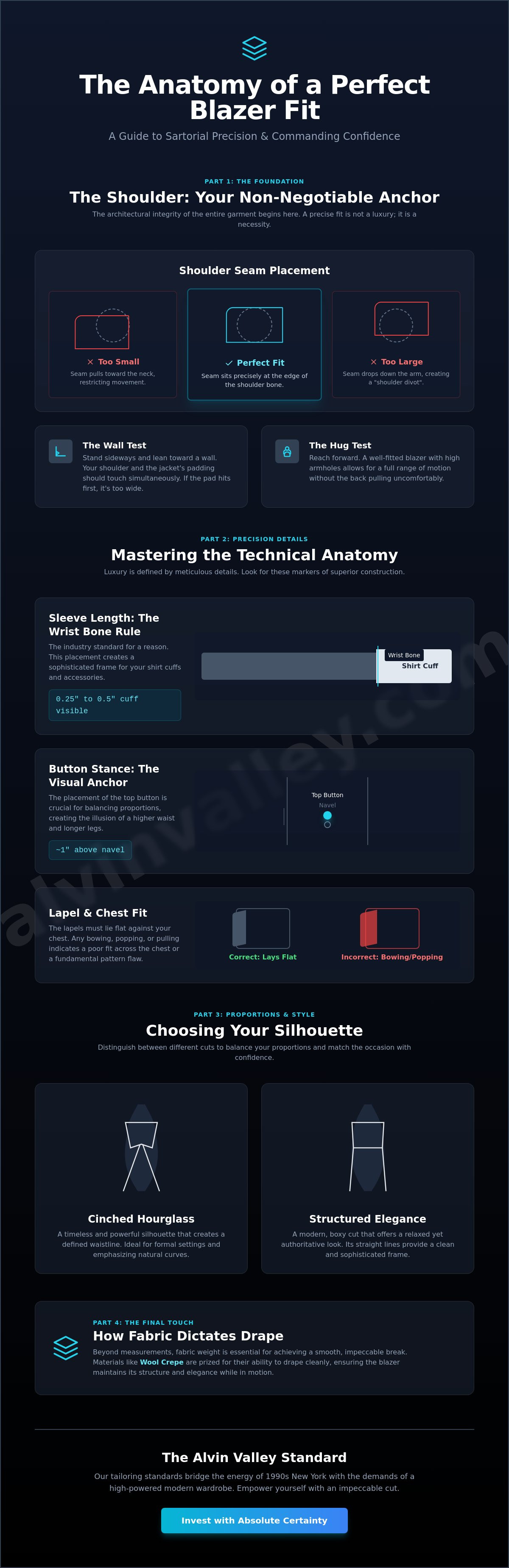
The shoulder is the non-negotiable anchor of the entire garment. It is the architectural foundation. If the shoulder fails, the silhouette collapses. To understand what is a blazer in its most refined form, one must look at the seam. This is the primary starting point for anyone learning how to choose the right blazer fit. Precision here dictates how the fabric will drape over the chest and back.
A perfect fit begins exactly where your natural shoulder ends. In luxury tailoring, the seam should sit precisely at the edge of your shoulder bone. If the seam drops down the arm, the jacket is too large. If it pulls toward the neck, it is too small. You should also watch for the "shoulder divot." This unsightly hollow occurs when the shoulder pad extends beyond your frame, causing the fabric to collapse inward. It is a hallmark of poor construction and an immediate sign that the jacket is poorly fitted.
Try the "wall test" in the dressing room. Stand sideways next to a wall and lean in slowly. Your shoulder and the jacket's padding should touch the wall simultaneously. If the pad strikes first and bunches up, the width is excessive. This simple check ensures your frame isn't swallowed by the garment. Luxury is found in the details; the shoulder is the detail that matters most.
Natural vs. Padded Shoulders
Padding serves a specific purpose in power dressing. It creates a sharp, authoritative line that commands attention. A meticulous shoulder seam prevents fabric from bunching at the upper arm, ensuring a clean transition from the neck to the sleeve. This level of detail is rooted in the Alvin Valley heritage. Our history in the 1990s New York fashion scene established a standard for precise upper-body tailoring. Whether you prefer a soft, natural slope or a structured, iconic silhouette, the seam must remain impeccable.
The 'Hug Test' for Mobility
Range of motion shouldn't come at the expense of style. Perform the "hug test" by reaching forward as if to embrace someone. The back shouldn't pull uncomfortably across your shoulder blades. A high armhole is a primary marker of superior luxury construction. It allows for greater mobility while keeping the body of the jacket close to your frame. When you extend your arms, the lines should remain crisp. Restrictive fits or excessive pulling suggest a lack of technical mastery in the pattern making process. Confidence requires comfort; an impeccable fit provides both.
The Technical Anatomy of an Impeccable Blazer Fit
Precision is the hallmark of luxury. Once you have mastered the shoulder, the rest of the garment must follow suit. Understanding how to choose the right blazer fit requires a meticulous eye for the technical anatomy of the torso and sleeves. A blazer that fits perfectly should feel like a second skin. It must move with you. It should never feel like a constraint.
Sleeve length is a frequent point of failure in off-the-rack garments. The wrist bone rule remains the industry standard for a reason. The sleeve should end exactly where the thumb meets the wrist. This specific placement allows for approximately 0.25 to 0.5 inches of a shirt cuff to remain visible. It is a subtle marker of sartorial sophistication. For those exploring blazer styles for every body shape, remember that sleeve length can visually elongate or shorten your frame depending on where the break occurs.
The button stance acts as the visual anchor for your waist. In a well-constructed jacket, the top button sits about one inch above the navel. This placement creates the illusion of a higher waist and longer legs. If the button sits too low, the silhouette feels heavy. If it is too high, the proportions become disjointed. The lapel must also lay flat against your chest. Any bowing or popping indicates the chest is too tight. Even the finest fabric cannot hide a fundamental pattern flaw in the lapel construction.
Sleeve Length and the 'Crown'
The 'Crown' refers to the slight, structured lift where the sleeve meets the shoulder seam. It provides a polished, professional finish that defines the upper body. Unlike generic designs, women's blazers require specific tapering through the forearm to avoid a bulky or boxy appearance. This ensures the sleeve follows the natural curve of the arm. While standard lengths are timeless, bracelet-length sleeves offer a sharp alternative for showcasing jewelry. This level of detail is what separates a simple garment from a true investment piece.
The Button Test
The button test is a simple diagnostic tool for the dressing room. When the jacket is fastened, you should be able to slide one finger between the button and your stomach comfortably. If you see a prominent 'X' crease forming in the fabric, the jacket is too tight. This tension distorts the silhouette and ruins the drape of the wool. A button should secure the garment, not hold it together under duress. To experience this balance of form and function, consider the impeccable tailoring of our signature blazers.
Proportions and Silhouettes: Matching the Cut to the Occasion
Silhouette is a statement of intent. Once the technical foundations of the shoulder and sleeve are secure, the choice of cut defines your presence. Deciding how to choose the right blazer fit often comes down to the specific aesthetic you wish to project. A tailored fit speaks to traditional authority; the boxy silhouette suggests a modern, effortless cool. Both require a meticulous understanding of proportion to ensure the garment works for your frame rather than against it. Precision in the cut is what transforms a simple jacket into a piece of legacy tailoring.
The tailored blazer remains the gold standard for high-status dressing. It creates an iconic hourglass shape by cinching slightly at the natural waist. This cut emphasizes the transition from the shoulder to the hip, providing a sharp, composed look that never fades. In contrast, the boxy blazer offers a more architectural approach. It relies on straight lines and a relaxed torso to create a sense of ease. However, the length of the jacket is just as critical as its width. A cropped jacket elongates the leg line. A longline blazer extending to the mid-thigh creates a more grounded and elongated silhouette that feels worldly and chic.
The Boxy Blazer Masterclass
There is a vast difference between a jacket that is oversized and one that is simply too big. An intentional oversized fit still respects the rules of the shoulder. The seam must remain aligned with your frame even if the body of the jacket is voluminous. To master this look, you must balance the proportions. We recommend styling a structured, boxy blazer with our wide leg jeans. This combination maintains a sense of deliberate style while preventing the fabric from overwhelming your frame. It's a modern look that feels both storied and contemporary.
Peak Lapels and Power
The peak lapel is a tool of visual psychology. Its upward-pointing edges draw the eye toward the shoulders, creating an illusion of height and dominance. It is the preferred choice for high-stakes boardrooms and evening events. Conversely, the notch lapel is more understated and versatile for daily wear. Your lapel width should always correspond to your shoulder proportions. A lapel that is too narrow on a broad frame looks disjointed. One that is too wide can feel dated. Choose the peak lapel when you want to command the room with a sense of sophisticated authority. It is an impeccable choice for the modern, powerful woman.
Beyond Measurements: How Fabric and Drape Dictate Fit
Fabric is the soul of the garment. Measurements provide the frame, but the material dictates the life of the piece. When considering how to choose the right blazer fit, you must look beyond the tape measure. A heavy wool crepe behaves differently than a lightweight linen. Wool crepe offers a structured "break" that maintains the jacket's architectural integrity throughout a 12-hour day. Linen, while breathable, lacks this recovery. It softens and creases; this fundamentally alters the silhouette by mid-afternoon. High-quality fabrics possess a memory. They return to their original form after movement. This resilience is a primary marker of high-end women's blazers and coats.
The lining is equally critical. It is the silent partner of the outer shell. A high-grade Bemberg or silk lining ensures the blazer glides over your base layers. It prevents the fabric from catching on a knit top or silk blouse. This creates a smooth, impeccable silhouette that remains undisturbed as you move. Without a proper lining, even the most expensive wool will bunch and pull. The interior is where the true fit is secured.
The Role of Interior Construction
Construction defines longevity. A canvassed jacket uses a layer of horsehair or wool between the fabric and lining. This layer is not glued. It is stitched. Over time, the canvas molds to your specific body shape. It creates a personalized fit that improves with every wear. Fused jackets rely on glue. They are stiff; they eventually bubble. Alvin Valley utilizes traditional techniques to create a lasting legacy fit. Our shoulder pads and chest pieces are meticulously placed. They provide a permanent structure that survives the trends of the season.
Seasonal Fabric Selection
Wool is the ultimate year-round choice. It offers natural stretch and exceptional breathability. For the modern professional, a wool-blend blazer is a strategic investment. It resists wrinkles. It holds its shape. Silk and lighter blends present specific fit challenges. They are fluid; they reveal every line of the body. If you choose a lighter fabric, the tailoring must be even more precise. Fabric weight is the secret to a blazer that looks as sharp at a 7:00 PM dinner as it did at a 9:00 AM briefing. To experience the pinnacle of fabric selection and drape, shop our latest collection of iconic blazers.
The Alvin Valley Standard: Elevating the Power Blazer
Alvin Valley is widely recognized as "The King of Pants." This title is a bold signature of our category dominance. However, our pursuit of sartorial excellence does not end at the waistline. We have transitioned into the master of the blazer. This evolution was a natural progression. A perfectly tailored trouser demands an equally impeccable jacket to complete the narrative of power. Our philosophy centers on meticulous tailoring for the modern, powerful woman. We do not chase fleeting trends. We create a high-status lifestyle through silhouette and substance.
A foundational wardrobe is a strategic asset. It begins with the jacket. The blazer is the most versatile tool in your sartorial arsenal. It anchors your entire look. It bridges the gap between a casual ballet knit top and a high-stakes boardroom presentation. When you master how to choose the right blazer fit, you unlock a level of confidence that is palpable. This is the Alvin Valley standard. We provide the architecture of confidence for women who command the room.
Before finalizing your next acquisition, consult this final checklist. These are the three non-negotiable signs your blazer is a true investment piece:
- The shoulder seam remains razor-sharp. It must sit at the natural edge of your frame without collapsing or creating a divot.
- The fabric recovery is instantaneous. High-end wool should resist deep creases even after a long day of movement.
- The internal construction is felt. A true luxury piece uses a canvas that molds to your body over time, creating a personalized fit.
The Legacy of the Perfect Fit
Our New York heritage informs every meticulous stitch. We carry the energy of the 1990s fashion scene into every contemporary design. This storied history is the bridge to a functional future. A perfectly fitted blazer is the ultimate wardrobe investment for 2026. It is more than a garment; it is a transformation. It is an essential component of a high-status lifestyle. Understanding how to choose the right blazer fit ensures your wardrobe remains a reflection of your personal legacy.
Investing in Your Silhouette
Iconic silhouettes always outlast seasonal fads. Our collection is curated for those who value technical superiority and aesthetic refinement. Whether you require a cinched hourglass shape or a structured longline frame, the quality remains absolute. We invite you to experience this precision firsthand. Do not settle for the compromises of mass-market tailoring. Choose the expert craftsmanship that has defined our brand for decades. Discover the Impeccable Fit of Alvin Valley Blazers.
Master Your Sartorial Legacy
Precision is not an option; it is a requirement. You now possess the technical vocabulary to evaluate every seam and stitch. From the non-negotiable anchor of the shoulder to the specific visibility of the shirt cuff, excellence is found in the details. Knowing how to choose the right blazer fit transforms a garment into a definitive tool of influence. It is the difference between wearing a jacket and commanding a room.
Alvin Valley brings the energy of the 1990s New York fashion scene to the high-powered modern wardrobe. As the "King of Pants," our founder applies the same meticulous standards to the upper body. These are iconic silhouettes designed for longevity and highlighted in prestigious luxury fashion journals. Every piece reflects a legacy of meticulous New York tailoring that refuses to compromise on form or function. We prioritize substance over fleeting trends.
Your silhouette should be as powerful as your ambitions. Do not settle for the limitations of mass-market construction. Choose the architecture that supports your confidence and reflects your status. Shop the Alvin Valley Blazer Collection for an Impeccable Fit. Step into a future defined by sartorial excellence.
Frequently Asked Questions
How do I know if my blazer is too small in the shoulders?
A blazer is too small in the shoulders if the seam sits closer to your neck than the edge of your shoulder bone. You'll also notice a distinct pulling across the upper back when you cross your arms. This restriction ruins the drape of the fabric. If the fabric bunches upward at the collar, the width is insufficient. Precision in the shoulder is the first step in learning how to choose the right blazer fit.
Should a blazer be able to close comfortably even if I plan to wear it open?
Yes, a blazer must close comfortably to maintain its architectural integrity. Even if you prefer an open, effortless look, the garment's proportions are designed based on the fastened button. If it doesn't close, the lapels will likely bow or pull. This tension distorts the silhouette. A jacket that fastens easily ensures the lines remain clean and authoritative regardless of how you style it.
What is the difference between a boyfriend fit and a poorly fitted blazer?
The difference lies in the shoulder construction. A boyfriend fit is intentionally voluminous in the torso but retains a sharp, correctly placed shoulder seam. A poorly fitted blazer looks accidental because the shoulders drop down the arm, creating a sloppy profile. True luxury is defined by this intentionality. Mastering how to choose the right blazer fit means recognizing that oversized never means ill-fitting at the anchor points.
How long should the sleeves be on a luxury women's blazer?
Luxury sleeves should end exactly at the hinge of your wrist. This length provides a polished frame for your hands and allows for the visibility of a shirt cuff. If the sleeve extends to the palm, it looks unfinished. If it sits too high, it appears shrunken. This specific placement is a hallmark of meticulous New York tailoring. It ensures the garment looks custom-made for your frame.
Can a blazer that is too big in the waist be tailored?
A blazer that is too large in the waist is often an easy fix for a skilled tailor. You can typically take in the side seams or add darts to create a more defined hourglass shape. However, you shouldn't attempt to reduce the waist by more than two full sizes. Excessive tapering can throw off the pocket placement and the overall balance of the jacket. Start with the correct shoulder width first.
Why does my blazer lapel gap or bow when I button it?
Lapping or bowing occurs when the chest of the jacket is too narrow for your frame. When you fasten the button, the tension forces the lapels to pop outward instead of laying flat. This is a common issue for women with broader chests or athletic builds. It indicates that the garment's internal structure is under duress. To fix this, you'll likely need to size up and then tailor the waist for a precise finish.
Is it better to size up or down when buying a designer blazer?
It is always better to size up when purchasing a designer blazer. A master tailor can easily remove excess fabric from the waist or sleeves to create your perfect silhouette. Adding fabric to a jacket that is too small is nearly impossible and often leaves visible marks. Prioritize the fit of the shoulders and chest above all else. If those areas fit, the rest can be refined to your liking.
What is the 'wrist bone rule' for sleeve length?
The wrist bone rule states that the sleeve should terminate exactly where your thumb meets your wrist. This technical standard ensures the jacket doesn't swallow your hands or look overly restrictive. It is the definitive marker of a well-proportioned sleeve in luxury tailoring. Following this rule allows for the classic 0.25-inch reveal of a blouse cuff. This detail is essential for a high-status, professional appearance.