

A high price tag is no longer a guarantee of excellence. In a market where private equity often prioritizes margins over artistry, the designer label has become a distraction from the actual integrity of the garment. You likely know the frustration of denim that loses its shape by noon or thin fabric that feels more like a legging than a luxury staple. Learning how to spot high quality jeans is the only way to ensure your wardrobe reflects your standards rather than a brand's marketing budget.
True luxury is an architectural achievement. It requires a mastery of material science and precision tailoring to create a silhouette that remains permanent. This guide empowers you to identify investment-grade denim by evaluating fabric weight, the scarcity of Supima cotton, and the technical markers of superior construction. We will explore the shift toward clean, non-toxic washes and the specific silhouettes, like the Doyenne Indigo Wash Jeans and The Beyond Wide Leg Jeans, that define the 2026 sartorial landscape. Prepare to look past the branding and master the nuances of denim that commands the room and lasts a decade.
Key Takeaways
- Identify why long-staple cotton is the non-negotiable foundation for denim that maintains its silhouette over time.
- Learn how to spot high quality jeans by inspecting the "Clean Inside" rule and evaluating stitch density for structural longevity.
- Understand how precision grain line alignment prevents the twisting and sagging common in mass-market denim.
- Distinguish between industrial mass-production and artisanal washes that utilize multiple indigo dip cycles for superior depth.
- Master the financial logic of cost-per-wear to justify investing in high-status pieces that serve as a permanent wardrobe foundation.
The Material Foundation: Decoding Premium Denim Fabrics
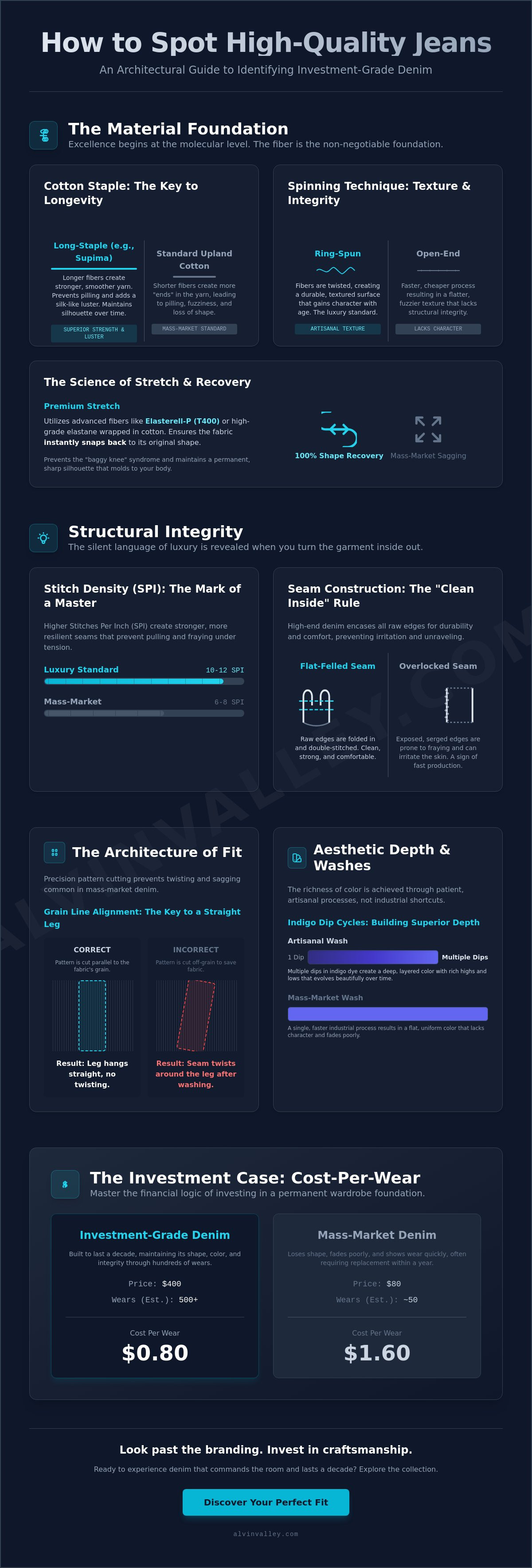
Luxury denim is an architectural achievement that begins at the molecular level. To understand how to spot high quality jeans, you must first look past the silhouette and examine the fiber. The foundation of any investment-grade garment is long-staple cotton, specifically varieties like Supima. With Supima production decreasing to approximately 330,000 bales in recent seasons, its scarcity has cemented its status as the gold standard for high-end textiles. At a market price of roughly $1.75 per pound, this fiber represents a significant investment in durability and aesthetic depth compared to standard upland cotton.
The technical distinction lies in the spinning process. Premium labels utilize ring-spun denim, which involves twisting the fibers to create a slubby, textured surface that gains character with age. Cheaper alternatives rely on open-end spinning. This mass-production method is faster but results in a flatter, fuzzier texture that lacks structural integrity. Weight also plays a role, though "heavy" does not inherently mean superior. While a 14-ounce denim offers a classic, substantial feel, a high-density 12-ounce weave can provide equal durability with a more refined drape suitable for a metropolitan wardrobe.
Cotton Staples and Weaving Techniques
Long-staple fibers are essential because they create fewer "ends" in the yarn. This prevents pilling and gives the fabric a natural, silk-like luster that survives hundreds of washes. The history of denim fabric shows a transition from rugged utility to the sophisticated weaves we see in pieces like the Doyenne Indigo Wash Jeans. When testing for quality, use the "hand-feel" test. Luxury denim should feel cool and substantial against the skin, never fuzzy or synthetic. Most premium jeans utilize a right-hand twill for a tighter, more defined look, while a left-hand twill offers a softer, more compliant fit often found in high-end comfort styles.
The Truth About Stretch and Shape Retention
Modern luxury demands utility without sacrificing form. While 100% cotton remains a legacy choice for purists, the most advanced 2026 designs incorporate "premium stretch." This is not simple elasticity; it is a science of recovery. Superior blends, such as those found in the Social Climber Jean, often utilize Elasterell-p (T400) or high-grade elastane encased in cotton. This technology prevents "baggy knee" syndrome by ensuring the fabric snaps back to its original shape instantly. High-quality stretch denim feels firm and restrictive upon the first wear, gradually molding to your body while maintaining a permanent, sharp silhouette that commands the room.
Structural Integrity: The Invisible Markers of Quality
Construction is the silent language of luxury. While fabric provides the aesthetic, the architecture of the seam determines the lifespan of the garment. Understanding how to spot high quality jeans requires turning the piece inside out. Luxury denim reveals its true nature in the places the casual observer never sees. Precision is the baseline. Excellence is the result.
Stitch density is the first indicator of a master's hand. In the world of premium denim, a higher number of stitches per inch (SPI) translates to a more resilient seam. Mass-market brands often utilize long, loose stitches to move garments through the factory faster. This speed comes at a cost. Loose stitching creates weak points that pull apart under the tension of daily wear. A luxury jean typically features 10 to 12 stitches per inch, creating a tight, uniform bond that prevents fraying. While the raw fiber must meet official cotton standards for strength and length, the way those fibers are joined determines the ultimate durability of the piece.
Seam Construction and Finishing
The "Clean Inside" rule is the ultimate test of sartorial integrity. High-end denim utilizes flat-felled seams, where the raw edges of the fabric are folded into each other and double-stitched. This technique encases the edge entirely, preventing irritation and ensuring the seam won't unravel. You should also look for chain stitching on the hem. This heritage technique uses a specialized machine to create a series of looped stitches that allow the denim to shrink and expand naturally. When examining the structural soul of a piece like The Beyond Wide Leg Jeans, the precision of the felled seam is immediately evident. It ensures the garment hangs straight, preventing the dreaded "leg twist" that occurs when seams are cut off-grain or sewn with uneven tension.
Hardware and Fastenings
Hardware should be a signature, not an afterthought. Luxury denim uses substantial, weight-bearing components. A high-grade YKK Excella zipper is a hallmark of quality. It offers a smooth, fluid glide that feels distinct from the notchiness of standard hardware. Rivets and buttons must be made of solid brass or copper. Plated plastic is a red flag. These components should be hand-set or reinforced with bar tacks, which are tight rows of zigzag stitching placed at high-stress points like pocket corners. This level of technical precision ensures that the hardware remains secure for a decade of wear. It is this commitment to the "invisible" that separates a fleeting trend from a permanent wardrobe foundation.
The Architecture of Fit: How Pattern Cutting Defines Luxury
High-status denim is more than a simple garment. It is a structure. While inferior brands rely on the stretch of the fabric to mask poor tailoring, luxury denim utilizes an architectural approach to define the body. When you master how to spot high quality jeans, you look first at the balance of the leg and the precision of the cut. A master pattern acts as the soul of the jean, dictating how the fabric interacts with gravity and movement. This is the essence of the "King of Pants" philosophy, where every curve is calculated to provide a transformative silhouette that commands the room.
Silhouette longevity is the true test of a luxury investment. You've likely experienced jeans that "grow" two sizes by mid-afternoon, leaving you with a sagging waist and baggy knees. This failure is rarely just a fabric issue; it is a failure of the pattern. A well-engineered jean, such as the Social Climber Jean, is cut to distribute tension evenly across the seams. This reduces the mechanical stress on the fibers, ensuring the garment retains its intended form from the first meeting of the day to the final cocktail of the evening.
The Importance of the Back Yoke
The rear view of a jean is defined by the yoke, the triangular panel sititng below the waistband. In luxury tailoring, a deep V-shaped yoke is a non-negotiable marker of quality. This specific geometry creates a visual lift and a more contoured fit. Shallow or straight yokes are easier to mass-produce but result in a flat, uninspired silhouette. Pocket placement is equally critical. High-end designers position pockets with mathematical precision to complement the yoke's angle, ensuring a balanced and flattering rear view that remains consistent even as the fabric relaxes slightly with wear.
Pattern Precision and the Grain Line
Precision in the cutting room is what prevents the dreaded "leg twist," where the side seam migrates toward the front of your foot. This occurs when manufacturers "nest" patterns too closely to save fabric, cutting pieces slightly off-grain. Luxury denim requires each leg to be cut in perfect alignment with the grain line of the weave. This attention to detail is a hallmark of Alvin Valley's luxury tailoring, where the integrity of the drape is prioritized over manufacturing speed. By respecting the natural orientation of the fibers, the designer ensures the jean hangs perfectly straight, providing a clean, vertical line that elongates the leg and reinforces the wearer's confidence.
Artisanal Washes and Aesthetic Depth
The finish of a garment is its final statement. It is where raw material meets the artist's eye. In the mass market, washing is a chemical shortcut to mimic age. In luxury, it is a deliberate, multi-stage process that adds dimension without compromising the fiber. Understanding how to spot high quality jeans requires an eye for tonal complexity. A premium wash should look as if it has grown from the fabric, not as if it has been painted onto it. By 2026, the definition of luxury has moved away from heavy distressing toward clean, refined finishes that emphasize the purity of the indigo.
Aesthetic aging is the hallmark of an investment piece. High-quality denim develops character rather than simply wearing out. While lower-tier fabrics thin and tear, luxury denim develops high-contrast fades and soft texture in high-friction areas. This evolution is a testament to the material's integrity. It is the difference between a garment that survives a season and one that becomes a legacy piece in a high-powered wardrobe. True luxury is about the slow reveal of excellence over time.
The Indigo Saturation Process
Depth of color is achieved through repetition. Luxury indigo requires multiple dip cycles to ensure the dye penetrates deep into the ring-spun yarn. This creates the multi-dimensional tones found in high-end dark wash denim. Cheap alternatives often look "flat" because they utilize fewer dips and chemical shortcuts. You can also test for quality by checking for crocking. While some indigo transfer is natural, premium washes are stabilized to ensure the color stays on the jean and not on your upholstery. In 2026, the market has also shifted toward non-toxic fashion, prioritizing GOTS-certified dyes and water-saving ozone technology to achieve deep, saturated blacks and blues without harmful chemical residues.
Authentic Distressing Techniques
Spotting the "human touch" is essential when evaluating a wash. Authentic whiskering and honeycombs should align with your natural anatomy. On luxury pieces, these are often created through a "dry process" involving hand-sanding with specialized tools. This creates soft, graduated transitions. Conversely, lower-tier denim often relies on repetitive laser patterns. These look artificial and identical across every pair on the rack. When you examine a piece like the Doyenne Jean dark wash, look for the subtle irregularities that indicate artisanal finishing. These nuances provide a sense of storied heritage that mass production can never replicate.
Experience the difference of a hand-finished silhouette. Shop the Doyenne Indigo Wash Jeans today.
The Investment Case: Why Quality Denim is the Ultimate Wardrobe Foundation
Luxury is not an indulgence. It is a strategy. In a culture of fleeting trends, the garment has become a disposable commodity. True sartorial authority requires a rejection of this cycle. Once you have mastered how to spot high quality jeans, the financial logic of the investment becomes undeniable. You aren't simply buying denim. You are acquiring a permanent silhouette that serves as the foundation for a high-powered lifestyle. This is the final step in transition from a consumer to a curator of excellence.
The psychological impact of a perfect fit cannot be overstated. In professional environments, your attire is your first silent negotiation. A jean that retains its architectural shape through a twelve-hour day provides a level of composure that mass-market alternatives cannot match. When you understand how to spot high quality jeans, you choose pieces that offer a transformative experience. You move with more confidence. You command the room with an effortless elegance that feels both storied and contemporary.
The ROI of Sartorial Excellence
The math of luxury is found in the cost-per-wear. A premium jean, such as the Doyenne Jean, is engineered to endure for a decade. While a disposable pair may fail after a dozen washes, investment-grade denim gains character with age. High-quality pieces replace the need for an overflowing closet of mediocre options. The versatility of luxury women's wide leg jeans allows for a seamless transition from a high-stakes morning meeting to an evening gallery opening. By investing in a consistent silhouette, you define a signature style that transcends the seasonal noise of the fashion industry.
Caring for Your Luxury Denim
Preserving your investment requires a "less is more" philosophy. Luxury denim is resilient, but it demands respect. To maintain the structural integrity of your pieces, follow these essential care protocols:
- Wash sparingly: Spot clean when possible. Frequent laundering breaks down the long-staple cotton fibers and accelerates indigo loss.
- Cold water only: When a full wash is necessary, use cold water and a specialized denim detergent to preserve the depth of the artisanal wash.
- Air dry always: Never subject high-recovery stretch blends, like those in the Social Climber Jean, to the heat of a dryer. Air-drying is the only way to ensure the fibers retain their "snap-back" memory.
- Storage matters: Fold your jeans along the original crease or hang them by the belt loops. This maintains the architectural shape and prevents unnecessary fabric stress.
By following these technical care standards, you ensure your denim remains a cornerstone of your wardrobe for years to come. Luxury is a legacy. It is time to wear yours.
Master the Art of Permanent Style
The distinction between a seasonal trend and a wardrobe foundation lies in the technical details. You now possess the expertise to evaluate long-staple cotton, verify structural integrity through stitch density, and identify the architectural precision of a master-cut pattern. Mastering how to spot high quality jeans is more than a shopping skill. It is an act of sartorial curation. By prioritizing material science and silhouette longevity, you ensure your wardrobe reflects a standard of excellence that never wavers.
True luxury requires a partner who shares your commitment to substance. For over two decades, the world's most powerful women have turned to a single source for their definitive silhouette. Designed by the 'King of Pants' himself, our garments utilize proprietary silhouette-retention technology to maintain their form through the most demanding schedules. It is time to elevate your expectations. Discover the King of Pants' signature denim collection at Alvin Valley and secure a piece of fashion history. Your legacy begins with the perfect fit.
Frequently Asked Questions
What is the most important thing to look for when buying high-quality jeans?
Fiber length and pattern alignment are the primary indicators of excellence. Look for long-staple cotton that feels cool and substantial rather than fuzzy. Understanding how to spot high quality jeans requires checking that the side seams don't twist toward the front, which indicates a precision-cut grain line.
Do high-quality jeans always have to be 100% cotton?
No. While 100% cotton is a legacy standard, modern luxury often utilizes high-performance blends. Fibers like Elasterell-p provide essential recovery for the modern woman's wardrobe. These technical additions ensure a permanent silhouette that doesn't sag, offering a functional future for traditional denim.
How can I tell if jeans will stretch out and lose their shape?
Perform a manual recovery test by stretching the fabric firmly. A high-quality garment like the Social Climber Jean will snap back to its original form instantly. If the denim feels thin or lacks resistance, it's likely a low-recovery fabric that will lose its architectural shape within hours.
What is selvedge denim, and is it always better than non-selvedge?
Selvedge denim is woven on traditional shuttle looms, creating a finished edge often visible at the cuff. It signals a commitment to heritage and slow fashion. However, non-selvedge denim is often superior for complex, tailored silhouettes that require more intricate pattern cutting than a straight shuttle loom allows.
Why are some designer jeans so much more expensive than others?
Price often reflects brand markup and private equity influence rather than material cost. Some premium labels maintain a 570% markup on production. True luxury justifies its position through artisanal, multi-dip indigo washes and proprietary fit technology that mass-market brands cannot replicate. Knowing how to spot high quality jeans helps you distinguish between marketing and true craftsmanship.
How many stitches per inch should high-quality jeans have?
Aim for a density of 10 to 12 stitches per inch. This creates a tight, resilient seam that prevents fraying and structural failure. Mass-market manufacturers often use fewer, longer stitches to increase factory speed, which results in a weaker garment that pulls apart under tension.
Can you tell the quality of denim just by the weight of the fabric?
Fabric weight is a preference, not a definitive quality marker. While a 14-ounce denim feels substantial, a 12-ounce weave can be equally durable if it utilizes high-density ring-spun yarns. Quality is found in the tightness of the weave and the scarcity of the cotton staples used.
Is it worth buying 'raw' denim for a luxury women's wardrobe?
Raw denim is an investment in a personal break-in process that takes months. For a high-powered metropolitan wardrobe, a refined, pre-washed indigo is often the superior choice. It provides the same aesthetic depth and high-status silhouette with immediate comfort and color stability.