

A finer knit isn’t automatically the better one. Luxury fine gauge knitwear earns its place through the balance of yarn, construction, fit, and how well it works with the clothes you already own. Gauge describes the fineness of the knit, not the quality of its fiber or craftsmanship.
A refined surface can look impeccable in a photograph and still leave important questions unanswered. Will the fabric drape cleanly? Does the garment hold its shape? What care does it require? These are practical considerations when choosing a piece you expect to wear often.
This guide explains what gauge does and doesn’t tell you, how yarn and construction affect a knit, and what to check in fit, finishing, and care guidance. You’ll also find a practical way to assess a knit when shopping online. The aim is to choose a versatile piece that fits your wardrobe and your preferences, rather than relying on a label or image alone.
Key Takeaways
- Understand what fine gauge describes, and why it doesn’t guarantee fiber quality or luxury.
- Learn how yarn, knitting structure, and finishing contribute to a knit’s appearance and feel.
- Use product details, fit notes, care instructions, and imagery to assess luxury fine gauge knitwear before buying.
- Follow the garment’s own care label, and seek professional advice when instructions are unclear.
- Apply a clear checklist to Alvin Valley knitwear, including the Ballet Knit Top, without assuming unverified product details.
What Does Luxury Fine-Gauge Knitwear Mean?
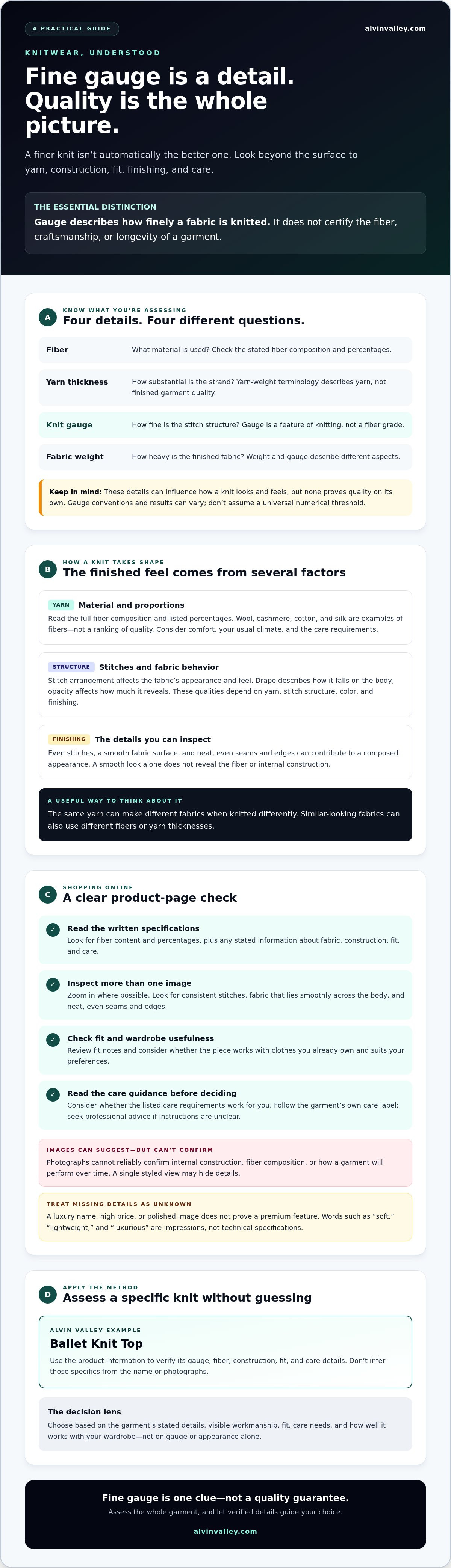
Fine gauge describes the fineness of a knitted fabric’s structure. It doesn’t certify the yarn, the skill of the maker, or the garment’s longevity. A knit can look delicate and polished yet use ordinary materials; a heavier knit can be exceptionally well made. Assess the garment’s actual details rather than treating “luxury” or a fine appearance as proof of quality.
Knit gauge describes the density and scale of stitches in a knitted fabric. It refers to the knitting, not the fiber. The term what fine-gauge means is best understood as a relative description: the fabric has a finer stitch structure than a more substantial knit. Measurement conventions and results can vary, so don’t assume a universal numerical threshold.
Gauge, fiber, yarn thickness, and fabric weight are related but answer different questions. Fiber identifies the material; yarn thickness describes the strand; gauge concerns how the fabric is knitted; and weight describes the finished fabric’s heaviness. Together, these details influence how a garment looks and feels. None proves quality on its own.
How Is Knit Gauge Different from Yarn Weight?
Gauge is a feature of knitted construction. Yarn weight describes the yarn itself. Think of them as material and arrangement: the same yarn can create different fabrics depending on how it’s knitted, while similar-looking fabrics can use different fibers or yarn thicknesses. A product photograph can’t confirm these details, so look for stated specifications.
What Makes a Fine Knit Feel Refined?
Refinement comes from the overall surface and silhouette. Even stitches, considered finishing, and clean edges can give fabric a composed appearance. Drape describes how it falls on the body; opacity affects how much it reveals. These qualities depend on the yarn, stitch structure, color, and finishing, so assess each garment rather than inferring them from its category.
Words such as “soft,” “lightweight,” or “luxurious” convey an impression, but they aren’t technical specifications. Check the listed fiber content and any available information about construction, fabric, fit, and care. Luxury fine gauge knitwear is best evaluated through those details, not a polished image or label alone.
How Yarn, Knitting Structure, and Finishing Shape Fine-Gauge Knitwear
A fine stitch is only one element of a finished knit. Yarn, stitch arrangement, and finishing work together to create its surface, shape, and feel. A smooth appearance, for example, may come from the stitch structure or finishing, not simply from the fiber. No single material or knitting method guarantees luxury or longevity.
Gauge describes the fineness of a knit, but it cannot establish the quality of the yarn, construction, or finished garment. To assess a knit, consider the evidence as a whole: product specifications, visible workmanship, fit information, and care guidance.
Which Fiber Details Should Shoppers Look For?
Start with the fiber composition and its stated percentages. A blend listing gives more useful information than a fiber name alone because it shows the proportions used in the garment. Wool, cashmere, cotton, and silk are examples of fibers you may encounter, not a ranking of quality. Assess each in the context of the specific garment.
Yarn-weight terminology is separate from fiber composition. The Craft Yarn Council’s Standard Yarn Weight System explains yarn-weight categories; those categories don’t confirm a garment’s knit gauge or finished quality. Consider your comfort, usual climate, and willingness to follow the listed care requirements alongside the fiber percentages.
How Construction and Finishing Affect Appearance
Product photographs can offer useful clues. Look for consistent stitches, fabric that lies smoothly across the body, and neat, even seams and edges. Zoom in where possible and check more than one view. A single styled photograph may hide details or make the fabric’s surface difficult to judge.
Images have limits: they can’t reliably confirm internal construction, fiber composition, or how a garment will perform over time. Look for those details in the written product information. Treat anything not stated as unknown rather than filling the gap with assumptions about a luxury label.
For a concrete example of Alvin Valley’s knitwear offering, explore the Ballet Knit Top. Confirm its gauge, fiber, construction, fit, and care details in the product information rather than inferring them from its name or photographs.
How to Judge Luxury Fine-Gauge Knitwear Before You Buy
Online, a polished image can suggest quality without proving it. The same goes for a luxury name or a high price. Separate what the product page states from what its styling implies. Missing details are unanswered questions, not evidence of a premium feature.
Which Product Details Support a Confident Choice?
Check the fiber composition and percentages, construction notes, garment measurements, model information, and care instructions. The Utah State University Extension guide to knitting and finishing techniques offers context for understanding how knitted pieces are made and assembled. Product pages may not disclose every detail, so use the comparison below to distinguish stated facts from assumptions.
| What to assess | Look for | Don’t assume |
|---|---|---|
| Fiber | Named fibers and percentages | Composition from the garment’s look or price |
| Construction | Specific details about seams, stitches, or finishing | Manufacturing method from a close-up image |
| Fit | Garment measurements, fit notes, model details | Your fit from model styling alone |
| Care | Clear instructions for cleaning and storage | Easy care from a “lightweight” or “soft” description |
| Imagery | Several views showing edges, surface, and silhouette | Durability or internal construction from photographs |
How Should Fit and Drape Influence Your Decision?
Choose according to how you intend to wear the knit. Will it layer over a shirt or sit beneath a jacket? How much ease do you prefer through the body, and where should the sleeves and hem fall? Compare listed garment measurements with a similar piece you already own. A model’s pose, styling, and proportions can make a knit appear longer, closer-fitting, or more fluid than it may feel on you.
Consider the full outfit as well. A defined knit silhouette can contrast with denim; the wide-leg jean guide offers perspective on building an outfit around that proportion. Before ordering, review the seller’s return policy and confirm that the measurements and terms suit your decision. If essential specifications are missing, pause rather than making assumptions.
How to Wear and Care for Fine-Gauge Knitwear
A refined knit can work across settings, but styling and care depend on the individual garment. Fiber, construction, fit, and finish all influence how it layers and how it should be maintained. Treat the following as wardrobe principles, not promises that every fine-gauge piece will behave the same way.
How Can Fine-Gauge Knits Work Across a Wardrobe?
Wear a knit on its own when its cut and coverage suit the occasion, or layer it if the design allows comfortable movement without pulling or bunching. A streamlined knit can complement tailored trousers; denim gives it a more relaxed counterpoint. For a sharper finish, consider how it sits beneath a blazer. The women’s blazer guide offers ideas for polished layering.
Start with pieces already in your wardrobe. Choose colors that work with the trousers or denim you wear most, then consider proportion. A closer-fitting top may balance a fuller leg, while a longer silhouette changes where the outfit’s visual weight falls. Check the garment’s fit and fabric details before deciding how it will layer.
What Care Habits Help Preserve a Knit?
Care should follow the garment, not a general rule about fine knits. Use this simple routine:
- Read the care label. Check the complete instructions before wearing or cleaning the piece.
- Handle it thoughtfully. Take care around jewelry, bags, and other items that could catch or pull the fabric.
- Clean as directed. Follow the stated method. If instructions are missing or unclear, ask a qualified garment-care professional before proceeding.
- Store it appropriately. Follow any label guidance and keep the knit in a clean, dry place between wears.
These habits support considered wardrobe care without assuming that all fibers or constructions respond alike. Don’t apply a cleaning method simply because it worked for another knit; the right approach depends on the garment’s own specifications.
If you’re considering Alvin Valley knitwear, explore the Ballet Knit Top and review its current product details for fit and care information before deciding how it will work in your wardrobe.
Choosing Alvin Valley Knitwear with Confidence
A considered knit begins with evidence, not assumption. The same framework applies whether you’re assessing luxury fine gauge knitwear or another knit style: confirm what the product page states, decide whether the fit suits how you dress, and understand the care the garment requires. Brand reputation and a refined photograph may shape first impressions, but neither fills in missing product details.
Alvin Valley is a designer-led womenswear brand known for trousers and premium denim, with knitwear among its offerings. The Ballet Knit Top is an Alvin Valley knitwear product. Its name alone, however, doesn’t establish its gauge, composition, construction, silhouette, or care requirements. Confirm those details through current product information.
What to Verify on the Ballet Knit Top Product Page
Before deciding, review the current product page for stated fiber composition, construction details, fit notes, sizing information, and care instructions. Check garment measurements if provided, and compare them with a similar piece in your wardrobe. Product descriptions and images provide context, but they aren’t substitutes for specifications. If a detail you need isn’t listed, treat it as unknown rather than inferring it from the product name or styling.
- Composition: Look for the stated fibers and any percentages.
- Construction: Check for explicit details about how the knit is made or finished.
- Fit and sizing: Review the available fit notes, size information, and measurements.
- Care: Read the garment-specific instructions before purchase.
From Knitwear Choice to a Considered Wardrobe
A well-chosen knit can add a useful silhouette and texture to pieces you already wear. Consider its color, proportion, and intended fit alongside your existing trousers or denim. The right choice is personal: it should suit your preferences and the way you plan to wear and care for it, rather than rely on a promise of lasting performance.
Alvin Valley’s designer-led point of view centers on considered womenswear, including trousers, premium denim, and knitwear. Understand the garment’s stated details, then decide whether it belongs in your wardrobe. Explore Alvin Valley knitwear and review each product’s current information carefully.
Choose Your Next Knit with Discernment
The finest choice isn’t defined by a delicate appearance or a prestigious name. Gauge describes the fineness of the knitted structure, while yarn, construction, fit, and finishing offer a fuller picture. Assess the stated details, consider how the silhouette works with your existing wardrobe, and follow the care instructions for that specific piece.
That approach makes luxury fine gauge knitwear easier to evaluate, especially when shopping online. Look for clear product information, compare measurements with a garment you already wear, and treat undisclosed specifications as unknown rather than assuming a premium feature.
Alvin Valley is a designer-led luxury womenswear brand with knitwear among its offerings. The Ballet Knit Top is one option; check its current product page for details before drawing conclusions about its fiber, construction, fit, or care. Explore Alvin Valley knitwear and choose a piece that suits your wardrobe and preferences.
Frequently Asked Questions
What does fine-gauge knitwear mean?
Fine-gauge knitwear has a finer, more closely scaled knitted structure than a heavier, more substantial knit. Gauge describes the knitting, not the fiber, yarn quality, or overall garment quality. There isn’t one universal number that makes a knit “fine gauge,” so check product details rather than relying on a label or photograph. Yarn and construction also shape the finished fabric’s look and feel.
Is fine-gauge knitwear better than chunky knitwear?
Neither is inherently better; each serves a different purpose. A fine knit may suit streamlined layering or a refined silhouette, while a chunky knit can offer a more substantial look. Decide based on your wardrobe, comfort, and intended use. Then assess the specific garment’s fiber, construction, fit, and care information. A finer appearance alone doesn’t prove greater quality or durability.
How can you tell if knitwear is high quality?
Assess the available evidence rather than relying on price or brand prestige. Look for clear fiber composition, construction details, useful fit information, and garment-specific care instructions. In photographs, inspect stitch consistency, seams, edges, and how the fabric falls, while remembering that images can’t confirm internal construction or long-term performance. For luxury fine gauge knitwear, a considered decision comes from the relationship between these details, not one feature alone.
What is the difference between fine-gauge knitwear and lightweight knitwear?
Fine gauge describes the fineness of the knitted structure; lightweight describes how little the finished fabric weighs or how light it feels. The terms aren’t interchangeable. A fine-gauge garment isn’t necessarily lightweight, and lightweight fabric doesn’t automatically have a fine stitch structure. Check product specifications for construction and fabric details, and don’t infer weight from a close-up image or a description such as “delicate.”
Can fine-gauge knitwear be worn year-round?
It can work across seasons, depending on the garment and how you style it. Gauge alone doesn’t tell you how warm or breathable a knit will feel; fiber, fabric weight, fit, and layering all matter. In milder conditions, consider wearing it on its own or over a light base. In cooler weather, layer it under other pieces if the fit allows. Check the product details before deciding.
How should fine-gauge knitwear be cared for?
Follow the care label on the specific garment. Knits can differ in fiber and construction, so don’t assume that a cleaning or drying method suitable for one piece will suit another. Handle the fabric thoughtfully during wear and follow any storage guidance provided. If the label is missing or unclear, ask a qualified garment-care professional before cleaning. Follow garment-specific instructions over general advice.
What should you look for when buying luxury knitwear online?
Look for stated fiber percentages, construction details, garment measurements, fit notes, model information, and clear care instructions. Compare measurements with a similar piece you own, and examine available images for stitch definition, seams, edges, and drape. Treat anything the page doesn’t disclose as unknown. Before ordering, read the return policy and confirm that the available sizing and terms suit your needs.