

What if the most versatile knit in your wardrobe weren’t reserved for winter? Luxury knitwear for year round wear is less about finding one perfect sweater and more about choosing the right weight, construction, and silhouette for the way you dress. A lighter knit can work on a mild day or cool summer evening, while a layer beneath a tailored jacket can help an outfit adapt as temperatures fall.
Premium knitwear earns its place when it suits your everyday routine. A piece that feels too warm for your usual settings may stay in storage; one that is too light for the occasions you have in mind may not get much use. The difference comes down to practical choices, not seasonal rules.
This guide explains how to assess knitwear by fabric, weight, and silhouette, then style it through changing temperatures. You’ll also find care principles to help preserve pieces you reach for often. As part of a considered wardrobe alongside tailored separates, Alvin Valley’s Ballet Knit Top is one option to style in a refined daily rotation.
Key Takeaways
- Choose knitwear for the conditions and occasions you dress for, rather than expecting one piece to suit every season in the same way.
- Assess fibre, knit density, construction, and silhouette together; a fibre name alone won’t tell you how warm a garment will feel.
- Use a practical checklist for luxury knitwear for year round wear, considering your climate, occasions, layering needs, and existing wardrobe.
- Adapt outfits as temperatures shift by adjusting layers and proportions, not by relying on rigid seasonal rules.
- Consider how the Ballet Knit Top could work with the tailored and everyday pieces already in your wardrobe.
Luxury Knitwear for Year-Round Wear: What Versatility Really Means
Year-round knitwear isn’t one sweater expected to perform in every season. It’s a considered selection of pieces suited to different temperatures and settings, styled with the layers you need. Versatility means adapting knitwear to the conditions, not wearing one weight all year.
That distinction matters when you want a refined wardrobe that earns its space. A knit can work as a standalone top in mild weather, add polish beneath a jacket, or provide another layer when the air turns cold. But no single garment suits every climate, occasion, or personal comfort level. Instead of asking, “Can I wear this all year?” ask, “When will I wear it, and what will I pair it with?”
Does year-round knitwear mean wearing the same sweater in every season?
No. Seasonal versatility comes from choosing a knit that suits the conditions and adjusting the outfit around it. A lightweight layer and a more substantial cold-weather knit serve different purposes. Local climate matters, as does time spent indoors, where heating can change how warm a garment feels. Personal preference counts, too. Some people reach for a layer at the first cool breeze; others feel comfortable in lighter pieces for longer.
Construction also influences how a knit behaves. Knitted fabric is formed from interlocking loops, and its structure contributes to the way it stretches and drapes. That’s one reason a garment’s feel can’t be judged by season or fibre name alone. Consider how it sits on the body, what you’ll wear beneath it, and whether you can comfortably add or remove a layer.
Why invest in knitwear beyond winter?
A refined knit can take on different roles across your wardrobe. Wear it as a standalone top when conditions allow, layer it beneath tailored separates for a more composed look, or use it as a transitional piece when the temperature shifts throughout the day. Alvin Valley’s Ballet Knit Top can be styled with pieces you already wear, rather than assigned to a single season.
Choose pieces for the settings you actually dress for, then look for opportunities to wear them in more than one way. That’s the value of luxury knitwear for year round wear: each piece has a considered place in your rotation, without relying on one-weight-fits-all dressing.
How Fibre, Knit Weight, and Construction Shape Seasonal Comfort
Comfort comes from several factors working together. Fibre influences a garment’s feel, knit density affects how much air can move through it, and shape determines how it sits on the body or layers beneath another piece. Knit weight and layering can matter as much as fibre when deciding how warm a knit feels.
Cotton, linen, silk, and lightweight wool are all options to consider for warmer or transitional dressing, but none is a universal answer. The yarn, stitch structure, garment shape, and intended layers all affect the result. A fibre label alone can’t tell you how a particular knit will feel in a warm room or beneath a jacket. For a brief technical overview, Knitted fabric explains how knitted structures are formed.
Which knitwear materials suit warmer or transitional weather?
Start with the conditions you expect to dress for, then assess fibre alongside construction. Cotton or linen may be worth exploring for a lighter-feeling layer; silk and lightweight wool can also suit transitional wardrobes, depending on the garment. An open construction can feel different from a compact one, even when the fibre is similar. Think about whether you’ll wear the piece on its own or over another layer.
How do knit weight and layering affect warmth?
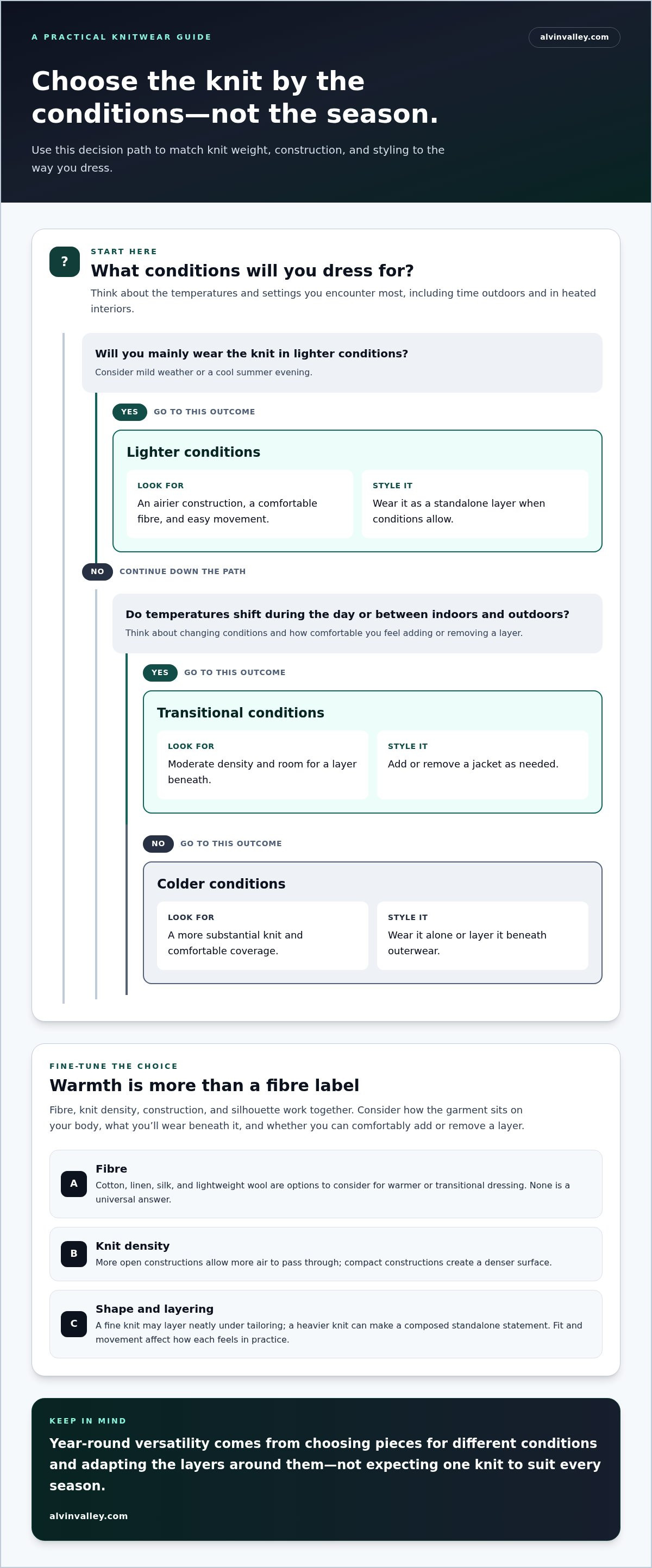
Knit density describes how closely the stitches sit together. More open constructions allow more air to pass through, while compact ones create a denser surface. A fine knit may layer neatly under tailoring, while a heavier knit can make a composed standalone statement. Fit, movement, indoor conditions, and personal comfort all influence how each feels in practice.
| Wear context | What to consider | Styling approach |
|---|---|---|
| Lighter conditions | Airier construction, comfortable fibre, easy movement | Wear as a standalone layer |
| Transitional conditions | Moderate density and room for a layer beneath | Add or remove a jacket as needed |
| Colder conditions | More substantial knit and coverage that feels comfortable | Wear alone or layer beneath outerwear |
Use the table as a starting point, not a rulebook. The same knit may feel different during an active day than at a desk, or in a heated interior than outdoors. For a considered wardrobe, explore Alvin Valley knitwear alongside the tailored pieces you already wear. Assess each piece by its intended setting, layering potential, and how comfortable it feels. That’s the practical foundation of luxury knitwear for year round wear.
A Practical Framework for Choosing Luxury Knitwear You Will Rewear
Luxury knitwear isn’t automatically too warm for most of the year. How it feels depends on the garment’s weight, how you style it, and the conditions you dress for. Start with your actual wardrobe, not an imagined ideal one. Think about the outfits you wear regularly and the occasions you want a knit to serve.
What should you consider before choosing a year-round knit?
Use this checklist to assess whether a piece fits your routine:
- Climate: Consider the temperatures you encounter most, including shifts between outdoors and heated interiors.
- Setting: Picture where you’ll wear it, from a cool office to a mild outdoor day or an evening occasion.
- Layering: Decide whether it needs to sit comfortably beneath a jacket or work as a standalone layer.
- Silhouette: Look at neckline, sleeve length, and overall shape. These details affect both the feel of a knit and how it works with the rest of an outfit.
- Wardrobe compatibility: Choose colours and proportions that complement trousers, skirts, and tailored pieces you already reach for.
Start with the clothes you own and wear often. If most of your wardrobe is tailored, consider how a knit will sit beneath or alongside those pieces. If you dress for changing indoor and outdoor temperatures, prioritize combinations that let you adjust a layer with ease. This makes the idea of luxury knitwear for year round wear specific to your life, rather than a promise that every garment suits every season.
How can you assess whether a knit will earn repeat wear?
Before choosing, picture at least two ways you could wear it: on its own and layered with something already in your wardrobe. Consider whether the fit feels right for both and whether the piece suits occasions you genuinely have. A knit that works with your regular wardrobe is more likely to earn repeat wear than several similar pieces chosen without a clear role.
How to Style Luxury Knitwear Through Changing Seasons
Style by conditions, not calendar dates. A mild afternoon, a cool office, and a breezy evening may call for different combinations on the same day. The advantage of luxury knitwear for year round wear is the ability to adjust the outfit around the piece: refine the proportions, add a layer, or remove one when the setting changes.
How do you wear knitwear in spring and summer?
On warmer days, choose a knit that feels appropriate for the rest of your outfit and wear it as a standalone top if comfortable. Pairing a knit with tailored trousers creates a clean line; with a skirt, balance the volume so the overall silhouette feels intentional. A more relaxed top can work well with a streamlined lower half, while a closer-fitting knit can complement a fuller skirt.
For cooler mornings or indoor settings, use the knit as an understated layer over a simple base. Keep the outfit easy to adjust: a light outer layer can come off as the day warms, while considered proportions keep the look polished either way. Choose a combination that suits the knit and your comfort, rather than expecting one piece to work in every warm-weather setting.
How can knitwear transition into autumn and winter?
As conditions cool, build in layers with a clear purpose. A knit top can sit beneath a blazer, adding texture while the tailored layer sharpens the silhouette. A cardigan can work as the visible top layer over a simple base, or add another layer beneath outerwear when appropriate. Keep the balance deliberate: if the knit has more volume, consider a cleaner line elsewhere; if the layers are close to the body, a more generous trouser or skirt can add proportion.
Consider how knitwear works with tailored separates and explore Alvin Valley’s knitwear as part of that wardrobe. A blazer can provide structure over a knit without making the outfit feel rigid. Choose layers you can comfortably remove indoors, then put back on as the temperature shifts.
Build from the base, add one purposeful layer, then adjust for the setting. That simple sequence keeps an outfit adaptable without losing its composure. The result is seasonal dressing guided by proportion and personal comfort, rather than a rigid rotation dictated by the calendar.
Alvin Valley Knitwear: A Considered Addition to a Year-Round Wardrobe
Knitwear works best when it has a clear place in the wardrobe. Alvin Valley’s Ballet Knit Top is a knit top to assess against your styling preferences, existing clothes, and planned occasions, rather than a piece assigned to one season.
Where can a knit top fit into a refined wardrobe?
A knit top can be worn on its own when conditions allow or used as a layer beneath a jacket. The right choice depends on the setting and the way you like an outfit to sit. Consider pairing a top with tailored trousers for a composed daytime look, or with a skirt for an occasion that calls for a different proportion.
Apply the same practical questions to the Ballet Knit Top. Think about where you would wear it, what you might style it with, and whether its place in your wardrobe feels distinct from pieces you already own. Those criteria make the decision personal and useful.
What is the next step in choosing a knit?
Use the guide’s framework before settling on a piece: consider comfort, construction, silhouette, styling options, and intended use. Then bring those choices back to your own wardrobe. A versatile piece doesn’t have to work everywhere. It should make sense for the occasions you dress for and feel natural alongside the garments you already value.
That is the considered approach to luxury knitwear for year round wear. It’s not a search for one universal knit, but a clear-eyed choice about how a particular piece can contribute to a polished rotation. Explore the Ballet Knit Top and consider how it could work with your wardrobe. Discover Alvin Valley knitwear and find a place for considered knit dressing in your rotation.
Make Knitwear Work Beyond the Season
Year-round versatility isn’t about finding one knit for every temperature. It comes from choosing pieces with the right weight and silhouette for your needs, then styling them with intention. Fibre, construction, layering, and personal comfort all shape how a knit works in different settings.
Start with your wardrobe and the occasions you dress for. Consider whether a knit feels right on its own, works beneath tailoring, and complements pieces you already wear. That’s how luxury knitwear for year round wear becomes a considered choice, not simply another seasonal purchase.
Alvin Valley brings a designer-led perspective to a wardrobe shaped by tailoring. Founder Alvin Valley is historically known as the “King of Pants,” and the Ballet Knit Top is part of the brand’s knitwear offering. Explore it in the context of your own style and the pieces you value.
Explore Alvin Valley knitwear and build a wardrobe that feels polished through changing seasons.
Frequently Asked Questions
Can luxury knitwear be worn year-round?
Yes, luxury knitwear can be worn year-round when you choose pieces suited to different conditions and style them accordingly. A lighter knit might work as a standalone top or under a jacket, while a more substantial piece may feel better in cooler weather. Consider your climate, indoor settings, personal comfort, and planned occasions. The aim of luxury knitwear for year round wear is adaptable dressing, not one garment for every temperature.
What knitwear material is best for warm weather?
There’s no single best material for every warm-weather wardrobe. Cotton, linen, silk, and lightweight wool are all options to consider, but the garment’s construction and styling matter too. An open knit may feel different from a compact one, even if the fibre is similar. Think about whether you’ll wear the piece alone or layer it, and choose based on the conditions and occasions you dress for.
Is cashmere suitable for wearing outside winter?
Cashmere isn’t automatically limited to winter, but suitability depends on the particular garment and how you wear it. Consider the knit’s weight, density, fit, and whether it will be worn alone or layered. A lighter-feeling piece may work in transitional conditions, while a more substantial knit may feel better in colder settings. Indoor heating, activity, and personal comfort also affect how warm it feels.
How do you style knitwear in warmer weather?
Wear a lighter-looking knit as a standalone top when the conditions feel comfortable, and pair it with tailored trousers or a skirt for a polished balance of texture and proportion. For cooler mornings or indoor settings, add a removable layer rather than relying on one outfit throughout the day. Keep the overall silhouette intentional: balance a relaxed knit with a cleaner line elsewhere, or pair a closer-fitting top with more volume.
How can I tell whether knitwear is lightweight?
Look beyond the fibre name. Consider how dense the stitches appear, how the fabric drapes, and how the garment feels in your hands. More open or fine-looking construction can suggest a lighter feel, while closely packed stitches may feel more substantial. These are useful clues, not guarantees. If possible, assess the garment as you expect to wear it, including whether you plan to add a layer beneath or over it.
Can you wear a knit top under a blazer?
Yes. A knit top can work beneath a blazer, especially when the layers sit comfortably together and don’t create unwanted bulk. Check how the neckline, sleeves, and hem interact with the jacket, then consider the outfit’s proportions with your trousers or skirt. A more refined, close-fitting silhouette can create a clean base, while a roomier knit may be better suited to wearing on its own or beneath a less structured layer.