

What makes luxury silk blend blazers appealing is not simply the word “silk,” but how the fabric and garment work together. A silk blend can bring a refined finish to a wardrobe, but the fiber blend alone won’t tell you how a blazer will feel, hold its shape, or fit into your routine.
It’s sensible to pause before choosing. Fabric descriptions can be difficult to compare, care instructions may raise concerns, and polished product photography can leave important details out. A considered choice looks beyond the label.
This guide will help you assess what a silk blend can and cannot tell you, compare construction and fit, and check care information before you buy. You’ll also consider how the blazer might work with pieces you already own, from tailored separates to denim and knitwear. The aim is not to follow a trend, but to identify a refined, versatile blazer that suits your standards and the way you actually dress.
Key Takeaways
- Read the fiber percentages, not just the phrase “silk blend,” to understand what the fabric label actually tells you.
- Compare silk blends, wool blends, and other blazer fabrics by hand, drape, structure, seasonality, care, and intended occasion.
- When shopping online, look for clear composition and care details, plus photographs that let you assess features such as lining, closures, seams, and finishing.
- Choose luxury silk blend blazers by first defining when you’ll wear one, then evaluating fit, care requirements, and construction against your wardrobe.
- Treat the silk-blend label as one factor, not a verdict on quality. Composition, construction, fit, and care all inform a considered choice.
Luxury silk-blend blazers: what the fabric label can, and cannot, tell you
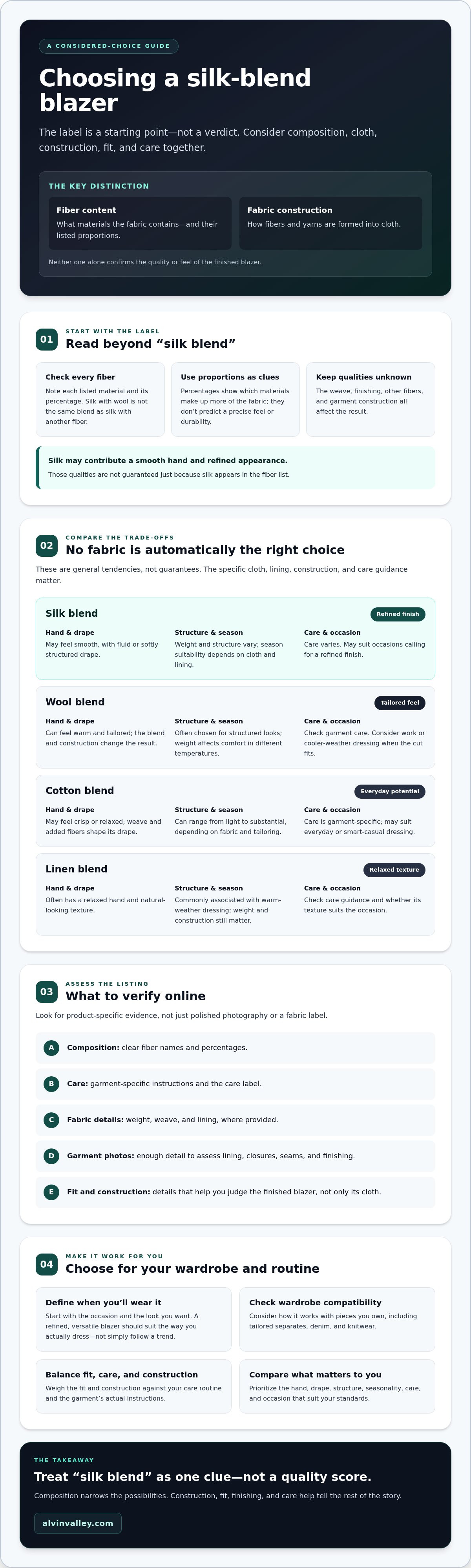
A silk-blend blazer combines silk with one or more other fibers. The label’s wording is only a starting point: fiber names and percentages give you a clearer picture of what the cloth contains, but not a complete verdict on how the finished blazer will look or wear.
In brief: Fiber content tells you what a fabric is made from; fabric construction describes how its fibers and yarns are formed into cloth. Neither, on its own, confirms a blazer’s overall quality.
That distinction matters when comparing luxury silk blend blazers. Silk is often associated with a smooth hand and refined appearance, but the weave, finishing, other fibers in the blend, and garment construction all influence the result. Consider the label evidence, then look for product-specific details rather than treating “silk blend” as a promise.
How to read a silk-blend fabric label
Check every listed fiber and its percentage. A silk and wool blend, for example, is not the same as a blend of silk and another fiber. The proportions show which materials make up more of the fabric, while the fiber names identify what those materials are.
There’s no universally best blend. Think about the hand, drape, structure, and care you want, then compare those priorities with the composition. Don’t infer a specific feel or level of durability from a percentage alone. Before buying, check the care guidance for the actual garment, including its care label. Instructions can vary by product.
What silk can contribute to a blazer
Silk is a natural fiber made by silkworms. For an overview of its origins and material properties, see Silk. In clothing, it’s often associated with a smooth feel and subtle refinement, but those qualities aren’t guaranteed by the fiber’s presence alone.
Other fibers can change how the fabric feels, drapes, and responds to wear. So can the way the yarns are woven and the cloth is finished. A product listing may identify composition without establishing the blazer’s precise hand, structure, or performance. Look for clear fabric details and garment photographs, and treat qualities the seller doesn’t confirm as unknown.
Read the label as useful evidence, not a quality score. Composition narrows the possibilities; the complete garment tells the rest of the story. For designers, tailors, or anyone interested in sourcing distinct cloth directly, explore Wholesale and Retail Fabric Sales to see how different natural silks and blend weights are specified.
Silk, wool, and other blazer blends: compare the trade-offs
No fiber is automatically the right choice. Silk blends may offer a smooth hand and fluid drape; wool blends may feel more substantial and hold a defined shape. The finished blazer depends on more than its fiber list, though. Use the comparison as a guide, then check the specific garment’s fabric weight, weave, lining, construction, and care instructions.
| Fabric type | Hand and drape | Structure and seasonality | Care and occasions |
|---|---|---|---|
| Silk blend | May feel smooth, with a fluid or softly structured drape depending on the other fibers and weave. | Structure and weight vary. Suitability across seasons depends on the cloth and lining. | Care varies by garment. May suit occasions calling for a refined finish, if the silhouette and fabric support it. |
| Wool blend | Can feel warm and tailored, though the hand and drape vary with the blend and fabric construction. | Often chosen for structured looks; weight determines how comfortable it feels in different temperatures. | Check the garment’s care instructions. Consider for work or cooler-weather dressing when the cut fits the setting. |
| Cotton blend | May feel crisp or relaxed, with drape shaped by the weave and added fibers. | Can range from light to substantial, with structure depending on fabric and tailoring. | Care is garment-specific. Can work for everyday or smart-casual dressing, depending on finish and formality. |
| Linen blend | Often has a relaxed hand and natural-looking texture. | Commonly associated with warm-weather dressing, but weight and construction still matter. | Check care guidance and how much texture suits the occasion. May work well in less formal settings. |
These are general tendencies, not guarantees. Fiber labels identify the materials, while U.S. labeling guidance under the Textile Fiber Products Identification Act addresses fiber disclosure. A label can’t tell you by itself whether the blazer’s tailoring, finish, or overall quality meets your expectations.
Silk blend versus wool blend: which suits your priorities?
Choose by the look and feel you want, not by a presumed hierarchy. A silk blend may appear fluid or subtly lustrous; a wool blend may read as more matte or structured. Either can differ considerably. Fabric weight, weave, lining, and construction shape how the blazer hangs and feels. Compare the product description with photographs, then verify the care label before deciding.
When another blazer fabric may make more sense
Think about how often you’ll wear the blazer, your climate, the settings you dress for, and how much maintenance you’re comfortable with. A more relaxed cotton or linen blend may suit frequent daytime wear; a different fabric may better match a sharper, more formal silhouette. Balance the finish you prefer with care demands and wardrobe versatility. For a potential pairing, explore Alvin Valley’s Doyenne Indigo Wash Jeans.
How to assess a luxury silk-blend blazer online
A polished listing should help you judge more than appearance. Before ordering, look for concrete information about the fabric, care, fit, and construction. Luxury silk blend blazers can vary widely, so use this checklist to identify what the listing confirms and what remains unclear:
- Composition: Check the fiber names and percentages, not just “silk blend.”
- Care: Find the garment-specific care instructions and consider whether they suit your routine.
- Construction: Look for details about lining, lapels, closures, seams, and finishing.
- Fit: Compare size guidance and garment measurements with a blazer you already own.
- Images and terms: Review full-length and close-up views, then check the retailer’s return terms before purchasing.
Missing information isn’t proof of poor quality. It is a reason to pause, ask the retailer a focused question, or decide whether you have enough evidence to buy with confidence. For background on how natural materials such as silk and wool are discussed in conservation, the Government of Canada’s overview of the properties of natural fibers offers useful context. It doesn’t replace the care instructions for the specific garment.
Which construction details are worth checking?
A lining description can clarify whether the blazer is lined and help you understand what to expect in wear. Lapel shape and closure type establish visible design features; seam and finishing details may offer further insight if the retailer describes them clearly. Distinguish what you can see in photographs from claims about how a garment is made. If a detail matters to your decision, ask the retailer rather than filling in the gaps yourself.
How to judge fit and finish from product images
Study the shoulder line, sleeve length, waist shape, and overall proportions across available views. A model image can suggest the silhouette, but it can’t tell you exactly how the blazer will fit your frame. Compare listed garment measurements with a well-fitting jacket, and read size notes before choosing. Close-ups may reveal texture, seams, closures, and visible finishing. If photographs don’t show a feature clearly, treat it as unverified.
Make your decision by combining the evidence. Let the listing establish the composition and stated details, use measurements to assess fit, and review care guidance and return terms to judge whether the purchase suits your preferences. A refined image is only a first impression. The details make the decision.
Choose a silk-blend blazer for your wardrobe, fit, and care routine
A considered choice starts with your life, not the fabric label. Define where you’ll wear the blazer, assess your preferred fit, read the care instructions, then compare the garment details. This keeps the decision grounded in how the piece will work in your wardrobe.
- Define its role: Is it for work, occasions, or regular wear across both?
- Assess fit: Decide whether you prefer a defined shape or more relaxed proportions.
- Check care: Make sure the stated instructions suit the time and attention you’re willing to give the garment.
- Compare details: Review composition, lining, closure, and finish alongside the price and return terms listed by the retailer.
For versatility, picture the blazer with pieces you already wear: tailored trousers for a composed look, denim for a more relaxed balance, or a fine top for a simple change in formality. It is equally worth considering how easily the jacket layers with staple outerwear from labels like Martindale when transitioning between seasons. Luxury silk blend blazers aren’t automatically more versatile than other options. Their usefulness depends on the silhouette, color, care demands, and how naturally they work with your existing clothes.
Match blazer silhouette and fit to the way you dress
Consider formality, too. A clean, structured shape may feel at home in a professional setting, while softer proportions can work across less formal plans. Look for a cut you can wear more than one way, rather than choosing solely for a single occasion.
Care instructions depend on the specific fabric and garment. Don’t assume that every silk blend needs the same treatment, or that the fiber name alone determines the method. Read the actual garment’s care label and any product-specific guidance before buying. If the instructions aren’t available, ask the retailer rather than relying on a general rule.
Then be honest about your routine. If the stated care feels practical for a piece you expect to wear often, it may suit your wardrobe. If it conflicts with your habits, a different blazer may be the more considered choice. Explore Alvin Valley’s blazer selection and review each current listing before deciding which, if any, fits your preferences.
Make a confident choice, and explore Alvin Valley’s blazer offering
A considered purchase rests on evidence, not a single appealing detail. A silk-blend label can help you understand a garment’s composition, but it isn’t a standalone measure of quality or value. The full decision depends on the cloth, construction, fit, care requirements, and how naturally the blazer belongs in your wardrobe.
A final checklist before you buy
Before choosing among luxury silk blend blazers, confirm the details that will shape your experience after checkout:
- Composition: Review the listed fibers and percentages. Make sure the description clearly identifies the fabric.
- Construction: Check the available information about lining, closures, seams, and finishing. Separate visible details from claims the listing doesn’t substantiate.
- Fit: Compare garment measurements and size guidance with your preferences, including how you expect to layer beneath the blazer.
- Care: Read the care instructions for the specific garment and decide whether they fit your routine.
- Use: Consider the silhouette, formality, and occasions you have in mind. If a missing detail could change your decision, ask the retailer before ordering.
This final review gives you a practical way to weigh what the product page confirms against what matters in your day-to-day wardrobe. If answers remain unclear, wait for clarification rather than treating a refined image or fabric name as a substitute for information.
Explore Alvin Valley’s current blazer selection
Alvin Valley is a designer-led women’s apparel brand with blazers among its offerings. Its collection also includes designer trousers, premium denim, dresses, knitwear, and accessories. The right blazer for you still depends on the details of the particular garment. Review current product information for composition, fit, construction, and care, and confirm that the listing reflects a style currently available. Don’t assume a blazer is silk blend unless its product details state that composition.
If a current blazer suits your needs, compare its silhouette and stated details with the standards you’ve established here. Choose with clarity: verify the fabric, assess the construction, confirm the fit, and understand the care. That is a more reliable foundation for a wardrobe decision than the label alone.
Choose with clarity, then refine your wardrobe
The right blazer earns its place through more than a compelling fabric name. For luxury silk blend blazers, begin with verified fiber content, then assess construction, fit, and care instructions. Compare the garment with your wardrobe and routine, too. A silk-blend label can inform your choice, but it can’t establish quality or value on its own.
Alvin Valley is a designer-led luxury women’s apparel brand, and blazers are among its offerings. Fabric and availability can vary, so review the details on each current product page rather than assuming a particular silk-blend style is available.
Explore Alvin Valley’s current blazer selection and consider which options align with your preferred silhouette, intended occasions, and care needs. Let the details guide you toward a blazer that feels considered and distinctly your own.
Frequently Asked Questions
What is a silk-blend blazer?
A silk-blend blazer is made from silk combined with one or more other fibers. The fiber names and percentages on the garment label provide more useful information than the phrase “silk blend” alone. Composition can influence feel, drape, appearance, and care, but it doesn’t reveal every detail of the finished cloth or establish the blazer’s overall quality. Check the product description and care instructions for the specific garment.
Are silk-blend blazers suitable for everyday wear?
They can be, if the particular blazer’s fit, fabric, and care requirements suit your routine. Consider how often you’ll wear it, the settings you dress for, and whether its care instructions are practical for regular use. The blend itself doesn’t guarantee durability or easy maintenance. For everyday versatility, look for a silhouette that works with pieces you already own and can move between the occasions on your calendar.
How do I choose the right size in a luxury silk-blend blazer?
Use the retailer’s size guide and garment measurements, rather than relying on your usual size alone. Compare measurements with a blazer that fits you well, paying attention to the shoulders, sleeve length, and room through the body. Also consider what you’ll wear underneath. If the listing’s measurements or fit notes aren’t clear, ask the retailer before ordering. A product photograph can suggest a silhouette, but it can’t confirm fit on your frame.
Are silk-blend blazers difficult to care for?
Care depends on the exact fiber blend and garment instructions, so silk-blend blazers don’t all require the same treatment. Read the care guidance for the specific item before purchasing, then decide whether it fits your habits. Don’t assume the word “silk” alone tells you how to clean or maintain the blazer. If the product page doesn’t provide clear instructions, seek clarification from the retailer before making your choice.
Is a silk-blend blazer better than a wool-blend blazer?
Neither fabric is inherently better. A silk blend may offer a smooth hand or fluid drape, while a wool blend may feel more substantial or structured, but the result depends on the fibers, fabric weight, weave, lining, and construction. Compare the specific garments against your priorities, including appearance, intended occasions, and care. The right choice is the one whose verified details suit your wardrobe and routine.
What should I check when buying a silk-blend blazer online?
Review the listed fibers and percentages, garment-specific care instructions, measurements, fit notes, and return terms. Examine available photographs for the silhouette, shoulder line, sleeves, texture, lining, closures, seams, and finishing. Distinguish visible details from construction claims that the listing doesn’t confirm. If information that matters to your decision is missing or vague, ask the retailer for clarification. Incomplete details are a reason to investigate, not proof of poor quality.
Does Alvin Valley currently sell a silk-blend blazer?
Alvin Valley offers blazers, but whether a silk-blend blazer is currently available can only be confirmed by checking the brand’s current product listings. Review the composition and availability shown for each garment rather than assuming a blazer contains silk. For any specific item, rely on its product-page details and care information to decide whether it meets your preferences.