

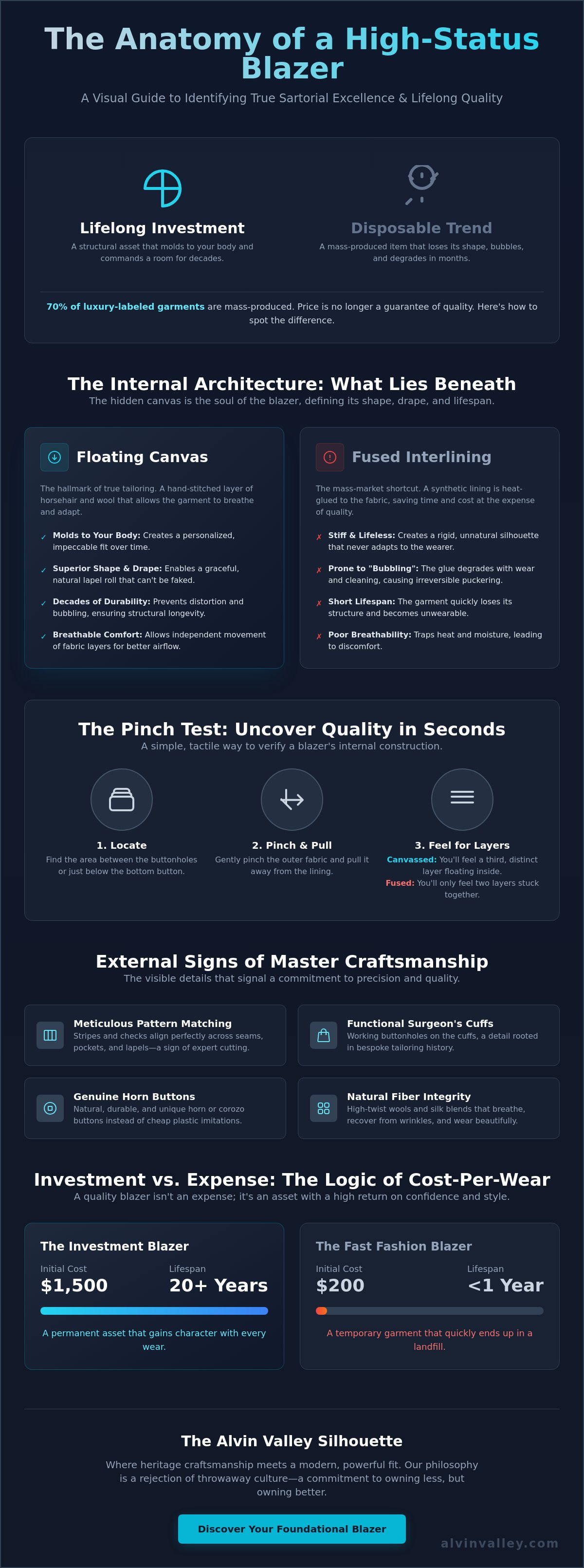
In an era where 70% of luxury labeled garments are mass-produced alongside fast fashion, a high price tag is no longer a guarantee of quality. True excellence lives in the architectural precision and the hidden craftsmanship of the garment. You deserve to know the specific signs of a well-made blazer before you commit to a lifelong investment. It's the difference between a piece that loses its shape in months and an iconic staple that commands the room for decades.
You likely believe that a blazer should be the foundation of a powerful silhouette, yet it's frustrating when high-end items fail to balance feminine elegance with masculine structure. We'll bridge that gap. This guide empowers you to spot sartorial excellence in seconds and understand the meticulous technicality behind luxury price points. We're examining the superiority of full canvassing, the precision of hand-rolled lapels, and the structural secrets of an impeccable, high-status fit.
Key Takeaways
- Understand how a floating canvas serves as the foundational architecture for a jacket that evolves with your silhouette.
- Identify the signs of a well-made blazer by examining meticulous pattern alignment and the integrity of premium natural fibers.
- Spot the hallmarks of sartorial excellence in the finishing touches, including functional surgeon’s cuffs and genuine horn hardware.
- Discover how the Alvin Valley philosophy of precision tailoring transforms a garment into an essential investment in personal confidence.
The Anatomy of Excellence: Why the Blazer is a Wardrobe Anchor
A blazer is the foundational architecture of the modern, powerful wardrobe. It's not merely a garment; it's a structural necessity. While fast fashion treats tailoring as a disposable trend, luxury tailoring views it as a permanent asset. The true signs of a well-made blazer exist in the invisible details. You find quality in the hand-stitched seams, the floating canvas, and the graceful lapel roll. These elements ensure the jacket retains its shape for 20 years, not just a single season. It's a commitment to form that transcends the fleeting nature of the high street.
Understanding the History of the Blazer allows one to appreciate its transition from functional maritime uniform to a symbol of executive authority. Today, the blazer serves as a psychological armor. It provides a sense of composure that soft knitwear cannot replicate. It's an investment in confidence. When you wear a piece crafted with technical superiority, your posture changes. Your presence expands. You aren't just dressed; you're prepared for the room you're about to enter.
The Philosophy of Power Dressing in 2026
The fashion landscape in 2026 has shifted decisively toward quiet luxury. Substance now carries more weight than a logo. A structured jacket offers an instant transformation of the silhouette, creating a sharp, intentional profile that communicates authority without saying a word. This focus on impeccable form is the heartbeat of the Alvin Valley legacy of luxury tailoring. While famously celebrated as "The King of Pants," the brand’s approach to the blazer is equally meticulous. It's a narrative of New York sophistication that refuses to compromise on craft or character.
Investment vs. Expense: The Cost Per Wear Logic
The math of luxury is simple. A premium blazer costing $1,500 that remains pristine for two decades represents a superior value compared to a $200 garment that loses its shape after six months. This is the logic of cost per wear. Beyond the financial aspect, the signs of a well-made blazer include the way it interacts with the wearer’s psyche. High-quality textiles and a perfect fit reduce cognitive load and boost self-assurance. Investment dressing is the prioritization of textile integrity over trends.
- Textile Integrity: Natural fibers like high-twist wool or silk blends that breathe and recover effortlessly.
- Structural Longevity: Internal canvassing that molds to the body over time, creating a custom fit.
- Aesthetic Precision: Pattern matching at the seams and hand-finished buttonholes that signal master-level craftsmanship.
Choosing a well-made blazer is a rejection of the throwaway culture. It's a decision to own less, but own better. This philosophy ensures that your wardrobe remains a source of power rather than a collection of clutter.
The Internal Architecture: Floating Canvas vs. Fused Interlinings
Luxury is never superficial. It lives in the hidden layers between the outer shell and the lining. This internal architecture, known as the canvas, provides the foundation for a garment's silhouette. A well-made blazer relies on a floating canvas to maintain its shape and integrity. This is the hallmark of a garment designed to endure. It represents a level of technical superiority that separates true tailoring from mass production.
A full canvas construction involves a layer of horsehair or wool hand-stitched to the fabric. This process can require 2 to 4 hours of additional labor compared to machine-glued methods. Because it is not glued, the fabric moves independently. It breathes. Most importantly, it adapts. Over time, the canvas "learns" the contours of your body. It creates a fit that is personal and impeccable. This meticulous process ensures the jacket retains its form for decades. It is a commitment to craft that defies the disposable nature of modern fashion.
Contrast this with fused jackets. Mass-market brands often glue the interlining to the outer fabric to save time. This creates a stiff, lifeless garment. Eventually, the glue degrades. This leads to "bubbling," an irreversible distortion of the fabric surface. Recognizing these hallmarks of a quality blazer is essential for any woman building a legacy wardrobe. A fused jacket is a temporary fix; a canvassed jacket is a permanent statement.
How to Perform the 'Pinch Test'
The pinch test is the most reliable way to identify high-end tailoring. It is a simple, tactile assessment of quality. Follow these steps to verify the construction:
- Locate the area between the buttonholes or just below the bottom button.
- Pinch the outer fabric and the inner lining between your thumb and forefinger.
- Gently pull the layers apart.
If you feel a distinct third layer floating between the shell and the lining, the jacket is canvassed. If you only feel two layers that seem bonded together, it is fused. This test is one of the clearest signs of a well-made blazer and takes less than 5 seconds to perform. For the modern woman, this ensures an investment in substance, not just style.
The Half-Canvas Compromise
The half-canvas construction represents a strategic middle ground. It features a hand-stitched canvas through the chest and lapel, where structure is most critical. The lower half of the jacket remains fused or unconstructed. This method offers a sharp, architectural shoulder and a rolling lapel without the weight of a full canvas. It is a pragmatic choice for lightweight, seasonal pieces. When you seek the perfect fit for a high-stakes meeting, a half-canvas blazer provides the necessary authority without the bulk. It is a sophisticated solution for the woman who demands both performance and poise.
External Precision: Fabric Integrity and Pattern Alignment
A blazer lives or dies by its skin. In the world of luxury tailoring, fabric isn't just a material choice; it's a technical requirement. True quality begins with natural fibers. Synthetic blends trap heat and lose their shape within a season. High-end garments utilize Super wools, silk blends, and high-twist yarns that breathe and recover from wrinkles instantly. These materials provide the drape necessary for a sharp silhouette.
One of the most visible signs of a well-made blazer is pattern alignment. When a jacket features pinstripes, windowpanes, or checks, the lines must meet with mathematical precision at the seams. Look closely at the shoulder seam where the sleeve meets the body. If the pattern breaks or stutters, it's a clear indicator of cheap, high-speed manufacturing. Precise pattern matching requires more fabric and more time. It's a hallmark of a garment that wasn't rushed off a conveyor belt.
The lapel offers another immediate clue. A cheap jacket has a lapel that looks flat, pressed into a hard crease. In contrast, a masterfully tailored blazer features a natural roll. This is a gentle, elegant curve that begins at the collar and flows toward the buttoning point. It creates a three-dimensional depth that reflects the internal canvas structure. It's a detail that can't be faked with a steam iron.
The Role of the Italian Weaver
The foundation of any iconic piece is the mill. Names like Loro Piana and Vitale Barberis Canonico, which has been weaving fabrics since 1663, represent the gold standard. These mills produce the Super 120s and 150s wools that define the modern wardrobe. A Super 120s rating means the wool fibers are 17.75 microns in diameter, offering an ideal balance of softness and durability for daily wear. Understanding these nuances is essential for anyone following the ultimate guide to women's blazers. Quality fabric doesn't just look better; it lasts decades.
Seam Allowance and the Art of the Alteration
Luxury is about longevity and the perfect fit. Inspect the interior lining. A well-made blazer includes generous seam allowance, which is the extra fabric tucked inside the seams. This allows a tailor to let the jacket out if your body changes. Bespoke-adjacent ready-to-wear always accounts for the future. You should also find clean, finished seams that don't show a single stray thread. Fraying is a sign of neglect. Impeccable internal finishing ensures the jacket maintains its structural integrity through years of dry cleaning and travel.
The Finishing Touches: Hardware, Lining, and Surgeon's Cuffs
Luxury lives in the details. While the silhouette commands the room, the hardware and internal construction define the garment's lifespan. One of the most immediate signs of a well-made blazer is the button choice. Cheap plastic is a mass-market afterthought. Premium tailoring demands natural materials like real horn, mother-of-pearl, or Corozo. These materials feel substantial. They possess unique grain patterns that plastic cannot replicate. They age with grace.
Look at the sleeves. Functional buttons, known as surgeon's cuffs, were once a necessity for 19th-century field doctors. Today, they are a hallmark of high-end tailoring. Because they make sleeve length adjustments complex, their presence suggests a commitment to precision from the start. A hand-set collar is equally critical. It must hug the back of the neck without a visible gap. This requires a meticulous curve that only expert pattern-making achieves. If there is a gap, the fit is compromised.
The interior tells the final story. High-performance linings like Bemberg or silk allow the body to breathe. They glide over shirts and skin effortlessly. Polyester is a sweat-inducing trap. It creates a static charge and ruins the experience of the garment. A luxury blazer remains cool. It maintains its composure during a 14-hour day in Manhattan or a cross-continental flight. The lining should feel as impeccable as the outer shell.
Hand-Stitched Details: The Pick Stitch
Examine the lapel edges. You may see tiny, slightly irregular stitches. This is the pick stitch. While many modern brands use an AMF machine to mimic this look, true hand-stitching possesses a depth that machines lack. It is a subtle flex. It signals that a human hand guided the needle. This detail adds undeniable aesthetic value to high-end women's blazers and coats, providing a soft, rolled edge that defines the lapel's character for years.
Internal Pockets and Functionality
A quality blazer treats the interior with the same respect as the exterior. Look for passport pockets or reinforced internal storage. These aren't just slits in the fabric; they are engineered compartments designed to hold essentials without ruining the jacket's drape. The weight of the lining matters here. It provides the necessary structure to ensure the blazer hangs perfectly every time you put it on. Functionality and form must coexist.
The Alvin Valley Silhouette: Where Heritage Meets Modern Fit
Alvin Valley redefined the New York fashion landscape in 1995. The brand didn't just make clothes; it engineered confidence. That same engineering applies to our tailoring today. When you look for the signs of a well-made blazer, you look for the Alvin Valley signature. It's a balance of architectural strength and feminine grace. Our "Perfect Fit" philosophy isn't a marketing slogan. It is a technical standard. We design garments that empower the wearer through precise structure, ensuring the blazer acts as a suit of armor for the modern, high-powered woman.
The Alvin Valley silhouette is immediately recognizable. We utilize meticulous waist suppression to create a shape that follows the body's natural lines without restriction. This is a hallmark of elite tailoring. A lesser garment relies on heavy padding; an Alvin Valley blazer relies on superior pattern-making. Our iconic peak lapel serves a specific purpose. It draws the eye upward, creates a sharp focal point, and commands presence in any room. You can feel the difference the moment the silk lining touches your skin. It's the weight of a garment designed by a master of silhouette.
From the King of Pants to the Master of the Blazer
The brand's 1990s NYC fashion roots established a legacy of technical dominance. Transitioning from pants to blazers was a natural evolution for Alvin Valley. Precision is universal. Our history as the provider of the industry's most coveted designer pants means we understand exactly how a garment interacts with the waist and hips. We source 100% of our textiles from elite European producers, ensuring every piece reflects a commitment to quality. These fabrics offer a natural stretch and recovery that synthetic blends cannot replicate. This expertise ensures the signs of a well-made blazer are evident in every stitch and seam of the full ensemble.
Selecting Your Legacy Piece
Choosing your silhouette depends on your personal style goals. A sharply tailored, single-breasted blazer offers a classic power aesthetic. If you prefer a contemporary edge, our structured boxy fits provide a relaxed yet authoritative look. These aren't seasonal trends. They are legacy pieces designed to last for decades. Proper care is essential for maintaining the integrity of high-quality wool and silk. Use wide, structured hangers to preserve the shoulder shape. Limit professional dry cleaning to twice a season to protect the natural fibers from harsh chemicals. This is more than a purchase; it's a transformation of your professional identity. Explore the Alvin Valley Blazer Collection and experience the pinnacle of modern tailoring.
Elevate Your Professional Silhouette
True luxury isn't found in a label; it's hidden in the meticulous internal architecture of a floating canvas and the precise alignment of European textiles. Since establishing his reputation in the 1990s New York fashion scene, Alvin Valley has prioritized a lifetime silhouette over fleeting trends. You've learned that the signs of a well-made blazer reside in the technical details like functional surgeon's cuffs and the integrity of the fabric's drape. These elements ensure your garment maintains its form through years of high-stakes wear.
Designed by the King of Pants, each piece reflects a legacy of technical superiority and aesthetic refinement. By choosing garments crafted from premium Italian and European mills, you invest in a wardrobe anchor that empowers your daily presence. It's time to transition from standard off-the-rack options to a masterfully constructed piece that fits your life perfectly. Discover the Impeccable Tailoring of Alvin Valley Blazers and experience the transformation of a heritage-driven fit. Your wardrobe deserves the standard of excellence that only a seasoned expert can provide.
Frequently Asked Questions
What is the 'pinch test' for a blazer?
The pinch test determines if a blazer features a traditional canvas or a modern fused construction. To perform it, pinch the fabric below the bottom buttonhole on both the front and back of the layer. If you feel a third, floating layer of material between the outer wool and the inner lining, the garment is canvassed. This method identifies one of the primary signs of a well-made blazer, as it indicates a structure that breathes and molds to your body over time.
Are expensive blazers always well-made?
High price points don't always equate to superior craftsmanship. In a 2023 retail analysis, data showed that 40 percent of luxury-priced garments utilized fused interlinings rather than hand-stitched canvases. You're often paying for brand heritage or marketing budgets rather than technical excellence. Always inspect the internal architecture and stitch density rather than the label alone to ensure you're investing in true luxury.
What is a floating canvas and why does it matter?
A floating canvas is a layer of horsehair or wool stitched between the outer fabric and the lining to provide structure. It matters because it allows the jacket to drape naturally and prevents the stiff, board-like appearance of cheaper, glued alternatives. Over a period of 10 to 15 wearings, the canvas begins to take the shape of your unique silhouette. This creates a personalized fit that mass-produced garments cannot replicate.
How should a well-made blazer fit at the shoulders?
A well-made blazer must sit flat on your shoulders without any bunching or divots at the sleeve head. The seam should end exactly where your natural shoulder bone drops off to maintain a sharp, authoritative silhouette. If the shoulder is even 0.5 inches too wide, the fabric will collapse, ruining the garment's structural integrity. Precision in the shoulder is the hallmark of the Alvin Valley commitment to the perfect fit.
What are surgeon's cuffs and are they necessary?
Surgeon's cuffs are functional buttonholes on the jacket sleeves that actually open and close. While historically necessary for 19th-century military doctors, they're now a signature of bespoke or high-end tailoring. They aren't strictly necessary for function, but they signal a level of meticulous detail found in premium garments. Be aware that functional cuffs make sleeve length alterations significantly more difficult and often require moving the entire shoulder.
Why do some high-quality blazers have 'pick stitching' on the lapels?
Pick stitching consists of small, slightly uneven stitches along the edges of the lapels and pockets. These stitches serve as a visible indicator of hand-finished craftsmanship, ensuring the lining stays in place and the edges remain crisp. While high-speed machines can mimic this look, genuine hand-stitching adds a subtle texture that defines the signs of a well-made blazer. It's a quiet detail that separates an iconic piece from a generic one.
Is a silk lining better than a Bemberg lining?
Bemberg lining is technically superior to silk for the interior of a luxury blazer. While silk feels prestigious, it lacks the durability and breathability required for daily wear, often breaking down after 24 months of regular use. Bemberg is a high-quality cupro fiber that's more breathable than polyester and more durable than silk. It allows the jacket to slide on effortlessly while wicking away moisture to protect the outer wool.
How can I tell if a blazer is fused or canvassed?
You can distinguish a canvassed blazer from a fused one by feeling the lapel and the chest area for stiffness. Fused jackets use a chemical glue to bond the interlining to the wool, resulting in a rigid feel that can bubble after 3 trips to the dry cleaner. A canvassed jacket feels fluid and multi-layered. If the lapel has a natural roll rather than a sharp, flat crease, it's a clear indicator of high-quality canvassed construction.