

Your closet should never be a museum of a past self. Holding onto luxury garments that no longer honor your silhouette isn't an act of preservation; it's a quiet drain on your daily power. We often cling to the "someday" wardrobe out of guilt or a misplaced sense of loyalty to a label. This hesitation usually stems from the struggle of knowing how to find pants that fit waist and hips perfectly without compromise. When the search for precision feels daunting, we settle for the familiar, even when it no longer serves us.
It's natural to feel a pang of regret when eyeing a high-end blazer that's now too snug. You've invested in quality, and letting go feels like admitting defeat. However, a high-status wardrobe requires a ruthless commitment to the present. This guide will teach you how to strategically audit your collection and release what's holding you back with absolute sophistication. We'll explore the psychology of the sartorial purge, the financial reality of luxury resale, and the technical standards for a truly transformative fit.
Key Takeaways
- Master the psychology of the "someday" wardrobe to reclaim your mental and physical space from a past version of yourself.
- Apply the Alvin Valley Evaluation Trinity to categorize garments for precise tailoring, archival storage, or elegant disposal.
- Discover the technical secrets of how to find pants that fit waist and hips to restore your professional authority and silhouette.
- Navigate high-end consignment strategies to release luxury investments while preserving your financial and sartorial legacy.
- Commit to your present silhouette as the ultimate standard for building a high-status, high-power wardrobe.
The Psychology of the Someday Wardrobe
Your dressing room is your command center, a space that should be as meticulously curated as the fixtures from Milan Gallery Bathroom Vanities. It should only house pieces that empower your current silhouette. Instead, many high-powered women allow their closets to become a graveyard for the "Someday Wardrobe." This is a collection of garments curated for a hypothetical future or a preserved past. It's a phantom archive that occupies valuable physical and mental space. For the modern leader, these pieces represent more than just fabric; they are markers of specific eras, achievements, or bodily states. Holding onto them isn't an act of hope. It's a weight on your current identity.
The struggle to release these items is often rooted in a sense of loyalty to a previous version of yourself. You remember the deal you closed in that suit or the gala where that gown turned every head. But a wardrobe that doesn't fit is a wardrobe that doesn't function. An audit isn't an admission of defeat; it's a strategic realignment. It's an act of self-respect that prioritizes the woman you are today over the woman you used to be.
The Illusion of Incentive
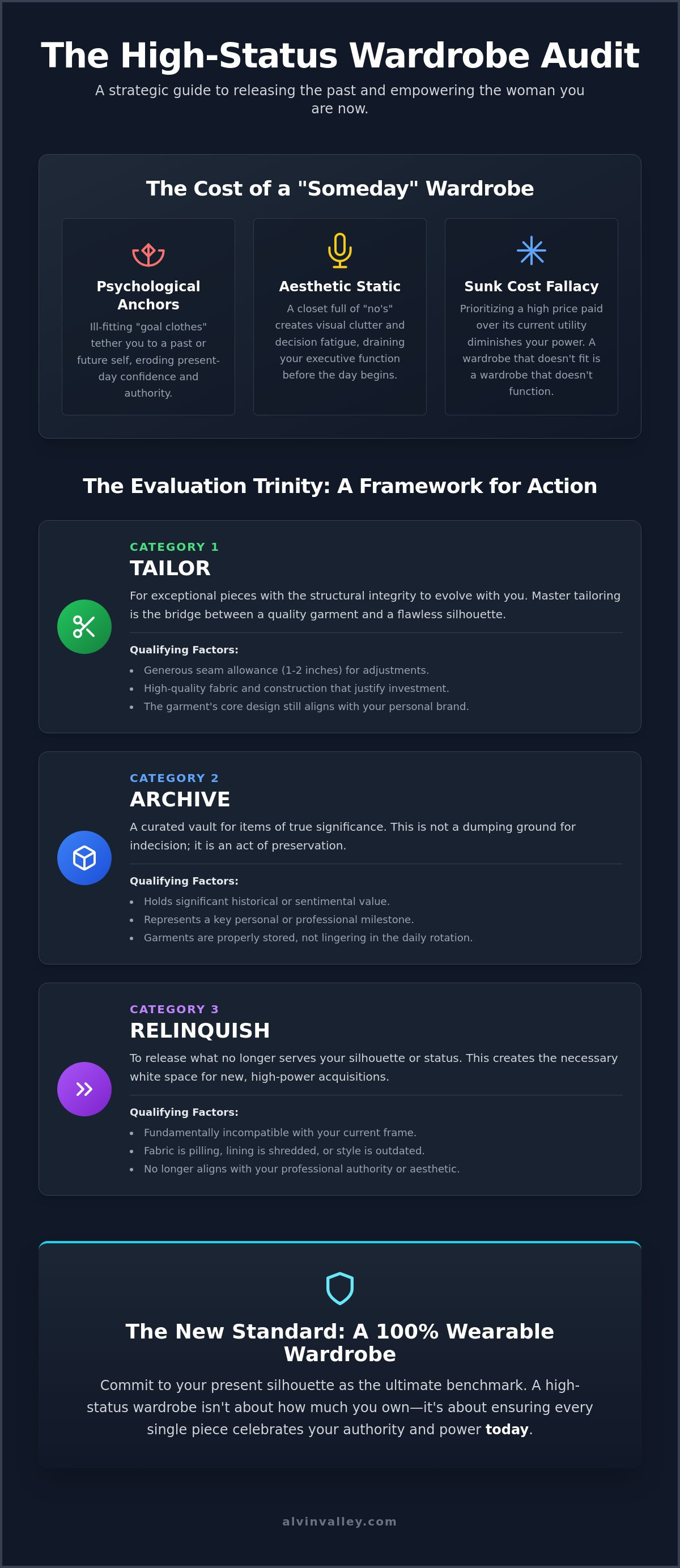
We often treat "goal clothes" as motivators. Experience suggests otherwise. These garments often act as psychological anchors that tether you to a version of yourself that no longer exists. Sunk cost fallacy in luxury fashion occurs when you prioritize the high price paid for an item over the actual utility it provides to your life. The woman who commands the room today is the "Now" woman. She understands that her authority is tied to her silhouette. She doesn't waste time wondering how to find pants that fit waist and hips in a pile of outdated denim; she invests in precision tailoring that honors her current form.
Closet Static and Mental Clarity
Visual clutter creates decision fatigue. Every morning, you scan your collection. Every item that doesn't fit is a "no." This creates aesthetic static. It erodes your executive function before your first meeting. Part of this frustration stems from the industry's reliance on vanity sizing, which renders the number on the label a moving target rather than a technical standard. Seeing ill-fitting clothes every morning subtly erodes your morning confidence. A 100% wearable wardrobe is the ultimate luxury. It allows for effortless elegance. The friction of your morning routine often begins with the struggle of how to find pants that fit waist and hips in a sea of items that simply don't. When every piece in your closet is a "yes," you reclaim your mental clarity and your power.
Precision is a promise you make to yourself. By clearing the path of garments that no longer serve you, you make room for a collection that matches your current status. You deserve garments that celebrate your technical superiority and aesthetic refinement today. The audit is the first step toward a legacy wardrobe that commands immediate respect.
Evaluating Your Collection: Tailor, Archive, or Relinquish
A high-status wardrobe is a living entity. It requires regular pruning to maintain its vitality and authority. The Alvin Valley Evaluation Trinity provides a disciplined framework for this process: Tailor, Archive, or Relinquish. This system moves beyond the emotional weight of a garment. It focuses on the technical reality of the fit and the narrative of your personal brand. When researching how to find pants that fit waist and hips, one often overlooks the potential already hanging in the closet. Some pieces are worth saving. Others have simply reached their sartorial finish line.
The Tailor category is reserved for exceptional pieces that possess the structural integrity to evolve with you. These are garments where the fabric and construction justify the investment of professional adjustment. Conversely, the Archive is a curated vault for items of historical or sentimental significance. It is not a dumping ground for indecision. Finally, the Relinquish category is for items that no longer serve your silhouette or your status. Releasing them creates the white space necessary for new, high-power acquisitions.
The Art of the Alteration
Master tailoring is the bridge between a quality garment and a flawless silhouette. Look for a generous seam allowance; typically one to two inches of fabric hidden within the construction. This allows a professional to let out or take in the garment with surgical precision. Pieces from Alvin Valley: The Definitive Guide to the King of Pants and Luxury Tailoring are specifically designed with this longevity in mind. Their internal architecture supports significant adjustments without compromising the drape. If the fabric is pilling, the lining is shredded, or the rise is fundamentally incompatible with your frame, it is beyond the needle. Respect the garment's limits. Knowing how to find pants that fit waist and hips often means knowing when a pair is structurally incapable of meeting your standards.
Strategic Archiving vs. Hoarding
True archiving requires strict criteria. Save items that represent a designer's legacy, rare textiles, or a pivotal moment in your personal history. Store these in breathable, acid-free garment bags in a climate-controlled environment. Limit this collection to a single, dedicated trunk or a specific section of your secondary closet. This prevents closet creep. It ensures your primary space remains a high-performance environment. If an item doesn't meet these standards and doesn't fit, it belongs in the final category. Once you have cleared the static, you can focus on the technical superiority of modern tailoring that commands the room immediately.
The Cost of Keeping: Why Ill-Fitting Clothes Diminish Your Power
Precision is the silent language of power. In high-stakes environments, your silhouette acts as a visual shorthand for your executive presence. When a garment fails to honor your frame, it doesn't just look untidy; it suggests a lack of alignment. A gap at the waistband or pulling across the lapels communicates distraction. It signals that you are battling your own wardrobe rather than commanding the room. High-status dressing requires a ruthless commitment to the present form. A smaller, perfectly tailored collection carries more weight than a vast archive of ill-fitting luxury. Fit is a promise you make to yourself. Precision is power.
The psychological shift that occurs when every item in your closet fits perfectly is profound. You no longer spend mental energy negotiating with a zipper or hiding behind an oversized blazer. Instead, you step into the world with the poise of an industry veteran who knows her worth. When you master how to find pants that fit waist and hips, you eliminate the friction of dressing. You replace it with the effortless elegance that defines quiet luxury. This isn't just about vanity. It's about the technical superiority of a wardrobe that serves its wearer without compromise.
Silhouette as a Language
A crisp, tailored line is an assertion of competence. It shows you value precision and detail. Conversely, the constant need to adjust, pull, or hide behind excess fabric erodes your poise. You cannot lead effectively if you are preoccupied with a sagging hem or a tight seam. This standard of excellence extends beyond trousers. The same technical rigor found in Women's Blazers: The Definitive Guide to Luxury Tailoring and Power Dressing should be applied to every piece you own. When your clothing is an extension of your authority, you move with a fluid, unbothered grace. Every seam becomes a statement of intent.
The Confidence of the Perfect Fit
The mirror test is the ultimate arbiter of sartorial success. When you know your clothes are working with you, your posture shifts. You stand taller. You speak with more conviction. You eliminate the "closet apology"-that subtle, internal excuse for why you don't look your best. The King of Pants philosophy is built on this very foundation. It prioritizes the woman's current silhouette over the arbitrary number on a size tag. Understanding how to find pants that fit waist and hips is the first step in reclaiming this confidence. When every item in your closet fits perfectly, you no longer dress for a hypothetical version of yourself. You dress for the powerful woman you are today.
Strategic Curation: How to Part with Luxury Investments Gracefully
Releasing a high-end garment is not a loss. It is a liquidity event for your wardrobe. When an item no longer serves your silhouette, it becomes dead capital. Holding onto it out of a sense of financial obligation only hinders your ability to project authority. Strategic curation allows you to transition these pieces to new owners while reclaiming the value they hold. As you refine your eye for how to find pants that fit waist and hips, you will naturally identify legacy pieces that no longer meet your technical standards. Releasing them with sophistication ensures your closet remains a high-performance environment.
The process requires a disciplined approach. You must evaluate the provenance and condition of each piece. High-value garments deserve a transition that respects their craftsmanship. Whether you choose the secondary market or a philanthropic hand-off, the goal is to maintain the integrity of your personal brand. Once the path is cleared, you can reinvest in the technical perfection of a Doyenne Indigo Wash Jean that honors your current form.
Navigating Luxury Resale
For the time-poor professional, luxury consignment is the gold standard for resale. Platforms like The RealReal offer white-glove services that handle the photography and authentication of your items. Commission rates typically range from 30% to 55% of the final sale price; however, high-value assets can yield returns as high as 85%. Alternatively, Vestiaire Collective utilizes a tiered structure where the commission drops to 15% for items priced between $2,000 and $4,999. This market is thriving. The global secondhand apparel market is projected to reach $393 billion by 2030. Utilizing these platforms allows you to recoup your investment and fund the acquisition of perfectly fitted, modern essentials.
Philanthropy Through Fashion
There is a unique power in a sartorial hand-off. Donating high-end professional attire to organizations like Dress for Success empowers women entering high-level careers. These garments provide the immediate authority needed to command a room. Beyond the emotional reward, high-value donations offer significant tax benefits when properly documented. Ensure every piece is professionally cleaned and presented with the respect it deserves. A well-timed gift of a luxury suit can change the trajectory of another woman's career. It’s a way to ensure your style legacy continues to inspire. When you master how to find pants that fit waist and hips for your own frame, you can pass on the gift of a perfect silhouette to those who need it most.
The Alvin Valley Philosophy: Investing in the Woman You Are Now
A legacy wardrobe is not built on volume. It is built on precision. Once you have cleared the "someday" static from your closet, you transition from a mere collection of clothes to a curated arsenal that mirrors your current status. Buying for your current silhouette is an act of dominance. It ensures you command immediate respect because your garments don't look like an afterthought. They look like an intentional choice. High-status dressing requires you to stop dressing for a version of yourself that no longer exists. Your clothes should be a reflection of your current power, not a museum of a past self.
The King of Pants understands that the female form is dynamic. Many women struggle with how to find pants that fit waist and hips because traditional retail relies on rigid, linear patterns. Alvin Valley rejects this. Alvin Valley Jeans: The Definitive Guide to the King of Pants Denim explores how these pieces are engineered for the modern woman's reality. They are designed to accommodate the nuances of your shape while maintaining a sharp, architectural line. When you invest in a fit that honors your present form, you move with a fluid confidence that cannot be mimicked.
The Anatomy of a Foundational Piece
After a successful closet audit, your first acquisition should be a "power piece." Prioritize fabric, technical construction, and timelessness over fleeting trends. A foundational wardrobe relies on the interplay between a perfect trouser and a structured top. High-end Designer Shirts: The Architectural Foundation of a Legacy Wardrobe act as the anchor for your silhouette. They provide the crisp edges necessary to balance a tailored pant. Selecting a new piece is about technical superiority. You are looking for a garment that offers aesthetic perfection from every angle. This is how you build a streamlined closet that works as hard as you do.
Building for the Future, Dressing for the Present
The mindset shift is simple: stop buying a size and start investing in a fit. Sizes are arbitrary numbers that vary by brand. A true fit is a technical standard. The Doyenne silhouette is a masterclass in this philosophy. It is designed to contour the waist while providing the necessary ease through the hips. It solves the age-old problem of how to find pants that fit waist and hips by utilizing superior tailoring and high-recovery fabrics. This silhouette doesn't ask you to change; it adapts to your power. Audit your closet today. Release the ghosts of your past self. Step into the silhouette you deserve and let your wardrobe reflect the authority you have already earned.
Maintaining your silhouette is a holistic endeavor that includes both professional attire and fitness; learn more about Silvana & Osmany CanXport Fashion Finds to find apparel that supports your physical and sartorial goals.
Reclaim Your Sartorial Authority
A successful sartorial audit is more than a seasonal cleaning; it's a strategic restoration of your personal brand. By releasing garments that no longer honor your frame, you eliminate the mental friction of a "someday" wardrobe. You replace hesitation with the absolute confidence of a 100% wearable collection. This process ensures that every piece in your closet communicates competence, precision, and power. It allows you to move with the fluid, unbothered grace that defines quiet luxury.
The search for technical perfection doesn't have to be a compromise. While many struggle with how to find pants that fit waist and hips, the solution lies in the anatomy of a perfect fit. Founded by the King of Pants, Alvin Valley offers luxury tailoring designed specifically for the modern powerful woman. The Doyenne Jean remains the gold standard for accommodating the female form while maintaining a sharp, architectural line. Step into a wardrobe that reflects your current status and commands immediate respect.
Discover the fit that defines you: Shop the Alvin Valley Collection
Your current silhouette is your greatest asset. Honor it with the precision it deserves. Step into the power of the present.
Frequently Asked Questions
Is it worth tailoring clothes that are two sizes too big?
Tailoring a garment more than two sizes down is rarely advisable. This process, often called a full recut, typically costs around $60 and risks distorting the garment's architectural proportions. Pocket placement and side seams often shift, which compromises the designer's original intent and the garment's drape. It's more sophisticated to release the piece and acquire a new silhouette that honors your current form with technical precision and effortless elegance.
How do I deal with the guilt of getting rid of expensive clothes that don't fit?
View the release of luxury items as a strategic reallocation of assets. Guilt is a byproduct of the sunk cost fallacy. By utilizing luxury consignment, you recoup financial value while reclaiming the mental clarity required for high-level decision-making. Your wardrobe should be a reflection of your current power, not a catalog of past expenses. Precision requires letting go of what no longer serves your silhouette.
Should I keep my skinny jeans for motivation?
Motivation should come from your current success, not your past measurements. Keeping smaller clothes as an incentive usually erodes morning confidence and creates unnecessary mental friction. It's far more empowering to master how to find pants that fit waist and hips for your present silhouette. Dressing for the "Now" woman allows you to command the room immediately without the distraction of ill-fitting or uncomfortable fabric.
What is the best way to store luxury clothes I'm archiving?
Preservation requires discipline and the right materials. Use acid-free garment bags and climate-controlled storage to maintain fabric integrity over time. Avoid plastic covers, which trap moisture and cause yellowing of delicate textiles. Only archive pieces with significant designer heritage or rare craftsmanship. A curated archive should be a small, intentional vault, not an overflow for items you simply aren't ready to confront yet.
How often should I perform a sartorial audit of my closet?
A biannual audit is the professional standard for maintaining a high-status wardrobe. Align these reviews with the spring and fall seasonal shifts to ensure your collection remains responsive to your current silhouette. This rhythm prevents the accumulation of "closet static" and decision fatigue. Regular pruning maintains the sharp, editorial edges of your personal brand and ensures every piece you own is ready for high-stakes environments.
What are the signs that a high-end garment is beyond repair or tailoring?
Fabric degradation is the most definitive sign that a piece has reached its end. Look for thinning fibers in high-friction areas or shattered silk linings that can't be patched. Structural limits also matter. If a garment lacks sufficient seam allowance for an adjustment or the rise is fundamentally incompatible with your frame, it cannot be saved. Respect the technical limits of the construction and move on.
Can I really build a versatile wardrobe with fewer pieces?
Quality always trumps quantity in the world of quiet luxury. A streamlined closet of ten perfectly fitted pieces is more versatile than a hundred mediocre ones. When you know how to find pants that fit waist and hips, you can build a high-power rotation around foundational silhouettes. Precision tailoring creates a cohesive aesthetic that communicates competence and attention to detail, allowing you to do more with less.
How do I know if a piece is a true investment or just a past trend?
Examine the construction and the narrative of the silhouette. True investments possess an architectural timelessness and technical superiority that transcend seasonal shifts. They don't rely on loud logos or fleeting aesthetics to assert their value. If a piece was bought to satisfy a temporary cultural moment rather than to enhance your long-term silhouette, it belongs to the past. Legacy pieces endure through superior craft.