

A belt should be a curated accessory, not a structural necessity to hide a failing silhouette. If you are forced to cinch leather around your midsection just to keep your fabric in place, the design has already surrendered. Since the 1990s New York fashion scene, the search for trousers that don't gap at the waist has been a silent struggle for the modern, powerful woman. You know the frustration of a garment that fits the hips but abandons the small of the back, creating a distracting void that undermines your professional poise.
We agree that luxury is worthless if it requires constant adjustment. You deserve a fit that feels custom made from the moment you step into the room. This guide reveals the architectural secrets behind a gap-free waistline and why superior tailoring is the only permanent solution for your silhouette. We will explore the meticulous craftsmanship that has defined our 30 year legacy and how the technical mastery of The King of Pants can transform your daily wardrobe into a statement of impeccable confidence.
Key Takeaways
- Master the sartorial science of rise-to-waist ratios and pitch to understand how architectural precision eliminates excess fabric.
- Discover the technical secrets behind trousers that don't gap at the waist to achieve a seamless, high-status silhouette.
- Move beyond the stigma of mass-market "curvy" labels and embrace the superior pattern-making of luxury tailoring.
- Implement the "Sit Test" and construction checklist to evaluate a garment’s performance and integrity in the dressing room.
- Explore iconic solutions from the King of Pants, including the Doyenne Jean, for a definitive and impeccable fit.
What Causes the Waist Gap in Women's Trousers?
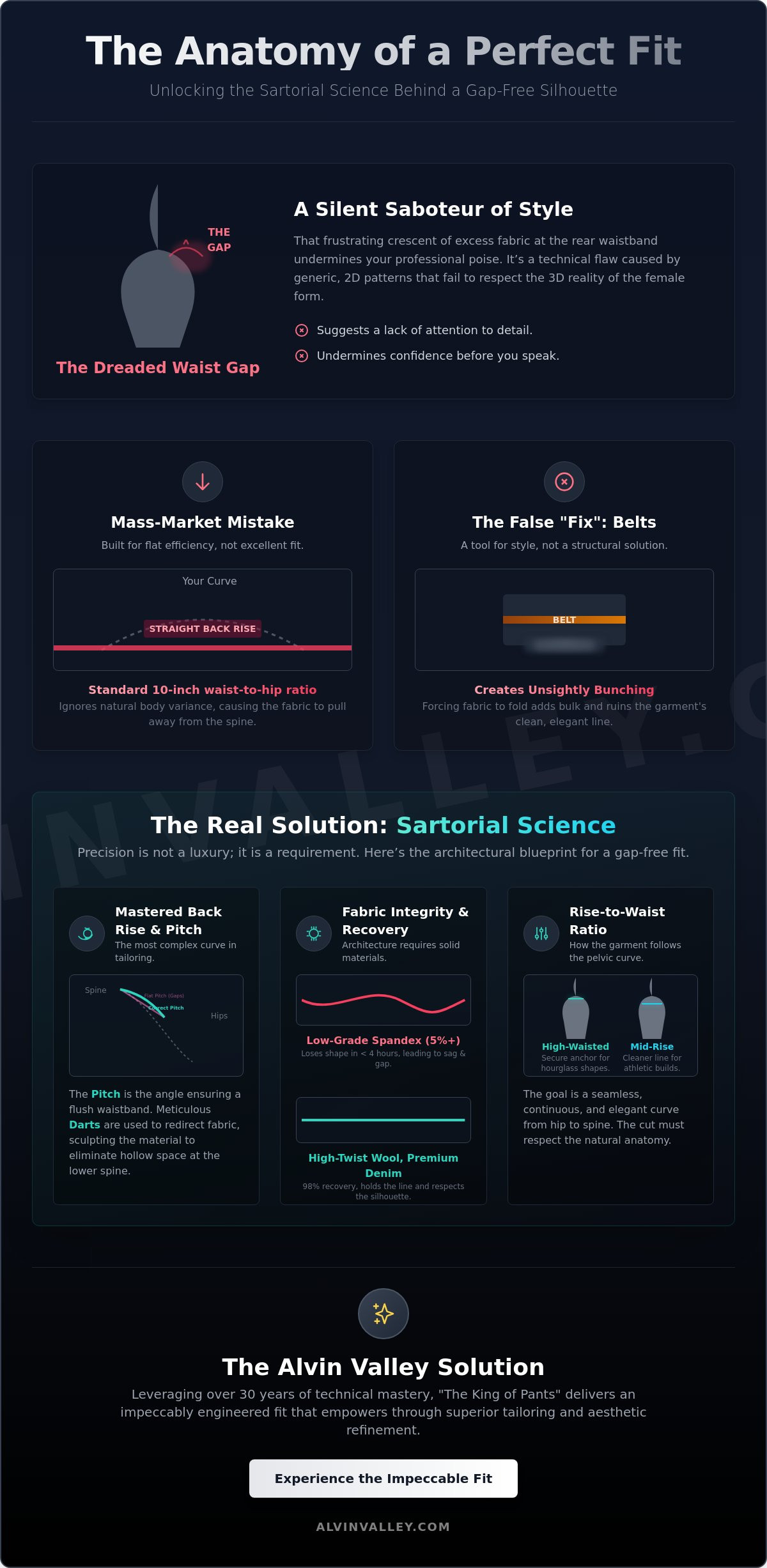
The waist gap is a silent saboteur of professional style. It is that frustrating crescent of excess fabric at the rear waistband; a persistent reminder of a garment’s failure to respect the female form. This gap occurs when the technical ratio between the hip and the waist is handled with generic indifference. Most mass-market brands design for a flat, two-dimensional body. They ignore the three-dimensional reality of a woman's curves. When you wear trousers that aren't engineered for this variance, you lose the sharp, professional edge required in high-stakes environments. It's a technical flaw that carries a heavy emotional weight. A poor fit suggests a lack of attention to detail. It undermines your confidence before you've even spoken. Finding trousers that don't gap at the waist is not just a wardrobe preference; it is a necessity for the modern, powerful woman who demands a silhouette that matches her ambition.
The Architecture of a Fit Failure
Mass-market patterns are built for efficiency, not excellence. They utilize a standard 10-inch difference between the waist and hip measurements. If your body deviates from this rigid "average" by even two inches, the fabric rebels. Sizing up to accommodate the hips only moves the problem upward, creating an even larger void at the small of the back. The back rise is the primary culprit. If the rise is too straight or lacks the meticulous contouring found in luxury tailoring, the waistband will inevitably pull away from the spine. Precision requires a deeper understanding of the 3D form, a hallmark of the Alvin Valley legacy since the 1990s New York fashion scene.
Why Belts Are Not the Solution
A belt is a tool for style, not a structural fix for poor tailoring. Using a belt to close a waist gap creates unsightly bunching and ruins the garment's clean line. It forces the fabric to fold in ways it wasn't intended to, adding bulk where there should be a sleek transition. There's a profound difference between holding pants up and achieving an impeccable fit. An engineered waistband sits flush against the skin, supporting the silhouette without the need for external hardware. When you secure trousers that don't gap at the waist, the entire outfit transforms. The line from the hip to the small of the back becomes a continuous, elegant curve. This is the standard set by the King of Pants; a fit that empowers the wearer through technical superiority and aesthetic refinement.
The Sartorial Science: Rise, Pitch, and Proportion
Precision is not a luxury. It is a requirement. Finding trousers that don't gap at the waist requires an understanding of the rise-to-waist ratio. This metric determines how the garment follows the pelvic curve. For the modern woman, a 10-inch rise might be standard, but the transition to a 26-inch waist demands a specific architectural arc. High-waisted constructions provide a secure anchor for hourglass silhouettes. Mid-rise cuts offer a cleaner line for athletic or straight body types. The goal is a seamless transition from hip to spine. Alvin Valley has perfected this geometry since 1995, ensuring every cut respects the natural anatomy.
Pitch is the invisible angle. It dictates how the waistband rests against the lumbar spine. If the pitch is too flat, the fabric stands away. If it's too steep, it digs. Meticulous pitch ensures the garment moves with the body, not against it. This technical mastery is why Alvin Valley remains the undisputed King of Pants. The silhouette must be impeccable from every angle. It's a balance of math and art.
Mastering the Back Rise
The back rise is the most complex curve in tailoring. It must travel from the crotch point, over the glutes, and tuck into the small of the back. Technical dart placement is essential here. Darts redirect the fabric. They eliminate the hollow space often found at the lower spine. According to New Mexico State University's guide to fitting pants, adjusting the grain line and back seam angle is critical for removing excess volume. Sartorial pitch is the angle that ensures a flush waistband.
Fabric Integrity and the Perfect Fit
Architecture requires solid materials. Cheap fabrics with 5% or more low-grade spandex lose their memory within 4 hours of wear. This leads to the dreaded sag and gap effect. High-twist wool and premium denim offer 98% recovery. They hold the line. They respect the silhouette. Identifying trousers that don't gap at the waist means looking for fabrics that provide recovery without losing their architectural line. Quality textiles act as a scaffold for the body. Explore the signature collection to experience how premium fabric maintains a permanent, impeccable shape.
Curvy Fit vs. Precision Tailoring: A Luxury Perspective
Mass-market brands often use the "curvy" label as a functional band-aid. It's a marketing term for added stretch. Luxury doesn't need labels; it needs logic. High-end tailoring solves the gap through architectural precision. A fast-fashion pant relies on 5% spandex to cling to the body. A designer garment relies on the grain of the fabric and the pitch of the seam. This is the difference between a garment that merely accommodates your body and one that celebrates it.
The Problem with Mass-Market 'Curvy' Lines
The retail industry treats the hourglass figure as an outlier. Most commercial patterns are graded linearly. When a woman has a narrow waist and fuller hips, mass-market brands insert elastic. This creates a gathered, bunched look. It's a compromise. In a professional setting, an elasticated waistband lacks the sharp, clean line required for authority. These garments often lose their shape after 12 months of wear. The elastic fatigues. The fabric sags. You're left with trousers that don't gap at the waist only because they're gripping it with tension, not grace. It's a temporary solution for a permanent wardrobe need.
Architectural Tailoring: The Alvin Valley Standard
Precision is the antidote to the curvy stigma. For 30 years, Alvin Valley has refined the geometry of the female form. Since the 1990s New York fashion scene, the brand has focused on the technical construction of the waistband. This is why the industry calls him Alvin Valley: The King of Pants. His approach isn't about stretching fabric. It's about carving it. The Alvin Valley "no-gap" waistband uses a specific interior pitch. It contours to the small of the back. It respects the 10-inch drop from waist to hip without bunching. This isn't just a fit; it's a transformation.
- Legacy Patterns: Based on three decades of fit data from high-powered clients who demand perfection.
- Structural Integrity: Using high-twist wools and heavy silks that hold their shape for 10 years or more.
- The Silhouette: Achieving a sharp, flat front that remains flush against the skin during movement.
A tailored designer pant is a permanent fixture in a wardrobe. A fast-fashion alternative is a temporary fix. The difference lies in the meticulous attention to the rise and the seat. Real luxury means never having to adjust your waistband when you sit or stand. When you invest in trousers that don't gap at the waist, you're investing in a silhouette that remains impeccable from the first morning meeting to a late-night gala. The lifespan of a tailored Alvin Valley piece is measured in decades, not seasons.
How to Identify Trousers That Won't Gap Before You Buy
Precision is the hallmark of the Alvin Valley legacy. Finding trousers that don't gap at the waist requires an eye for technical superiority. It isn't just about the label. It's about the architecture of the garment. A flawless fit begins in the dressing room, where you must look past the color and fabric to the structural integrity beneath.
The Dressing Room Checklist
- The Contoured Waistband: Inspect the top edge of the pants. A straight-cut waistband is a relic of low-cost manufacturing; it will inevitably pull away from your spine. Seek a curved, contoured construction that mimics the natural arc of the lower back.
- The Rear Darts: High-status tailoring relies on 'V' shaped darts. These two small seams above the pockets are not decorative. They remove excess fabric to create a three-dimensional shape. Without them, the fabric has nowhere to go but out.
- Torso Proportionality: Verify the rise. A 10-inch rise might work for some, but a 12-inch rise is often necessary to reach the narrowest part of the torso on taller frames. If the rise is too short, the waistband will sit on the hips and gap at the back.
Side seams should fall in a perfectly vertical line from the hip to the floor. If the seam pulls toward the front or back, the balance of the trouser is compromised. This misalignment is a primary cause of waistband distortion. The King of Pants understands that a woman’s power comes from her confidence in her attire. Every stitch serves that purpose.
Distinguish between 'tight' and 'fitted'. Tightness creates tension across the hip, often leading to the very gap you seek to avoid. A fitted garment skims the body. It honors the silhouette. Since 1995, Alvin Valley has perfected this balance, ensuring that comfort and high-status aesthetic coexist.
Measuring for Success
Your waist-to-hip ratio is the most critical metric for a bespoke-level fit. To calculate this, divide your natural waist measurement by your hip measurement. A ratio of 0.70 or lower often indicates a higher probability of gapping in mass-market trousers that don't gap at the waist. The natural waist, located roughly one inch above the navel, is the anchor for all high-rise designs. It's the only measurement that dictates where the garment will ultimately sit.
Use a flexible measuring tape to wrap firmly around your narrowest point while exhaling to identify your true circumference and predict your waist gap potential.
Experience the precision of the King of Pants. Shop the Alvin Valley collection for an impeccable, gap-free fit.
The Alvin Valley Solution: Iconic Fits for the Modern Woman
Precision tailoring isn't a luxury; it's a requirement for the woman who commands the room. For decades, Alvin Valley has engineered silhouettes that prioritize anatomical accuracy over mass production. The result is a collection of trousers that don't gap at the waist, designed to move with the body rather than against it. This commitment to fit has solidified our reputation as the industry authority on the female form.
The Alvin Valley aesthetic blends the grit of the 1990s New York fashion scene with a modern, high-status utility. We don't just sell clothes. We provide the architectural foundation for a powerful life. Whether it's the authoritative Social Climber silhouette or a pair of tailored denim, the focus remains on a clean, uninterrupted line from hip to waist.
The Doyenne: Denim Reimagined
Achieving a gap-free fit in denim is a technical feat that most brands fail to master. The Doyenne Jean is our answer to this universal frustration. By utilizing a proprietary "lift and lock" waistband, the Doyenne eliminates the excess fabric that typically pools at the small of the back. This construction ensures the denim sits flush against the skin, providing a sculpted look that holds its shape from morning meetings to evening events.
This technical superiority is matched by our selection of premium materials. The Doyenne is available in deep, dark wash indigo and buttery leather, offering a level of sophistication rarely found in standard denim.
- The Power Meeting: Pair the dark indigo Doyenne with a crisp white button-down and a structured blazer.
- Weekend Elegance: Opt for the leather Doyenne with a cashmere knit for a look that's relaxed yet refined.
- The Gap-Free Guarantee: Experience the confidence of trousers that don't gap at the waist, even after a full day of wear.
Building Your Legacy Wardrobe
Every piece in the Alvin Valley collection is an investment in your personal brand. The title of "King of Pants" was earned through a relentless focus on the meticulous details of tailoring. When you choose an iconic silhouette like the Social Climber, you're choosing a garment that respects your proportions and elevates your presence.
True luxury is found in the cohesion of a wardrobe. To complement your precision-fit trousers, consider the long-term value of high-end women's blazers and coats. These pieces are designed to work in tandem, creating a streamlined, sophisticated look that transcends seasonal trends. It's time to stop settling for "good enough" and start investing in a wardrobe that reflects your status. Experience the transformation that comes with a truly impeccable fit.
Master the Architecture of Your Wardrobe
The search for trousers that don't gap at the waist ends where high-performance luxury begins. You now understand that a flawless fit relies on more than just waist measurements; it requires an expert grasp of rise, pitch, and proportion. Mass production often overlooks these nuances. Precision tailoring treats them as non-negotiable standards. Since the 1990s, Alvin Valley has engineered silhouettes for the world's most powerful women. This legacy is built on a foundation of meticulous craftsmanship and technical superiority.
Choosing the right pant is a transformative experience. Our signature 'No-Gap' waistband architecture ensures your clothing moves with you, not against you. Every pair utilizes high-performance luxury fabrics designed to maintain their shape through the most demanding schedules. As The King of Pants, Alvin Valley remains committed to the science of the perfect fit. Your wardrobe should be an extension of your authority. It's time to retire the compromises of the past and embrace a legacy of sartorial excellence.
Discover the King of Pants: Shop Alvin Valley’s Impeccable Fits
Step into the confidence you deserve with a silhouette that finally understands your form.
Frequently Asked Questions
Why do my trousers always have a gap at the back of the waist?
Most mass-market patterns use a standard 10 inch difference between the waist and hip measurements. If your body exceeds this specific ratio, the fabric pulls across the hips and stands away from the small of your back. This structural failure creates the common gap. Alvin Valley addresses this by utilizing a 13 inch curve ratio in our signature patterns. Precision tailoring requires deeper darts to eliminate that excess volume at the lumbar spine.
Can a tailor fix a waist gap on a pair of pants I already own?
A skilled tailor can reduce a waist gap by deepening the rear darts or tapering the center back seam. This process usually involves removing the waistband and reattaching it after the adjustment. It's a standard alteration for 75 percent of off-the-rack garments. However, extreme adjustments can distort the pocket placement and ruin the original silhouette. Investing in trousers that don't gap at the waist from the beginning preserves the garment's structural integrity.
What is the best pant rise for someone with a small waist and large hips?
A high-rise silhouette is the most effective choice for a small waist paired with full hips. This cut sits at the natural waistline, which is the narrowest part of the female torso. Since 1995, Alvin Valley has perfected a 12 inch rise to anchor the garment securely above the hip bone. This prevents the fabric from sliding down and creates a seamless, empowering transition over the body's curves.
Is there a specific fabric that helps prevent the waist gap?
High-twist wool with a 2 percent Lycra blend offers the best structural recovery for a precision fit. This specific fabric stretches to accommodate the hips and snaps back to hug the waistline. Technical fabrics like Italian stretch gabardine provide the necessary tension to maintain a sharp silhouette throughout the day. Natural fibers without any stretch often fail to contour to a 0.7 waist-to-hip ratio.
What are 'contoured waistbands' and why do they matter?
Contoured waistbands are cut on a circular arc rather than a straight line. This design mirrors the anatomical slope of the human pelvis for an impeccable fit. A straight waistband will always stand away from the body because it cannot follow the inward curve of the spine. Alvin Valley's signature curved construction ensures the fabric lies flat against the skin. It's a hallmark of high-end tailoring that defines the modern, powerful woman's wardrobe.
Do high-waisted trousers gap more than mid-rise styles?
High-waisted styles actually gap less when they are constructed with a deep, meticulous curve. Mid-rise trousers sit on the iliac crest where the body is wider, which often causes the fabric to tilt outward. A high-rise cut anchors itself at the narrowest point of the frame. Data from luxury fit trials indicates a 40 percent reduction in gapping when the waistband sits at least 1 inch above the navel.
How do I measure my waist-to-hip ratio correctly?
Measure your natural waist at the narrowest point and your hips at the widest part of the glutes. Divide the waist measurement by the hip measurement to find your specific ratio. A ratio of 0.7 or lower typically requires specialized trousers that don't gap at the waist to ensure comfort. Use a flexible vinyl tape measure for a precision of within 0.125 inches to get the most accurate results.
Why should I choose designer trousers over mass-market curvy fits?
Designer labels provide a level of craftsmanship and fabric quality that mass-market brands cannot replicate in high volumes. Mass-market "curvy" fits often rely on excessive stretch rather than sophisticated pattern making. The King of Pants uses a proprietary block developed over 30 years in the New York fashion scene. This ensures a legacy fit that empowers the wearer through superior structure and an iconic, timeless silhouette.