

Why do most blazers lose their authority the moment you step out of the dressing room? You likely know the frustration of a silhouette that looks sharp under boutique lighting but feels restrictive or looks "cheap" by midday. It's an expensive mistake many high-powered women make. Understanding exactly what to look for when buying a blazer is the difference between a fleeting trend and a lifetime investment. You deserve a garment that commands the room with quiet luxury. Precision is everything.
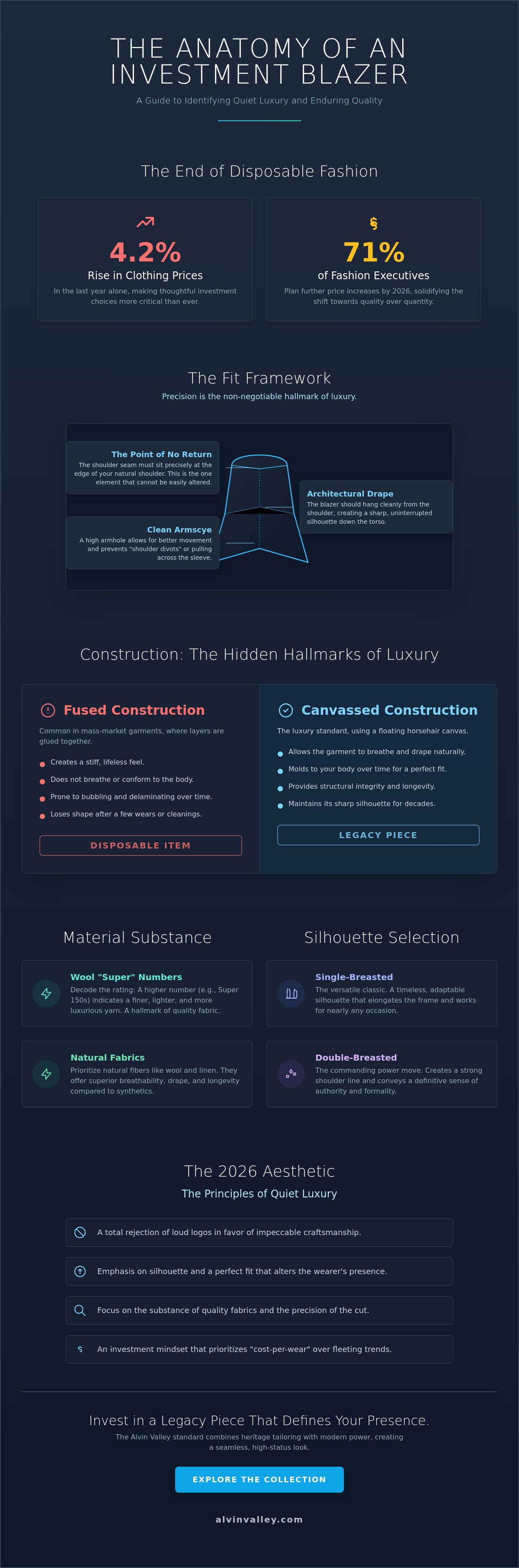
With clothing prices rising 4.2 percent in the last year and 71 percent of fashion executives planning further increases in 2026, every sartorial choice carries more weight. We'll master the art of selection together. This guide explores the technical markers of quality tailoring, from the architectural precision of the shoulder to the integrity of natural fabrics like wool and linen. We'll decode lapel styles and the shift toward soft tailoring. You'll finish this guide feeling empowered to find a piece that fits perfectly and reflects your professional stature. It's time to invest in a legacy piece that defines your presence.
Key Takeaways
- Identify the non-negotiable architectural markers of the shoulder, the one element of tailoring that cannot be compromised or easily altered.
- Learn exactly what to look for when buying a blazer to distinguish between fleeting fast-fashion and a permanent wardrobe cornerstone.
- Decode the complexity of wool "Super" numbers and seasonal weights to ensure your investment maintains its integrity and drape for years to come.
- Select the silhouette that aligns with your public persona, comparing the versatile single-breasted classic against the commanding double-breasted power move.
- Understand how the Alvin Valley standard of precision creates a seamless, high-status look when paired with foundational pieces like the Doyenne Jean.
The Architecture of Authority: Why Your Blazer Choice Matters
The blazer is the undisputed cornerstone of a woman's public persona. It is not merely a garment. It is a structural foundation that signals competence, status, and a commitment to excellence. In a professional landscape where 71 percent of fashion executives are planning to increase prices in 2026, the era of disposable fashion is ending. Discerning investors now prioritize pieces that offer structural longevity over the fleeting appeal of mass-market trends. Understanding exactly what to look for when buying a blazer is the first step in building a wardrobe that lasts decades rather than seasons.
A well-constructed blazer does more than cover the body; it alters the wearer’s physical presence. It forces a refinement of posture. It squares the shoulders and narrows the focus. This architectural precision translates directly into psychological confidence. When you wear a piece designed with technical superiority, you don't just look the part. You feel the weight of your own authority. This is the essence of the "cost-per-wear" mindset. A high-end blazer may require a larger initial investment, but its ability to maintain its silhouette through years of metropolitan life makes it the most economical choice in your closet.
The Difference Between a Jacket and a Tailored Blazer
Technical distinction defines true luxury. While a standard jacket might offer warmth or a casual layer, a blazer provides a specific architectural frame. The history of the blazer highlights its evolution from a structured sporting garment to the pinnacle of executive attire. The primary difference lies in the shoulder and internal canvassing. A tailored blazer uses specific padding and chest pieces to create a permanent shape. While "soft tailoring" is a significant trend for 2026, offering a more natural drape and minimal padding, structured tailoring remains the legacy choice for those seeking a definitive power move. A blazer stands alone as a statement piece, commanding a room even when separated from its matching trousers.
Quiet Luxury and the 2026 Aesthetic
The 2026 aesthetic is defined by a total rejection of loud logos in favor of impeccable silhouette and fit. This is the heart of quiet luxury. We are seeing a return to metropolitan fashion heritage where the quality of the fabric and the precision of the cut do the talking. The modern, powerful woman seeks a garment that feels both storied and sharply contemporary. Every stitch must serve a purpose. The 2026 blazer is a masterwork of historical precision and modern utility, designed to command respect without uttering a single word. It is a tool for the woman who values substance over spectacle.
- Structural Integrity: High-end blazers use horsehair canvassing rather than fused glues to ensure the garment breathes and molds to your body.
- Investment Value: With clothing prices having risen 4.2 percent in the last year, quality construction protects your capital.
- Visual Weight: A blazer creates a focal point in an outfit, grounding lighter pieces like silk camisoles or knit tops.
The Fit Framework: Technical Markers of a High-End Blazer
Precision is the hallmark of luxury. When considering what to look for when buying a blazer, you must look past the color and fabric to the structural skeleton. Excellence is found in the details of the fit. A high-end blazer should feel like a second skin, providing structure without restriction. It is the architectural anchor of your wardrobe. If the fit is flawed, the most expensive fabric in the world cannot save the silhouette.
The internal construction is where quality is truly revealed. Many mass-market brands use "fused" construction, where the outer fabric is glued to the lining. This creates a stiff, lifeless garment that eventually bubbles and loses its shape. Luxury tailoring utilizes a floating canvas, often made of horsehair, which allows the blazer to breathe and mold to your body over time. This internal integrity ensures your investment maintains its sharp edges for a lifetime. It's the difference between a disposable item and a legacy piece.
Shoulder Alignment and the Armscye
The shoulder is the point of no return. It is the only part of the blazer that cannot be easily or affordably tailored. The seam must sit precisely at the edge of your natural shoulder. If the pads extend beyond your frame, the look becomes dated and heavy. Conversely, if they are too narrow, the sleeve will pull and create "shoulder divots," which are small indentations that signal poor construction. Look for a high armhole, or armscye. A higher armhole allows for a greater range of motion and creates a slimmer, more modern silhouette that doesn't lift the entire jacket when you move your arms.
The Lapel and Chest Break
A flawless lapel should lie flat against your chest with effortless grace. If the lapel gapes or bows outward, the jacket is too tight across the chest or poorly constructed. The visual weight of the lapel also dictates the garment's tone. While a notch lapel is the standard for versatility, there is a distinct psychological impact to the peak lapel in power dressing. It draws the eye upward, broadening the shoulder and projecting a sense of assertive elegance. Ensure the width of the lapel is proportional to your frame to maintain visual balance.
The sleeve and waist provide the final touch of refinement. Your sleeves should hit just at the wrist bone, allowing a fraction of a shirt cuff or a watch to remain visible. At the waist, the closure should be snug but never tight. If you see an "X" shaped pull of fabric around the button, the blazer is too small. A perfect fit allows you to move with confidence. To find the ultimate foundation for this look, consider how a precision-cut blazer pairs with our Doyenne Indigo Wash Jeans for a balanced, high-status aesthetic.
- The Shoulder: Non-negotiable fit. Must align with your natural frame.
- The Sleeve: Wrist-bone length is the executive standard.
- The Waist: Aim for a clean drape without button-pull tension.
Material Substance: Evaluating Luxury Fabrics and Construction
Fabric is the soul of the garment. When discerning what to look for when buying a blazer, the tactile quality of the textile dictates its lifespan and its legacy. High-status tailoring relies on natural fibers that breathe, move, and recover. Synthetic blends may mimic the look of luxury on a hanger, but they fail the test of time. A true investment piece begins with the caliber of the wool and the integrity of the internal layers.
Wool quality is often measured by "Super" numbers, ranging from 100s to 150s and beyond. These figures represent the fineness of the individual fibers. A Super 100s or 120s wool is the executive standard. It provides a perfect balance of refined hand-feel and daily resilience. While Super 150s wool feels incredibly soft, it is also delicate and prone to premature wear. For a blazer that must withstand the rigors of metropolitan travel, a mid-weight Super 120s wool remains the definitive choice, offering a crisp handle and exceptional recovery.
Seasonal weights further refine the garment's utility. Heavy serge wool provides the architectural weight needed for cooler climates. Conversely, lightweight tropical wool is woven with a more open structure. This allows for maximum airflow without sacrificing the sharp, professional silhouette. Your choice of lining is equally critical. Avoid polyester at all costs. It traps heat and feels restrictive. Seek out Cupro, also known as Bemberg, or pure silk. These materials are breathable, anti-static, and allow the blazer to glide effortlessly over your base layers.
Canvassed vs. Fused Construction
The true mark of a luxury blazer is hidden beneath the surface. Mass-market jackets are "fused," meaning the outer fabric is glued to an interlining. Over time, heat and dry cleaning cause this glue to degrade, resulting in unsightly "bubbles" on the lapel and chest. High-end tailoring utilizes canvassing, a layer of horsehair or wool that is stitched, not glued, to the fabric. You can identify this through the "pinch test." Pinch the fabric near a buttonhole. If you feel a distinct third layer floating between the outer shell and the lining, the garment is canvassed. This construction allows the blazer to mold to your unique proportions over time.
Luxury Blends: Silk, Cashmere, and Linen
For those seeking a specific aesthetic, luxury blends offer unique advantages. A silk-wool blend provides a subtle, sophisticated sheen that excels in evening settings. Cashmere-wool blends offer unparalleled softness and warmth for the winter months. In warmer seasons, high-end linen is the premier choice. It does not aim for perfection; instead, it "wrinkles with dignity," signaling a relaxed yet refined approach to summer power dressing. A mid-weight Super 120s wool remains the definitive choice for a multi-season investment blazer, offering a crisp handle and exceptional recovery.
- Full-Canvas: The pinnacle of tailoring. The canvas runs the full length of the jacket.
- Half-Canvas: A strategic compromise. Canvassing is used in the chest and lapel for structure where it matters most.
- Unstructured: Ideal for "soft tailoring." This style relies on the weight of the fabric itself rather than internal layers.
Silhouette Selection: Matching the Blazer to Your Persona
Silhouette is the visual shorthand for your professional intent. It is the defining outline that communicates your role before you ever speak. Deciding what to look for when buying a blazer begins with identifying the shape that mirrors your ambition. In 2026, the market offers a diverse range of architectural forms, from the precision of the single-breasted classic to the assertive volume of the boyfriend cut. Each choice serves a specific function within a high-powered wardrobe.
The single-breasted blazer is a master of versatility. It offers clean, vertical lines that elongate the frame and provide a streamlined appearance. It's the essential entry point for any woman building a legacy closet. Conversely, the double-breasted blazer is the ultimate power move. By adding visual weight to the chest and shoulders while tapering at the waist, it creates a commanding V-shaped silhouette. It's a garment that demands space and respect. For a more contemporary edge, the cropped blazer has emerged as a high-status alternative, perfectly designed to highlight the waist when paired with high-rise tailoring.
Proportions and Styling
Mastering proportions is a technical skill. The "Rule of Thirds" is your primary guide; the hem of a standard blazer should ideally hit at the hip bone or mid-thigh to maintain a balanced aesthetic. Button stance, or the height at which the jacket fastens, also dictates the visual length of your torso. A lower button stance creates a deep V-neckline that elongates the neck and chest. When styling these pieces, contrast is key. Pairing structured, architectural blazers with wide leg jeans creates a sophisticated, metropolitan tension that feels both relaxed and refined. It's an elevated casual look that remains rooted in sartorial excellence.
Color Palette: Beyond the Navy Blazer
While navy is the traditional starting point, a truly definitive wardrobe requires a broader spectrum of neutrals. The black blazer remains the non-negotiable anchor piece, serving as the foundation for both daytime executive roles and evening engagements. Transitioning into "quiet luxury" means embracing camel, ivory, and grey melange. These tones highlight the quality of the fabric and the precision of the cut. Once your foundations are secure, consider investing in subtle patterns like herringbone or a muted windowpane check. These textures add depth to your public persona without sacrificing sophistication. Explore the latest in Alvin Valley signature tailoring to discover how color and cut can transform your professional presence.
- The Boyfriend Cut: Look for intentional volume in the shoulders; it should look oversized, not ill-fitting.
- The Belted Blazer: Ideal for creating a cinched, feminine waistline within a structured frame.
- The Funnel-Neck: A minimalist, modern choice for those who prefer a sleek, collarless aesthetic.
The Alvin Valley Standard: Where Heritage Meets Modern Power
Alvin Valley has long been hailed as the "King of Pants." This title is not merely a label; it is a testament to decades spent mastering the architectural nuances of the female form. That same obsession with precision defines our blazer collection. When you consider what to look for when buying a blazer, you are seeking more than a garment. You are seeking a structural promise. Our tailoring acts as a bridge between a legendary fashion past and a functional, high-powered future. Precision is our signature.
The Alvin Valley silhouette is designed for the woman who understands that a wardrobe is an ecosystem. Our blazers are engineered to complement the iconic Doyenne Jean, creating a seamless transition from executive meetings to metropolitan evenings. The high-rise cut of the denim meets the tailored waist of the blazer at the exact point of maximum impact. It is a visual dialogue of authority. We don't just sell clothing; we curate a high-status lifestyle where every line is deliberate and every fit is absolute.
A Legacy of Fit
Decades of experience inform every shoulder pad and chest piece we craft. We reject the compromises of mass-market volume in favor of limited-run, designer-led production. This ensures exclusivity. It ensures that your garment remains a rare artifact in a world of disposable trends. Investing in an Alvin Valley piece means owning a garment that feels both storied and sharply contemporary. We utilize the same technical rigor that made our trousers legendary to ensure our jackets mold to your body with effortless elegance. It is a legacy you can feel.
Completing the Look
A definitive wardrobe requires a foundation of excellence. A full Alvin Valley silhouette begins with the layer closest to the skin. Building a legacy wardrobe starts with our designer shirts, which provide the crisp, architectural base necessary for a high-end blazer to shine. When these elements align, the transformation is total. You aren't just dressed; you are armored in quiet luxury. Use this final checklist to ensure your next acquisition meets the Alvin Valley standard:
- The Shoulder: Does the seam sit precisely at the edge of your natural frame?
- The Canvas: Does the internal structure pass the pinch test for a floating canvas?
- The Fabric: Is the wool a natural fiber with high recovery, such as a Super 120s?
- The Proportion: Does the hem hit at a point that honors the Rule of Thirds?
- The Connection: Does the blazer integrate seamlessly with your foundational trousers or jeans?
Discover the latest collection of luxury blazers at Alvin Valley and secure your next architectural cornerstone.
Defining Your Sartorial Legacy
The blazer is the ultimate expression of executive presence. You now possess the technical knowledge to distinguish true craftsmanship from mass-market imitations. Remember that the shoulder is your architectural anchor. It must be perfect from the first wear. Natural fibers and internal canvassing are the silent markers of a garment that will mold to your life over time. Understanding exactly what to look for when buying a blazer transforms a simple purchase into a strategic asset for your public persona.
Alvin Valley, the legendary 'King of Pants', brings this same level of architectural tailoring to our signature blazer collection. We utilize only premium fabrics sourced for their longevity and impeccable drape. Every stitch is designed to empower the modern woman. You deserve a silhouette that reflects your status and your ambition. It's time to invest in a piece that commands respect without saying a word. Precision is not an option; it is a requirement.
Shop the Alvin Valley Blazer Collection to find your next cornerstone piece. Step into every room with the confidence of a legacy built on precision and poise. Your future wardrobe starts today.
Frequently Asked Questions
How should a women's blazer fit in the shoulders?
The shoulder seam must rest precisely at the natural edge of your shoulder. It should create a sharp, clean line without extending past your frame or pulling inward. A well-fitted shoulder is the non-negotiable foundation of luxury tailoring. If this area is ill-fitting, the entire silhouette fails. It is the one element that cannot be easily or effectively altered by a tailor.
What is the difference between a cheap blazer and an expensive one?
The primary difference lies in the internal construction and fabric integrity. Expensive blazers utilize natural fibers and a floating horsehair canvas that molds to your body over time. Cheap alternatives rely on synthetic blends and fused, glued interlinings. These mass-market versions often bubble and lose their architectural structure after only a few wears, whereas luxury pieces are built for longevity.
Should I buy a single-breasted or double-breasted blazer first?
Start with a single-breasted blazer for its unmatched versatility. It transitions effortlessly from high-level boardrooms to evening social engagements. Its vertical lines elongate the frame and provide a streamlined appearance. Once your foundation is secure, the double-breasted blazer serves as a secondary power move. It offers a more assertive, structured aesthetic for those seeking a commanding public persona.
Can a blazer be tailored if it's too big?
A blazer can be tailored at the waist, sleeves, and hem; however, the shoulders must fit perfectly from the start. Altering the shoulders is technically complex and often compromises the garment's architectural integrity. When considering what to look for when buying a blazer, prioritize the shoulder fit above all else. Proper waist suppression can be added later to create a more defined, feminine shape.
What fabric is best for a year-round blazer?
Mid-weight Super 120s wool is the definitive choice for a multi-season investment. It offers exceptional breathability during warmer months and provides enough substance for cooler climates. This natural fiber recovers its shape quickly and maintains a crisp, professional hand-feel throughout the year. It's the executive standard for durability and aesthetic perfection, ensuring your garment remains a cornerstone of your wardrobe.
How do I know if a blazer is high quality?
Quality is signaled by the "pinch test" and the hand-feel of the textile. Pinch the fabric near the chest to feel for a floating third layer; this indicates a superior canvassed construction. High-status garments also feature functional sleeve buttons, clean interior finishing, and natural linings like Cupro or silk. These markers distinguish a masterfully crafted piece from a disposable, mass-produced alternative.
Is a black or navy blazer more versatile for a woman's wardrobe?
Navy is the traditional cornerstone of a professional wardrobe. It offers a softer appearance and pairs seamlessly with a wider range of colors. However, a black blazer provides a sharper, more formal edge that anchors a metropolitan aesthetic. While navy is often recommended for a first purchase, both colors are essential foundations for a high-powered, high-status wardrobe.
What should I look for in the lining of a luxury blazer?
Seek out natural, breathable materials such as Cupro, also known as Bemberg, or pure silk. These fabrics prevent static and allow the jacket to glide effortlessly over your base layers. They also regulate temperature far better than synthetic options. Avoid polyester linings at all costs. They trap heat and signal a lack of technical refinement in the blazer's overall construction.