

The rise sets the silhouette. High-waist jeans have a waistband that sits above the hips, and the rise is measured from the top of the waistband to the crotch seam. Luxury denim jeans with a high rise can accentuate the figure and create the illusion of longer legs.
The appeal is clear: a considered waistline can make denim feel polished, while fit and fabric determine how it wears throughout the day. But a high rise is only the starting point. Leg shape, denim structure, wash, and styling all influence the final effect.
This guide explains what defines high-waist jeans and how prices vary across the market. You’ll also learn how to compare fits and fabrics, understand the character of different washes, and style high-rise denim for both relaxed days and more dressed-up occasions. The aim is a discerning choice: one that feels effortless with a simple tee and sneakers, yet equally composed beneath a blazer.
Key Takeaways
- Compare the rise, waist fit, and inseam together so the jeans work with your proportions and preferred shoes.
- Assess denim structure and stretch to choose how much give and shape retention you want from a pair.
- Use leg shape and wash to set the mood, from a clean, tailored line to a more relaxed silhouette.
- Evaluate market pricing by considering the cut, fabric, finish, and overall design rather than the label alone.
- Build more versatility into your wardrobe by choosing denim that can shift naturally between casual and polished looks.
1. What are High Waist Denim Jeans?
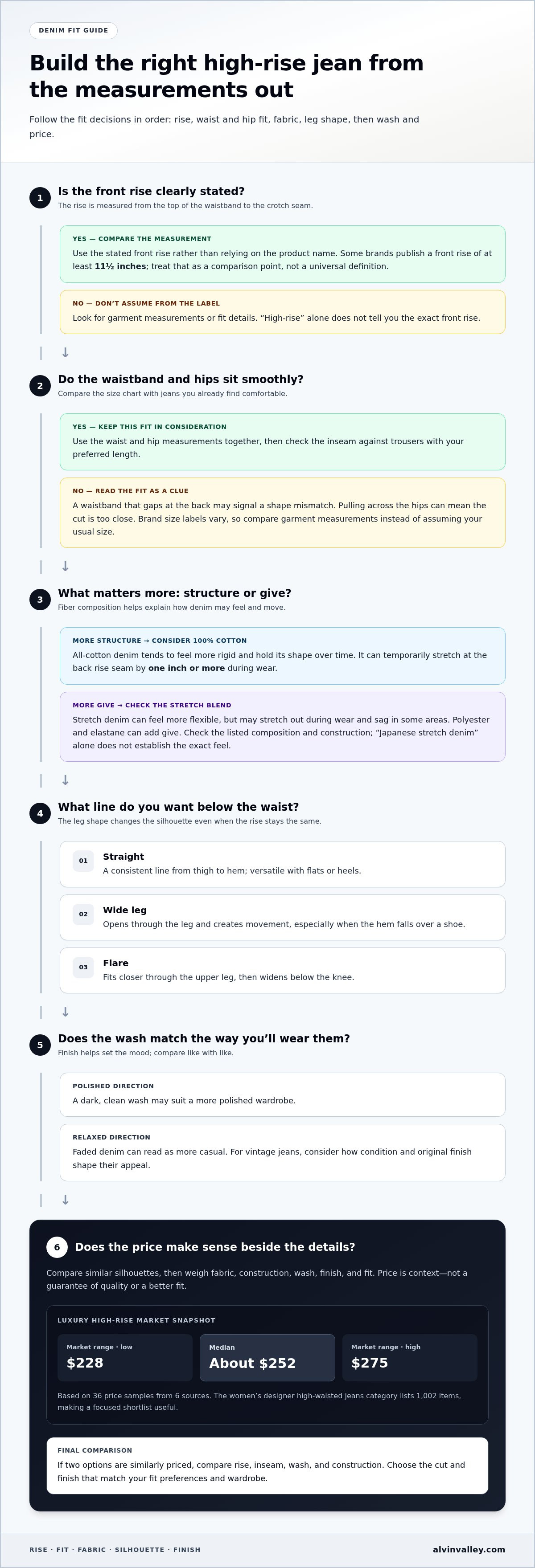
High-waist jeans have a waistband that sits just above the hips. Their defining feature is the rise, measured from the top of the waistband down to the crotch seam. This measurement helps distinguish a genuinely high rise from a mid-rise cut that simply feels snug at the waist. For a useful comparison, look at the stated front rise, not only the product name. The market includes brands publishing a front rise of at least 11 1/2 inches.
Fit begins with how the waistband and seat sit on your body. Check the size chart, then compare its waist and hip measurements with a pair of jeans you already find comfortable. A waistband that gaps at the back may signal a shape mismatch, while pulling across the hips can mean the cut is too close. Size labels vary between brands, so use garment measurements rather than assuming the same size will fit every silhouette.
Consider rise and inseam together. The rise determines where the waistband sits, while the inseam affects where the hem falls over your shoes. Compare inseam measurements with trousers that have your preferred length, and remember that flats and heels can call for different hem proportions. If a retailer offers filters for rise, size, inseam, and stretch, use them to narrow your options while keeping fit in focus.
Fabric affects both comfort and shape retention. Denim made from 100% cotton tends to feel more rigid and hold its shape over time. Stretch denim can offer more give, but it may stretch out during wear and sag in some areas. Stretchier blends may include polyester and elastane, which add give to the fabric. Even all-cotton jeans can temporarily stretch at the back rise seam by one inch or more during wear. That temporary change is different from fabric that stays stretched out.
Japanese stretch denim refers to denim associated with Japanese production and a stretch component, but the label alone doesn’t establish its exact feel. Check the listed fiber composition and cut. A pair with elastane may feel more flexible than rigid cotton; the degree of stretch depends on the fabric blend and construction. Compare these details before choosing a size, especially if you prefer a close fit.
When choosing luxury denim jeans with a high rise, weigh the rise measurement, waist fit, inseam, and fabric together. These details give a clearer picture of how the jeans will sit and move than any single filter.
2. High-rise jean prices
The best luxury high-rise jeans for women are defined by fit, fabric, construction, and versatility, not price alone. Choose a rise that sits securely at your waist, then assess the hip fit and leg shape. A straight cut can feel more tailored, while a wide leg creates a relaxed line. The strongest choice is the pair that works with your proportions and wardrobe.
On the market, high-rise jeans typically range from $228 to $275, with a median of about $252. This range reflects 36 price samples from 6 sources, collected October 23, 2026. A designer label’s price may differ according to fabric, construction, wash, and finish. Treat the market range as a comparison point, not a measure of quality or a promise about any individual collection.
Compare luxury high-rise jeans by looking at fit, quality, and price through specific details. A close fit should sit smoothly at the waist and hips; a relaxed cut allows more ease through the leg. Fabric composition affects feel and movement, while stitching, seams, and finishing shape the garment’s overall appearance. Weigh these details alongside the price rather than assuming a higher price guarantees a better fit.
Designer brands make high-rise denim in varied silhouettes and fabrics. Compare each collection’s fit notes, rise measurement, material, wash, and finish. A dark, clean wash may suit a polished wardrobe, while faded denim can read as more casual. Vintage jeans add another consideration: their condition and original finish shape their appeal.
Price differences can reflect more than the denim itself. A distinctive wash, carefully finished seams, or a particular leg shape may influence a garment’s design and positioning. For a practical comparison, narrow your choices by silhouette, then compare fabric and construction across similar cuts. This avoids judging a wide-leg jean directly against a rigid straight-leg pair with different design priorities.
In the United States, luxury high-rise jeans are available through designer labels’ online stores and fashion retailers. Compare listed measurements and fabric details before selecting a size. If two options have similar prices, use the rise, inseam, wash, and construction as deciding factors. A clear match for your preferred fit matters more than the number of styles in a collection.
The women’s designer high-waisted jeans category lists 1,002 items, so a focused shortlist helps. Set your preferred silhouette and wash first. Then compare fit information, fabric composition, and construction among the remaining options. The market range offers context, while the garment’s cut and finish help explain its individual positioning.
3. High-rise fits, including wide-leg, flare, straight, skinny, and baggy
Rise and leg shape create two distinct parts of a jean’s silhouette. Low-rise jeans sit lower on the hips, mid-rise styles fall between the hips and natural waist, and high-rise jeans have a waistband above the hips. High-rise jeans can accentuate the figure and create the illusion of longer legs. The effect also depends on the cut below the waist, from a narrow ankle to a generous hem.
A straight-leg jean keeps a consistent line from thigh to hem, making it versatile with flats or heels. Wide-leg jeans open through the leg and create movement, especially when the hem falls over a shoe. Flare jeans fit closer through the upper leg before widening below the knee. Each shape changes an outfit’s balance, even when the waist height stays the same.
Skinny jeans follow the leg closely from hip to ankle, creating a defined outline beneath longer layers. A crisp shirt or structured jacket can balance the close fit. Baggy jeans have more room through the seat, thigh, and leg; their volume pairs naturally with a fitted knit or tucked-in top. A fitted top, for example, gives a relaxed baggy cut a clearer waistline without changing the denim’s silhouette.
Choose a cut by considering both proportion and purpose. A wide leg can bring ease to a tailored outfit, while a straight fit works with a blazer or simple tee. A flare emphasizes the area below the knee, so check how its hem meets your footwear. For a streamlined look, compare skinny and straight cuts with the length of your top layer. The high waist remains a strong visual anchor across these combinations.
For a considered selection, compare the waistband, hip fit, and leg shape separately. First, decide where you want the waist to sit. Then choose the outline you want from hip to hem. Finally, picture the jeans with a top and shoes you already wear. A high-rise wide leg with a cropped jacket, for instance, creates a different proportion from a high-rise straight leg beneath a long coat.
Fit names vary between labels, so judge the garment’s shape rather than its title alone. Look at how the leg falls in product images, then compare the described cut with a pair you own. A straight jean should look cleaner through the hem than a flare; a baggy cut should show more ease through the thigh. These details help distinguish silhouettes before you choose a wash or styling direction.
4. Jeans in different fabrics and washes
For premium or sustainably positioned high-rise jeans, examine the fabric composition and the maker’s material and production disclosures. The word “premium” alone doesn’t establish sustainability. Compare those details with the denim’s feel, finish, and intended wear before choosing a pair.
Fabric influences a jean’s surface, weight, and movement. Denim with a pronounced texture creates a more rugged impression; a smoother surface can look refined with a crisp shirt. Read the fiber label, then consider how the fabric works with the cut. A structured wide leg, for example, looks different from a close-fitting straight style.
Wash defines denim’s color and visual character. Deep indigo reads clean and composed, while a lighter blue wash gives the same silhouette a more relaxed mood. Faded areas add contrast across the thigh or knee. Look at the front, back, and seams in product images, since one photograph may not show the wash evenly.
Dark washes pair naturally with tailored pieces, including a black blazer or fine-gauge knit. Wearing one with a similar-toned top creates a more continuous line. Lighter washes bring contrast to a white shirt or darker jacket. If choosing a versatile pair, consider which wash works with the shoes and tops already in your wardrobe.
Finishing details also shape a jean’s impression. A uniform wash keeps attention on the cut, while visible fading or whiskering adds texture. Contrast stitching makes seams stand out; tonal stitching gives them a quieter presence. Compare pocket placement, hem finish, and seam color together, since these details contribute to the garment’s overall balance.
Care affects how a wash looks over time. Follow the garment’s care label, and turn jeans inside out before laundering when the instructions allow. This helps limit friction against the visible face of the denim. For dark indigo jeans, separate them from pale garments during washing, especially when the denim is new.
A considered fabric-and-wash choice begins with three decisions: the feel you prefer, the color you’ll wear most, and the finish that suits your wardrobe. Textured denim in deep indigo, for example, gives a classic straight style a sharper presence; a softened blue wash lends a wide leg a more casual character. Evaluate these elements together, not in isolation.
5. Styling high-rise jeans for casual and dressy outfits
High-rise denim can move from a relaxed daytime look to a polished evening outfit through deliberate choices above and below the waist. A basic tee and sneakers keep the look easy, while a blazer and heels sharpen the same jeans. Start with the occasion, then balance the denim’s silhouette, wash, and volume with the rest of your outfit.
For a casual combination, tuck a simple cotton tee into straight-leg jeans and finish with low-profile sneakers. The tuck shows the waistline, while a clean shoe keeps the outfit composed. With a wide-leg pair, choose a closer-fitting tee or knit to offset the volume. A denim jacket can work, too, especially when its wash clearly contrasts with the jeans.
Relaxed styling still benefits from proportion. A roomy shirt worn open over a fitted tank creates a clear layer without hiding the waistband. With baggy jeans, a tucked-in top or cropped sweater keeps the silhouette intentional. For a flare, let the hem fall over a sleek boot or heel so the lower leg retains its lengthened line. Match the shoe to the hem, not just the wash.
For a dressier look, pair dark-wash straight jeans with a tailored blazer, fine knit, and pointed heels. The blazer adds structure, while darker denim keeps the outfit refined without feeling formal. A silk blouse is another considered option. Tuck it in to define the waist, then add a slim belt and understated jewelry for dinner or an evening event.
Let the wash guide your accessories. Deep indigo works with black leather shoes and a structured bag; lighter blue denim pairs naturally with tan accessories or a crisp white shirt. If the jeans have visible fading, keep other elements restrained. A monochrome top and simple earrings let the wash remain the focal point, without competing bold prints or multiple textures.
Before leaving, check the full outfit in a mirror while standing and seated. Confirm the waistband stays comfortable, the hem works with your shoes, and a tucked top remains smooth. A blazer, for example, can look polished standing but pull across the waist when seated. Adjust the top layer or shoe choice, then keep the rest of the outfit clean.
Explore elevated denim styling for a considered approach to dressing high-rise jeans.
Alvin Valley: Doyenne Indigo Wash Jeans
Alvin Valley’s Doyenne Indigo Wash Jeans offer a considered option for women choosing high-rise denim. Their indigo wash makes them a natural choice if you want a defined denim color in your wardrobe. For a different silhouette, compare The Beyond Wide Leg Jeans. The Social Climber Jean and Ballet Knit Top offer further pieces to consider when building an outfit around denim.
Apply the same criteria from this guide: assess the rise and fit, consider the wash, then picture the jeans with tops and shoes you already wear. This simple comparison helps you decide which option suits your preferred proportions and personal style.
Explore Alvin Valley’s denim and styling options online.
Make Your Next Pair a Signature
The most compelling denim earns its place through more than a single occasion. Let your next pair reflect how you want to move through the day, from a composed work look to an evening that calls for a sharper finish. The right choice becomes part of your personal uniform, not a passing trend.
For a considered starting point, Alvin Valley offers the Doyenne Indigo Wash Jeans, the Social Climber Jean, and The Beyond Wide Leg Jeans. Each offers a distinct direction for building a wardrobe around luxury denim jeans with a high rise. Choose the silhouette that feels most like you, then make it your own with the pieces you already love.
Ready to explore your next denim staple? Contact Alvin Valley about luxury denim, and take the next step toward a wardrobe that feels distinctly yours.
Frequently Asked Questions
What are High Waist Denim Jeans?
High-waist denim jeans have a waistband positioned above the hips, closer to the natural waist. That placement can make tucked tops sit neatly and creates a clear visual break between the upper body and legs. A tucked-in blouse, for example, shows the waistband, while a longer untucked sweater softens it. The label helps identify the cut, but garment measurements show how it will sit on you.
Should I buy 100% cotton or stretch denim?
Choose 100% cotton for a firmer feel and a fabric that tends to hold its shape; choose stretch denim if you prefer more give as you move. Stretch blends may include elastane and polyester. Consider your routine: a pair worn for long periods may feel better with flexibility, while rigid denim offers a more structured hand. Check the fiber content, since “stretch” alone doesn’t describe how much give the fabric has.
What is high rise?
High rise describes jeans with a waistband that sits above the hips. To compare cuts, look for the front-rise measurement, from the top of the waistband to the crotch seam. This gives a clearer comparison than names such as “high waist” or “super high rise,” which can vary between brands. If the waistband sits comfortably at your natural waist, the rise matches your preferred placement.
What is the typical price range for luxury high-rise jeans?
Luxury high-rise jean prices vary by brand, fabric, construction, wash, and finishing details. Compare pairs with similar silhouettes and materials to understand what each price reflects. A dark, uniformly finished jean and a heavily treated vintage-style pair, for instance, may have different design details. Consider the cut and craftsmanship alongside the label, and decide which features matter most for your wardrobe before comparing options.
What high-rise jean cuts are available, such as straight-leg, wide-leg, and skinny?
High-rise jeans come in straight-leg, wide-leg, flare, skinny, and baggy cuts. Straight legs keep a consistent line; wide legs open through the leg; flares widen below the knee. Skinny jeans follow the leg closely, while baggy cuts leave more room through the seat and thigh. Picture the jeans with your usual shoes and top layers, then choose the silhouette that creates your preferred balance.
How should I choose the right rise, inseam, and size in designer jeans?
Compare garment measurements with jeans you already find comfortable. Start with the waist and hip measurements, then check the front rise for waistband placement and the inseam for hem length. Wear or picture the shoes you expect to pair with the jeans, since footwear changes where the hem falls. Use the designer’s size chart rather than relying on a familiar label, because sizing can differ between brands.
Which designer brands make high-rise denim jeans?
Alvin Valley’s denim selection includes the Doyenne Indigo Wash Jeans.