

By midday, jeans that felt effortless in the fitting room can start to feel less considered. Comfort matters, but so does how the fabric moves and whether the fit still feels right after hours of wear. Choosing designer denim with perfect stretch means looking beyond the first impression.
If product descriptions leave you unsure what a fabric blend will feel like, you’re not alone. The balance between stretch and structure can be difficult to judge online, especially when you’re choosing a silhouette to wear with a polished wardrobe.
This guide shows you how to assess stretch, recovery, fit, and finish before you buy. You’ll learn what fabric composition can tell you, how to compare denim by feel and movement, and which silhouette may suit your preferred level of ease. Alvin Valley’s Doyenne Indigo Wash Jeans, Social Climber Jean, and The Beyond Wide Leg Jeans offer options to consider. Compare each style’s own fabric and fit information rather than assuming they share the same stretch or feel. The aim is simple: find denim that feels comfortable, suits your proportions, and works beyond the first wear.
Key Takeaways
- Distinguish immediate stretch comfort from recovery, which describes how fabric returns toward its original shape after being stretched during wear.
- Compare stretch and rigid denim by movement, structure, and the feel you prefer. Neither category is universally better.
- Choose designer denim with perfect stretch by weighing fabric details alongside silhouette, fit, and finish.
- Use a simple buying sequence: define your preferred feel, review the product’s material and care information, then assess its silhouette and fit.
- Consider proportion as carefully as comfort. The right denim silhouette can create a more polished line in your wardrobe.
What “Perfect Stretch” Means in Designer Denim
Stretch denim is designed to give as you move. That give can make sitting, walking, and bending feel easier, but it doesn’t tell you everything about how a pair will wear. Comfort at first try-on is only one part of the experience. A fabric may feel supple at first and behave differently after hours of movement.
There’s no universal specification for designer denim with perfect stretch. The right balance depends on what you want from your jeans: ease through the day, a firmer feel, or a silhouette that holds a more defined line. Consider the fabric alongside the cut and finish. Each affects how the finished jean feels and looks.
Stretch, comfort, and recovery are not the same
Stretch describes a fabric’s ability to give with movement. Comfort is your experience of wearing it, shaped by the fabric, fit, and places where the garment feels close or relaxed. Recovery describes how well the fabric returns toward its original shape after being stretched during wear. These qualities are related, but one doesn’t guarantee the others.
This distinction matters if jeans feel comfortable at first, then lose definition as the day goes on. A product description that mentions stretch may not explain recovery. Look for specific information about fabric and fit, and read it alongside the cut. Don’t infer lasting shape from softness alone.
Why designer denim needs more than a soft hand
A soft hand can make denim inviting, but refinement comes from the whole garment. The rise, leg shape, length, wash, and finish all affect its visual balance. A wide leg creates a different proportion from a close-fitting silhouette; neither is inherently more polished. Choose the line that works with your preferences and the way you plan to wear it.
Assess the details together. A clean finish reads differently from a heavily distressed surface, while fabric feel influences comfort and drape. These are useful ways to compare denim generally, not promises about every pair. For a specific jean, rely on its own material, care, and fit information rather than assuming a quality from its designer label.
Alvin Valley’s focus on women’s trousers makes silhouette and proportion a natural part of the conversation. The Doyenne Indigo Wash Jeans, Social Climber Jean, and The Beyond Wide Leg Jeans are styles to compare through that lens. First identify the shape that suits your wardrobe, then review the details provided for that particular style. This keeps your decision grounded in what matters to you, rather than in an abstract ideal of stretch.
Think of “perfect” as a personal balance. You may prefer more freedom of movement or a firmer feel that gives an outfit a sharper impression. Start with how you want your denim to feel and look, then weigh stretch, recovery, silhouette, and finish as distinct parts of the choice. That’s more useful than judging a pair by softness alone.
How Stretch Denim Works: Fabric Feel, Recovery, and Structure
A stretch label describes only part of a jean’s behavior. The finished feel also reflects the fabric’s composition and construction, as well as the way the garment is cut. Two pairs described with similar terms can feel different on the body. Read the product details as a whole, rather than treating a phrase such as “comfort stretch” as a complete account of fit or performance.
What cotton, elastane, and denim descriptions can tell you
Material names offer useful clues, not guarantees. Cotton is a familiar foundation for denim; elastane is a stretch fibre that may be included to add flexibility. The proportions and combination of fibres can influence the fabric’s hand and movement, while yarn and construction also shape the result. No fibre blend alone promises comfort or reliable recovery.
Compare the composition listed for each specific garment. A general label such as “stretch denim” may signal give, but it doesn’t tell you how the fabric will feel after extended wear. Look for item-specific material descriptions and care guidance, and treat marketing language as a starting point rather than a performance specification.
How fabric structure contributes to the finished look
Structure affects how denim presents, including its drape and impression of definition. A fabric can feel flexible yet create a composed silhouette when its cut and proportions support the intended line. A soft hand by itself doesn’t establish that a jean will look structured. Consider the fabric description alongside the garment’s shape and finish.
For online shopping, assess the details in a clear order:
- Read the composition. Use the exact garment’s fibre details to compare options, rather than making assumptions based on the word “denim.”
- Look for a description of feel. Terms such as soft, flexible, or structured provide context, but they aren’t standardized measures of stretch or recovery.
- Review fit and silhouette details. Rise, leg shape, and intended fit help explain how the jean is designed to sit and move.
- Check care guidance. Follow the instructions for the individual item. Care information is part of understanding how to look after its fabric.
These details are especially useful when you’re weighing designer denim with perfect stretch. They help separate what a product page actually tells you from what a broad label might imply. If recovery is a priority, look for a specific explanation of how the fabric is intended to return after movement. A stretch description alone doesn’t establish that performance.
Alvin Valley’s trouser heritage brings proportion and silhouette into focus when considering denim. Explore Alvin Valley designer denim with the same measured eye: review the details for each style, then decide whether its documented fabric and cut align with your preferences.
Stretch vs. Rigid Denim: How to Compare Comfort and Shape
The choice between stretch and rigid denim comes down to feel, movement, and the line you want your jeans to create. Stretch denim is designed to give as you move; rigid denim generally feels firmer and offers less immediate give. Neither is automatically more refined or better made. Fabric details, cut, and finish matter more than the category label alone.
| Consideration | Stretch denim | Rigid denim |
|---|---|---|
| Feel | May feel more yielding against the body | Often feels firmer at first |
| Movement | Give may make bending and sitting feel easier | May feel less flexible during movement |
| Shape | Can still look defined, depending on fabric and cut | May create a more structured impression |
| Best guide | Review composition, recovery details, and fit | Review fabric description, fit, and care guidance |
These are general tendencies, not promises about every pair. The same broad label can describe different fabric constructions, and a jean’s silhouette changes how its material reads. A straight leg and a wide leg, for example, create distinct proportions even before you consider the wash or finish.
When stretch denim may suit your priorities
If ease of movement is central to your day, stretch denim may be worth considering. Look beyond the label: compare the item’s composition and fit notes, and try the jeans on if possible. Sitting, walking, and bending can help you assess whether the fit feels comfortable without relying on softness alone.
Stretch doesn’t automatically mean poor quality, a casual appearance, or a relaxed silhouette. A flexible fabric can still present a clean, considered line. The key is how the fabric, fit, and design work together. If shape retention matters to you, treat stretch and recovery as separate questions: a stretch description indicates give, not necessarily how the fabric behaves after wear.
When a more structured denim feel may appeal
Some shoppers prefer a firmer hand and the more defined impression it can lend an outfit. That preference isn’t a quality ranking. The right choice depends on how much ease you want and the proportions you enjoy wearing. Consider how denim washes and silhouettes shape the overall effect, from a quieter finish to a more expressive leg line.
Before deciding, compare the product-specific material description, care instructions, and fit information. If two pairs share a stretch label, those details may still reveal meaningful differences. Let the garment’s stated details guide your choice, then weigh them against your priorities: movement, structure, or a balance of both. That’s a more precise way to find designer denim with perfect stretch than choosing by category name alone.
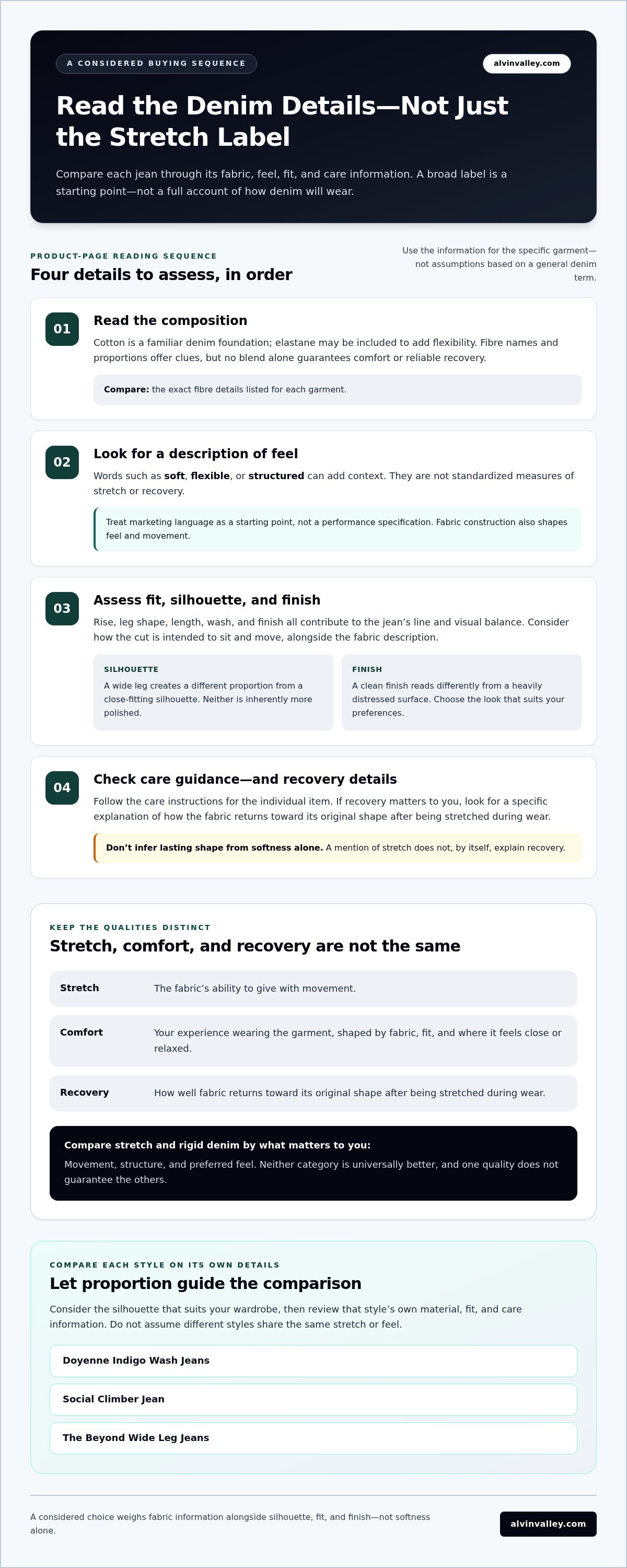
How to Choose Designer Denim with the Right Amount of Stretch
A considered purchase starts with your priorities, not a stretch label. Decide how you want your jeans to feel during a typical day, then compare the garment details and silhouette with that preference. This sequence makes it easier to choose designer denim with perfect stretch for your wardrobe, whether you’re shopping online or assessing a pair in person.
- Define your preferred feel. Decide whether you value ease of movement, a firmer hand, or a balance between the two. Think about how long you’ll wear the jeans and what your day involves.
- Compare the item details. Read the specific fabric composition, construction description, and care guidance. Treat general terms such as “stretch” as a starting point, not a full explanation of wear or recovery.
- Assess the silhouette. Consider rise, leg shape, and finish in relation to the proportions and outfits you prefer. A familiar cut in a different wash can create a distinct impression.
- Review the fit information. Use the garment’s fit description and listed size information to guide your choice. If possible, try the jeans on and move naturally before deciding.
A practical checklist for evaluating stretch online
Online, the product page is your fitting-room reference. Start with the exact garment rather than relying on broad category filters or descriptions from another style. Compare its documented fabric and fit details with what you already know you like. Product imagery can help you assess the intended silhouette and styling, but it can’t establish how the fabric will feel on your body.
- Read the stated fabric composition and any construction details.
- Review the fit description and listed size information.
- Compare product imagery with the shape and styling you want to wear.
Consider how the jeans will work with your wardrobe, too. If you want them to anchor polished outfits, think about which silhouette and finish will pair with the pieces you wear most. For relaxed daily dressing, movement and ease may carry more weight. Your priorities can differ from one outfit to another.
A fitting-room checklist for comfort and shape
Try the jeans with the kinds of movement they need to accommodate. Sit, stand, and walk at a natural pace. Notice whether the waistband and legs feel comfortable without pulling or restricting movement. Then check the overall line from more than one angle. Comfort matters, but it shouldn’t be the only measure of fit.
- Notice pressure or looseness at the waist, hips, and thighs.
- Check whether the fabric allows natural movement.
- Look at the full silhouette, including the rise and leg shape.
For context on Alvin Valley denim, compare the Doyenne Indigo Wash Jeans, Social Climber Jean, and The Beyond Wide Leg Jeans by their individual product details. Then explore Alvin Valley denim with your priorities in mind, giving equal consideration to fabric, fit, and silhouette.
Explore Alvin Valley Designer Denim with a More Considered Eye
Alvin Valley is known for women’s trousers, where silhouette and proportion are central to the way a garment reads. That perspective offers a useful lens for denim, too. A thoughtful choice isn’t made by stretch terminology alone. Begin with the shape you want, then use each style’s own product information to understand its fabric and fit.
Start with the silhouette that feels most like you
Alvin Valley’s denim includes Doyenne Indigo Wash Jeans, Social Climber Jean, and The Beyond Wide Leg Jeans. Their names offer a starting point for exploring the range, but shouldn’t substitute for the details provided for each garment. If you’re considering a wide-leg shape, the wide-leg jean guide offers further context on silhouette.
Think about how you want denim to contribute to an outfit. Do you prefer an understated line or a more pronounced silhouette? Which proportions already work with the jackets, knits, and shoes you wear often? These questions help narrow your choice without assuming that a product name reveals its stretch, fabric composition, or fit.
Let product details guide the final decision
Once a silhouette catches your eye, turn to that item’s published information. Review fabric composition, fit details, size guidance, and care instructions for the specific style. These details are more useful than broad category language because they relate to the garment you’re considering. Don’t assume two pairs share the same material or stretch performance simply because they’re both denim.
For a clear comparison, keep your priorities consistent across styles:
- Fabric: Check the listed composition and description for each individual item.
- Fit: Compare the stated fit information with the way you prefer jeans to sit and move.
- Care: Review the garment’s instructions as part of understanding how to look after it.
- Proportion: Consider how the named silhouette relates to your wardrobe and preferred overall line.
This is a considered approach to designer denim with perfect stretch: match your preferences with the fabric and fit details for a particular jean instead of searching for one universal formula. Alvin Valley’s founder is known as the “King of Pants,” making attention to trouser proportion especially relevant when considering denim. The silhouette deserves as much thought as the feel.
To compare individual styles against your preferred feel and fit, explore Alvin Valley denim through the details of each piece.
Make Your Next Denim Choice Deliberate
The most useful standard is one you can carry into every fitting room: how you want your jeans to feel, what kind of line you want them to create, and whether the fabric details support that choice. Keep those priorities in view, and “perfect” becomes less about chasing a label and more about choosing with intention.
That makes designer denim with perfect stretch a personal decision, not a promise hidden in a product description. Consider how a pair works with your wardrobe and everyday routine. The right choice should feel considered in both movement and appearance, without compromising your sense of style.
Alvin Valley brings a designer’s eye to women’s trousers and denim. Compare the product details and choose the silhouette that feels distinctly yours. Explore Alvin Valley designer denim to find a considered starting point for your wardrobe.
Frequently Asked Questions
What makes designer denim stretch comfortably?
Comfortable stretch depends on how the denim’s fibres and construction work together, along with a fit that allows movement without unwanted pressure. The phrase “stretch denim” alone can’t tell you how supple or supportive a particular pair will feel. For designer denim with perfect stretch, compare the garment’s stated fabric composition and fit details, then consider where you want more ease, such as at the hips or knees.
Does stretch denim lose its shape over time?
It can, but the outcome varies by fabric and garment. Stretch describes the fabric’s capacity to give; it doesn’t guarantee how well it returns to its original shape after wear. If you notice jeans relaxing during the day, consider whether the fit was already loose in key areas. Review the item’s fabric and care guidance, and follow the instructions rather than relying on the stretch label to predict long-term shape.
Is stretch denim better than rigid denim?
Neither is inherently better. Stretch denim may suit you if you value added ease during a day that involves sitting or walking. Rigid denim may appeal if you prefer a firmer hand and a more substantial feel. Your choice can also depend on the occasion: jeans for a long, active day may serve a different purpose from a pair chosen for a particular outfit or silhouette.
How can I tell if jeans have enough stretch?
Start with the product’s fabric description, then assess comfort in motion if you can try the jeans on. Sit, stand, and take a few steps. The denim should let you move naturally without pinching or pulling. Don’t judge by how far the fabric stretches when tugged by hand; that doesn’t show how the whole garment will feel or behave during wear.
Can designer stretch jeans still look structured?
Yes. A defined appearance depends on more than whether denim stretches. The cut, rise, leg shape, and finish all contribute to how jeans look on the body. For a polished effect, consider whether the silhouette works with your proportions and the pieces you plan to wear with it. A flexible feel and a composed outline can coexist, though individual garments will differ.
What should I look for when buying stretch denim online?
Review the exact item’s fabric composition, fit description, listed size information, and care instructions. Product imagery can offer clues about the cut and finish, but photographs can’t convey hand feel. When comparing styles, keep your priorities consistent: note which details describe the fit you want, and avoid assuming similar product labels mean identical comfort or recovery.
How should stretch denim fit when I first try it on?
It should feel secure without restricting ordinary movement. Check how the waistband sits when you’re standing and sitting, and notice whether the hips and thighs feel comfortable as you move. Avoid choosing a pair that feels painfully tight in the hope that it will change, or one that already slips out of place. Use the garment’s fit guidance alongside your own comfort rather than relying on a general sizing rule.