

Skinny jeans aren’t out. The best luxury denim for women over 50 is the pair that feels comfortable and works with your proportions, whether its silhouette is slim, straight, or wide-leg. For added ease without losing shape, Nordstrom fashion director Linda Cui Zhang recommends jeans with 1 to 2 percent stretch.
It’s understandable to wonder whether a once-familiar cut still feels current, or whether a different rise or leg shape might suit you better. The answer isn’t to follow an age-based rule. It’s to find denim with considered proportions and a fit that feels like your own.
This guide explains how stretch and fabric composition affect comfort, how inseam shapes a jean’s line, and what to assess when trying different fits. You’ll also find a practical approach to sizing, so you can choose with confidence rather than relying on trends.
Key Takeaways
- Skinny jeans aren’t out; choose a leg shape based on your proportions, comfort, and the outfits you want to create.
- Pay attention to stretch and fabric composition to find denim that moves comfortably while keeping its shape.
- Use the inseam, measured from the crotch seam to the bottom of the leg opening, to assess where jeans will fall with your shoes.
- Petite, tall, and plus-size fit considerations can help you focus on proportion and ease rather than relying on a size label alone.
- Compare straight, bootcut, flare, skinny, and wide-leg silhouettes to identify the cut that feels balanced and distinctly yours.
1. Comfort, stretch, and fabric composition
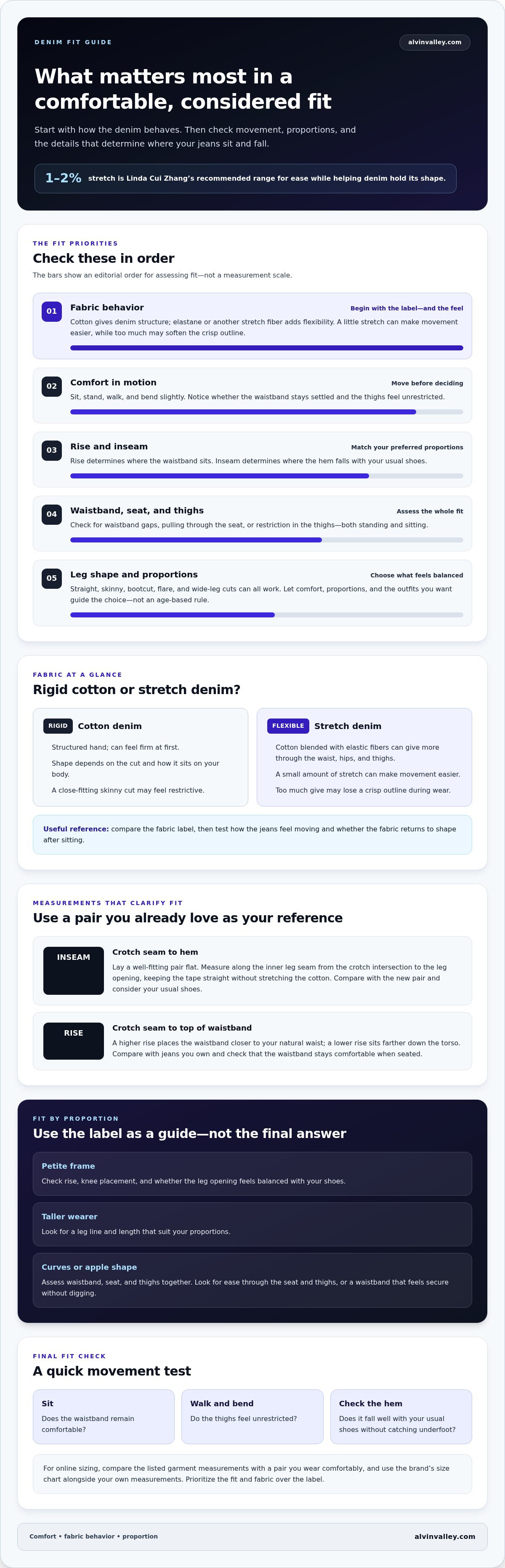
For the best luxury denim for women over 50, start with fabric behavior, not a label. Nordstrom fashion director Linda Cui Zhang recommends jeans with 1 to 2 percent stretch. That small amount can add ease while helping denim retain a defined silhouette. Move, sit, and stand in a pair before judging its comfort. Notice whether the waistband stays settled and the thighs feel unrestricted.
Rigid cotton denim and stretch denim feel different to wear. Rigid cotton has a structured hand and can feel firm at first; its shape depends on the cut and how it sits on your body. Stretch denim blends cotton with elastic fibers, often giving more through the waist, hips, and thighs. A skinny cut may feel restrictive in rigid fabric, while a little stretch can make movement easier. Check the fabric label, then test the fit as you move.
What luxury denim brands make the best jeans for women over 50? No label can determine the best fit for every woman. Prioritize a well-constructed pair whose rise, fabric weight, and leg shape feel comfortable and suit your proportions. Which luxury denim brands offer comfortable high-rise jeans with stretch? Look for a high-rise cut with a small stretch component, then assess whether the waistband lies comfortably and the fabric recovers after sitting. Those details matter more than a brand name alone.
Fabric composition affects both comfort and shape. Cotton gives denim its familiar structure, while elastane or another stretch fiber adds flexibility. More stretch isn’t automatically better: fabric that feels too yielding may lose its crisp outline during wear. Consider how you plan to style the jeans, too. A structured barrel leg can hold a sculptural line, while stretch denim may make a close-fitting skinny silhouette easier to wear throughout the day.
Where can women in the United States try on or buy luxury denim brands? Department-store fitting rooms and brand boutiques let you compare rises and leg shapes in person. For online shopping, use a brand’s United States storefront and compare garment measurements with jeans you already wear. Review the return terms before ordering, then assess the waistband, seat, and thighs when your jeans arrive.
Care matters. To limit fading, turn jeans inside out and wash them gently with similar colors when needed. Avoid unnecessary washing, which can shorten the life of the color and fabric. To help prevent stretching, don’t leave damp denim hanging under its own weight; reshape it and dry it flat. Make sure jeans are fully dry before hanging them to help avoid mildew or odor.
No particular brand is singled out; prioritize a high-rise pair with about 1-2% stretch. Check that the waistband feels comfortable and the fabric returns to shape after sitting.
2. Inseam lengths and fit guidance
Jeans can have the right waist size and still feel wrong at the hem. Inseam and rise determine where the leg falls and where the waistband sits. For a classic look, compare both measurements with a pair you already enjoy wearing. That familiar fit gives you a practical reference, whether you prefer straight legs, a close silhouette, or room for curves.
The inseam runs from the crotch seam to the bottom of a jeans leg opening. To compare lengths, lay a well-fitting pair flat and measure along the inner leg seam, from the crotch intersection to the hem. Keep the tape straight without stretching the cotton. Compare the result with the new pair’s garment measurements, then consider whether you’ll wear it with flats, boots, or heels.
Rise measures the distance from the crotch seam to the top of the waistband. Compare the rise of jeans you own with that of a prospective pair. A higher rise places the waistband closer to your natural waist; a lower rise sits farther down the torso. The best choice depends on where you prefer the waistband to rest and whether it stays comfortable when you sit.
How should women over 50 choose the right jeans rise, inseam, wash, and size? Compare the rise and inseam with a pair that fits well, then assess the waistband, seat, and thighs while standing and sitting. Choose a wash that complements your wardrobe, and use the brand’s size chart alongside your own measurements rather than relying on the label alone.
Test the fit with a few ordinary movements before deciding. Sit in a chair, walk, and bend slightly. Check whether the waistband gaps, the seat pulls, or the hem catches underfoot. A hem that works with your usual shoes creates a more considered line. If the length feels close but not exact, compare garment measurements before choosing a size or arranging alterations.
For online shopping, note the rise and inseam of a pair you already wear, then compare them with the listed measurements for the new style. In person, bring shoes with a similar heel height to the ones you plan to wear. A wide-leg denim option can be assessed by the same approach: check its actual rise and length against your preferred proportions, rather than assuming the silhouette will fit a particular way.
3. Petite, tall, and plus-size options
Petite, tall, and plus-size labels can help narrow your search, but the cut still determines how jeans sit. A petite frame may suit a shorter rise or a leg opening that doesn’t overwhelm the shoe. A taller wearer may look for a longer leg line. For curves, assess the waistband, seat, and thighs together instead of choosing by waist measurement alone.
What are the best luxury jeans for women over 50 with a curvy figure, apple shape, or petite frame? Choose by proportion and comfort, not by age: a curvy figure needs ease through the seat and thighs, an apple shape may prefer a waistband that feels secure without digging, and a petite frame can look for balanced rise and leg proportions. Try different cuts, such as straight or wide-leg jeans, and judge the fit while standing and sitting.
For petite sizing, check where the knee placement and leg opening fall, not just the overall length. A hem that stacks heavily over a flat shoe can interrupt a clean line; a cropped cut can leave more room around the ankle. Tall shoppers can check whether the knee and hem sit where intended. A longer inseam alone won’t correct a rise or knee placement that feels out of proportion.
Evaluate plus-size denim across the whole garment. Check for pulling at the front pockets, strain at the seat, or a waistband that gaps when you move. Stretch can provide more ease, while structured fabric can preserve a sharper outline. Neither feature guarantees comfort on its own. In the fitting room, sit, walk, and bend in each pair before deciding.
“One-size-fits-four” adaptable denim may sound convenient, but a single-size claim can’t explain how a garment fits different rises, hips, and leg proportions. Treat it as a starting point, then examine the size chart and garment measurements. Compare those details with a favorite pair that fits well. The label matters less than how the waistband, seat, and leg work together on your frame.
Prices and size ranges vary by label and style, so compare them on each product page rather than assuming luxury denim follows one standard. Look for the available size range, garment measurements, fabric composition, and stated fit. If you’re between sizes, use the waistband and seat measurements as key references. A smaller label size isn’t inherently a better fit, and a higher price doesn’t determine how jeans will sit.
Use a simple shortlist: identify where you need the most ease, choose a silhouette that suits your preferred proportions, then compare the size chart with a familiar pair. Petite, tall, and plus-size options can focus your search. The final test is specific: the jeans should let you move comfortably and create the shape you want.
4. Are skinny jeans out?
No. Skinny jeans remain an option, but they’re not the only silhouette worth considering. The right choice depends on the outfit, fabric, and leg line you want. Dark skinny jeans with a soft sweater create a close, polished profile. Straight-leg jeans offer a little more room while keeping a clean line from hip to hem.
Straight-leg styles are a versatile starting point because they balance fitted tops and relaxed layers. Wear them with a crisp shirt for a classic combination, or add a knit jacket for a more composed look. Check where the hem falls with your usual shoes. A straight leg that breaks neatly over loafers looks different from one that stacks over ankle boots.
Bootcut jeans widen subtly below the knee, creating space for boots and balancing a fitted jacket. They can also work with a tucked blouse when you want definition at the waist. Choose fabric with enough structure to keep the flare controlled. If the opening feels too wide for your shoes, the silhouette may look heavier than intended.
Flare jeans make a more pronounced statement. Their wider hem draws the eye downward, so the inseam and footwear matter. Try them with the shoes you plan to wear, such as a low heel or sleek boot. The fabric should fall cleanly rather than folding heavily around the ankle. A fitted or waist-defining top can balance the wider leg.
Wide-leg jeans offer ease through the leg and a distinct, modern silhouette. A tucked top or shorter jacket can clarify the waistline, while a long, fluid layer creates a more relaxed proportion. Notice how the denim moves as you walk. Stiffer fabric holds a more architectural shape; softer fabric drapes closer to the body. The cut should feel intentional from hip to hem.
Mid-rise jeans can provide a familiar, balanced foundation, while high-rise cuts create a higher waistline. Either rise can pair with straight, bootcut, skinny, flare, or wide-leg styles. Consider how the waistband works with the tops already in your wardrobe. A tucked shirt puts the rise on display; a longer sweater makes the leg shape more prominent.
Compare silhouettes in a full-length mirror, not just from the front. Turn to the side and back, then walk in each pair. Notice whether the fabric pulls, the hem catches, or the leg shape clashes with your shoes. Skinny jeans aren’t out; they’re one option among several. Keep the cuts that feel comfortable and complement the way you dress.
5. Choosing flattering jean fits
A flattering fit starts with the line you want, not a rule about age or body shape. Consider relaxed straight-leg jeans if you want ease without a wide hem. Choose a skinny cut for a closer outline, or a wide leg for more movement through the lower leg. The best option works with your proportions and the clothes you already wear.
Start by identifying where a pair feels wrong. If the waistband gaps while the seat fits, compare a different rise or cut instead of sizing down automatically. If the thighs pull when you sit, look for more room through the upper leg or fabric with some give. A flattering silhouette should follow your shape without pinching, dragging, or needing constant adjustment.
Next, assess the balance from shoulder to hem. A long, relaxed top can make wide-leg jeans feel heavy; a tucked blouse or shorter jacket can define the waist. With skinny jeans, a longer tunic or softly structured blazer creates a different proportion. Try each outfit with your usual shoes, since a hem that pools over flats may fall differently with boots.
Fabric composition is part of fit, not an afterthought. Read the label for cotton and stretch fibers, then consider how the denim holds its shape as you move. Polyester may appear in a blend, but both the percentage and the garment’s construction affect its feel. Check for strain at the pockets, pulling across the seat, or a waistband that shifts as you walk.
Use a simple fitting-room sequence: stand naturally, sit, walk, then view the jeans from the front and side. Notice whether the rise stays comfortable, the seat lies smoothly, and the hem works with your footwear. If a cut looks appealing but needs constant tugging, try another size or silhouette. A small change in rise or leg shape can alter the entire line.
For a useful comparison, bring a favorite pair and note what makes it work: the waistband position, room through the thighs, or hem length. Apply those details to a new relaxed cut or leg jean, rather than expecting the same size label to fit identically across styles. Explore denim silhouettes as you refine the shape that feels most natural in your wardrobe.
Alvin Valley: Doyenne Indigo Wash Jeans
Alvin Valley’s Doyenne Indigo Wash Jeans offer a distinctive wash and silhouette to consider as you explore luxury denim. Compare them with The Beyond Wide Leg Jeans if a wider leg better suits your wardrobe, or the Social Climber Jean as another option in the range. The right choice still comes down to how the rise, waist, and leg shape feel on you. Use the fit guidance above to assess proportion and comfort, then consider which style complements the pieces you already wear. A polished denim wardrobe begins with a silhouette you’ll reach for often, not a trend-led rule. Visit alvinvalley.com to explore the denim.
Make Denim Part of Your Signature
Let your next pair become the starting point for a more personal wardrobe, not another purchase shaped by a passing trend. Choose the silhouette that feels most like you, then build a few distinct outfits around it: a polished look for a daytime appointment, an easy combination for the weekend, or a sharper pairing for evening. The best luxury denim for women over 50 is the denim that earns its place in those real moments and makes getting dressed feel more deliberate.
Alvin Valley offers Doyenne Indigo Wash Jeans, Social Climber Jean, and The Beyond Wide Leg Jeans. Consider which style best suits the role you want denim to play in your closet. A thoughtful choice can give familiar pieces a fresh point of view without changing your personal style.
For a closer look at these denim options, contact Alvin Valley about luxury denim. Choose with confidence, and make the next pair unmistakably yours.
Frequently Asked Questions
Are skinny jeans out?
No, skinny jeans remain a valid choice; the key is styling them with intention. Try a sleek pair with a longer jacket and ankle boots for a defined, city-ready outfit, or balance the close-fitting leg with a softly draped blouse. If your wardrobe leans toward relaxed proportions, keep skinny jeans as one option rather than your only denim silhouette. Personal style matters more than an age-based rule.
Which premium jeans are most flattering for mature women and different body types?
The most flattering premium jeans are the ones whose details complement your proportions and styling preferences. Pocket placement and yoke shape, for example, can change how the back of a pair looks, while a darker wash can read as more formal than a heavily faded finish. Consider the outfits you wear most, then choose denim that works with those pieces. Fit should feel deliberate, not dictated by a label.
What are the best cuts of jeans for women over 50: straight-leg, wide-leg, bootcut, or slim?
There’s no single best cut; each creates a different effect. Straight-leg jeans are versatile with tailored shirts and everyday layers. Wide-leg denim gives an outfit a more expressive, contemporary line. Bootcut can complement broader footwear, while slim jeans pair neatly with longer tops and streamlined shoes. Choose based on how you want your outfits to feel and what’s already in your closet.
How much do luxury women’s jeans cost in the United States?
Luxury women’s jeans don’t have one standard price in the United States. Cost varies with the brand, fabric, construction, and design details. Compare a garment’s materials and finish with how often you expect to wear it, then consider whether its cut works across several outfits. For a specific pair, use the price shown on its product page, since prices differ between styles and labels.
Which luxury denim brands offer comfortable high-rise jeans with stretch?
No particular brand is singled out. Look for a high-rise pair with 1 to 2 percent stretch, a comfortable waistband, and fabric that returns to shape after sitting.